Species Explorer
Browse and search species from the IUCN Red List and GBIF.
54,666 species

Floating Hook-moss
ENWarnstorfia fluitans
Based on the available data, the specific threats facing Floating Hook-moss have not yet been assessed or documented by researchers. Without a formal threat assessment, it's unclear what particular dangers this moss species may be facing in its natural habitat. The status of whether threats to this species are increasing, stable, or decreasing cannot be determined until a proper scientific evaluation is completed.

Floating Water-plantain
VULuronium natans
flockig puderskivling
VUCystolepiota adulterina
flockskivling
ENFloccularia luteovirens
Floccularia luteovirens faces severe population declines primarily due to habitat loss from deforestation and agricultural conversion of its specialized forest ecosystems. Climate change and pollution are additional stressors affecting the delicate ecological conditions this species requires for survival.
flodtagging
CRPeniophorella echinocystis
Peniophorella echinocystis, a critically endangered corticioid fungus, faces severe population decline primarily due to habitat loss from deforestation and forest fragmentation in its limited range. The species' highly specific substrate requirements and narrow ecological niche make it extremely vulnerable to environmental changes and human disturbance.
Floerke's Phascum
VUMicrobryum floerkeanum

Flooded Jellyskin Lichen
ENLeptogium rivulare
The Flooded Jellyskin Lichen is declining primarily due to habitat loss and degradation of its specialized wetland environments. Water pollution, altered hydrology from development, and climate change impacts on water levels pose significant threats to this aquatic lichen species.
Floreana flax
CRLinum cratericolum
Floreana flax is critically endangered due to its extremely restricted range on Floreana Island in the Galápagos, where it faces severe pressure from invasive plant species that compete for resources and alter habitat conditions. The species' tiny population size and limited distribution make it highly vulnerable to stochastic events and ongoing habitat degradation from introduced flora.

Flores Crow
ENCorvus florensis
The Flores Crow faces severe population decline primarily due to extensive habitat loss from deforestation and agricultural conversion across its limited range on Flores Island, Indonesia. Additional pressures from hunting and the species' extremely restricted distribution make it highly vulnerable to extinction.

Florida Bog Frog
VULithobates okaloosae
Florida valerian
ENValeriana scandens
Florida valerian faces severe population decline primarily due to habitat loss from urban development and agricultural conversion throughout its limited range in Florida. The species is further threatened by invasive plant species that compete for resources and alter native plant communities, along with potential impacts from climate change affecting its specialized habitat requirements.
flottmaskros
CRTaraxacum subalpinum
Taraxacum subalpinum faces severe threats primarily from habitat loss and degradation in its restricted alpine and subalpine environments. Climate change poses an additional significant risk by altering the specialized mountain ecosystems this species depends on, while human activities such as infrastructure development and recreational use further fragment its limited habitat.
Flowering Rush Weevil
VUBagous nodulosus

fluesoppkamfot
VUCrustulina guttata

Fly Orchid
CROphrys insectifera
The Fly Orchid faces severe population declines primarily due to habitat loss from agricultural intensification, urban development, and changes in land management practices that have eliminated or degraded the calcareous grasslands and woodland edges it requires. Climate change and the loss of specialized pollinating insects further threaten remaining populations, while the species' highly specific ecological requirements make it particularly vulnerable to environmental changes.

Foothill Elaenia
VUMyiopagis olallai
forest johnnyberry
VUMiconia calycina
Forest Oldfield Mouse
VUThomasomys silvestris
Forest Silver-stiletto
VUPandivirilia melaleuca
Forest Woodwax
ENHygrophorus arbustivus
Forest Woodwax (Hygrophorus arbustivus) faces severe population declines primarily due to widespread deforestation and habitat fragmentation across its range. Climate change is altering the delicate moisture and temperature conditions required for this mycorrhizal fungus to form successful associations with its host trees. Agricultural expansion and urban development continue to reduce the mature forest ecosystems this species depends upon.

Fork-tailed Tody-tyrant
VUHemitriccus furcatus

Forked Spleenwort
CRAsplenium septentrionale
Forked Spleenwort faces severe population declines primarily due to habitat loss from quarrying and rock extraction activities that destroy its specialized rocky cliff and crevice habitats. Climate change poses an additional threat by altering the cool, moist microclimate conditions this arctic-alpine species requires for survival.

forsgytterlav
ENFuscopannaria confusa
Fuscopannaria confusa faces severe decline primarily due to air pollution and habitat degradation affecting the old-growth forests where it occurs. As a lichen species highly sensitive to atmospheric changes, it is particularly vulnerable to nitrogen deposition, sulfur compounds, and other airborne pollutants that alter its substrate chemistry and disrupt symbiotic relationships.
forskrimmerlav
CRRinodina endophragmia
Rinodina endophragmia is critically endangered primarily due to habitat loss and degradation of its specialized lichen habitat. Air pollution and climate change are additional stressors affecting this rare lichen species. The species has an extremely limited distribution, making it particularly vulnerable to local environmental changes.
forspåskrislav
CRStereocaulon coniophyllum
Stereocaulon coniophyllum, a lichen species, faces severe threats primarily from habitat degradation and climate change impacts on its specialized arctic and subarctic environments. Air pollution, particularly nitrogen deposition and sulfur compounds, significantly affects lichen communities by altering their sensitive physiological processes. The species' extremely limited distribution and slow growth rates make it particularly vulnerable to environmental changes.
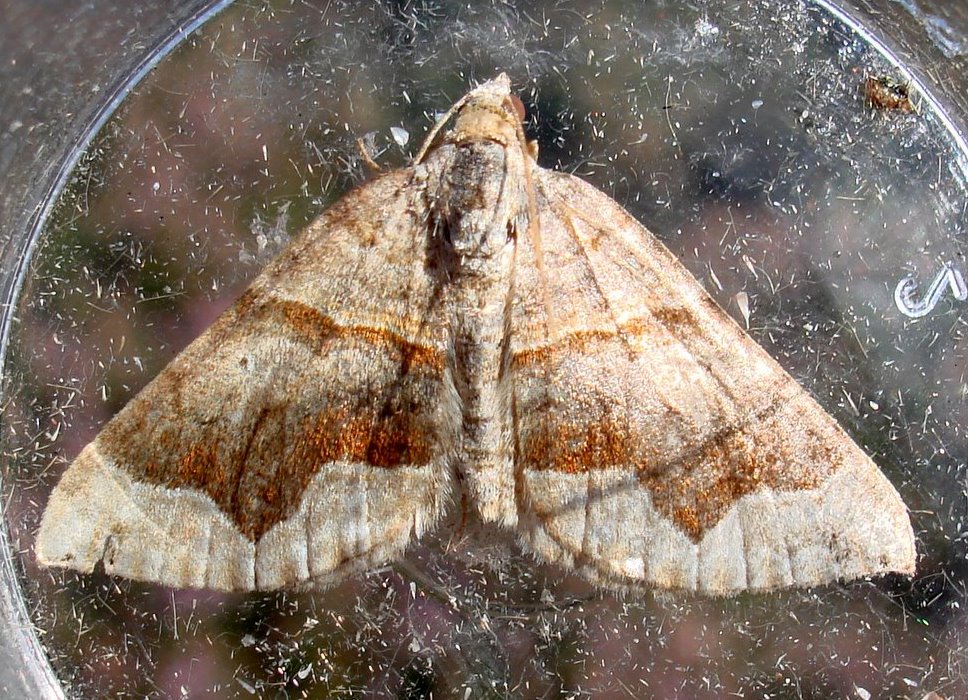
Fortified Carpet
VUScotopteryx moeniata
fosseringlav
CRRinodina stictica
Rinodina stictica, a crustose lichen species, faces severe decline primarily due to air pollution and habitat degradation. This species is particularly sensitive to atmospheric pollutants and changes in air quality, which directly impact its ability to photosynthesize and survive. Urban development and industrial activities have significantly reduced suitable habitat and increased pollution levels in areas where this lichen historically occurred.

Fountain Feather-moss
VUHygroamblystegium tenax
Fountain Lattice-moss
VUCinclidotus riparius
Four-banded Flower Bee
VUAnthophora quadrimaculata

Four-spotted Pipiza
VUPipiza quadrimaculata

Fourche Mountain Salamander
VUPlethodon fourchensis

fourleaf mare's tail
CRHippuris tetraphylla
Fourleaf mare's tail is critically endangered due to its extremely limited distribution and vulnerability to habitat degradation. The species faces severe threats from human activities that alter or destroy its specialized aquatic and wetland habitats. Climate change and water management practices pose additional risks to this rare aquatic plant's survival.

Fourmi mineuse
ENFormica cunicularia
Formica cunicularia faces significant population declines primarily due to habitat loss from agricultural intensification and urban development across its European range. Climate change and the use of pesticides in agricultural areas further threaten remaining populations by altering suitable nesting sites and reducing prey availability.
Foxtail Stonewort
ENLamprothamnium papulosum
Foxtail Stonewort faces severe decline primarily due to habitat degradation from coastal development, pollution, and eutrophication of its shallow aquatic environments. The species is particularly vulnerable to water quality changes and physical disturbance of sediments in its restricted coastal and brackish water habitats.

Foxy Bolete
ENLeccinum vulpinum
The Foxy Bolete faces severe population declines primarily due to habitat loss from deforestation and urban development in its limited range. Climate change is altering the delicate mycorrhizal relationships this fungus depends on with its host trees, while pollution and soil contamination further threaten its survival.

Fragile Amanita
CRAmanita friabilis
Amanita friabilis faces severe population decline primarily due to habitat loss from deforestation and agricultural conversion of its native forest ecosystems. Climate change is altering the delicate soil and moisture conditions required for this mycorrhizal species to form essential partnerships with host trees. Additionally, pollution and soil contamination from industrial activities are degrading the specific microhabitat conditions this fragile fungus requires for reproduction and survival.
fragile filmy fern
CRHymenophyllum fragile
The fragile filmy fern faces severe threats primarily from habitat destruction and degradation of its specialized humid forest environments. Climate change poses additional risks by altering the precise moisture and temperature conditions this delicate epiphytic species requires for survival.
Fragrant Crestwort
CRLophocolea fragrans
Fragrant Crestwort (Lophocolea fragrans) is critically endangered due to its extremely limited distribution and vulnerability to habitat degradation. This bryophyte species faces severe threats from human activities that alter its specialized microhabitat requirements, particularly in areas where it occurs on specific substrate types or in unique ecological niches.
Fragrant Macewort
CRMannia fragrans
Fragrant Macewort (Mannia fragrans) is critically endangered due to its extremely limited distribution and highly specialized habitat requirements. The species faces severe threats from habitat destruction, climate change impacts on its moisture-dependent environment, and human disturbance to its fragile bryophyte communities.

Fragrant Orchid
CRGymnadenia conopsea
The Fragrant Orchid faces severe population declines primarily due to habitat loss and degradation of its preferred grassland and meadow ecosystems. Agricultural intensification, including increased fertilizer use and conversion of traditional hay meadows to intensive farming, has eliminated much of its suitable habitat. Climate change and reduced grazing pressure that maintains the open habitats this species requires further compound these threats.
Frailejón de las Dantas
VUEspeletia tapirophila
franscitronbi
VUHylaeus difformis
fransgökbi
VUNomada stigma
fransrosettlav
VUPhyscia leptalea

Frayed Parasol
VUMacrolepiota excoriata
Frayed Ribbon Lichen
VURamalina roesleri
Freemouth Hydrobe Snail
VUAphaostracon chalarogyrum

Frejya's Fritillary
CRBoloria freija
Freija's Fritillary faces severe population declines primarily due to habitat loss and fragmentation of its specialized bog and wetland ecosystems. Climate change poses an additional threat by altering the hydrology and plant communities of these sensitive habitats, while the species' dependence on specific host plants makes it particularly vulnerable to environmental changes.

French nase
VUParachondrostoma toxostoma