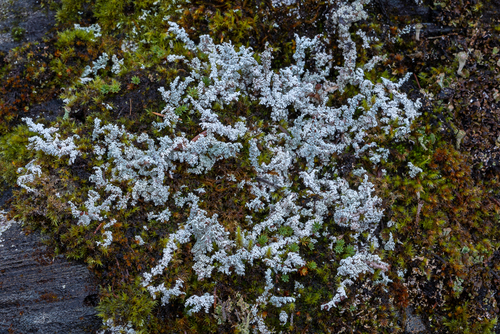
Powder foam lichen
Stereocaulon coniophyllum
Photo: Photo: (c) Scott Ranger, some rights reserved (CC BY-NC), uploaded by Scott Ranger
Overview
Stereocaulon coniophyllum is a distinctive fruticose lichen species characterized by its branched, coral-like thallus structure with small, scale-like phyllocladiae covering the surface. This slow-growing lichen forms small cushions or mats on exposed substrates and plays a crucial role in primary succession, helping to break down rock surfaces and create soil for other organisms while providing specialized microhabitats for invertebrates.
Stereocaulon coniophyllum, a lichen species, faces severe threats primarily from habitat degradation and climate change impacts on its specialized arctic and subarctic environments. Air pollution, particularly nitrogen deposition and sulfur compounds, significantly affects lichen communities by altering their sensitive physiological processes. The species' extremely limited distribution and slow growth rates make it particularly vulnerable to environmental changes.
Habitat
This lichen grows on exposed siliceous rocks, particularly granite and quartzite outcrops in montane and subalpine environments. It typically colonizes wind-exposed cliff faces, boulder fields, and rocky ridges where it can access adequate light while avoiding competition from faster-growing vegetation.
Other threatened species in Stereocaulaceae
Frequently asked questions
Why is Powder foam lichen classified as Critically Endangered?
Where does Powder foam lichen live?
What are the main threats to Powder foam lichen?
Get weekly conservation intelligence
One short digest a week of the most striking species and country data we ship, plus breaking conservation news paired with our database where it matters.
Free, no spam. One-click unsubscribe in every email.