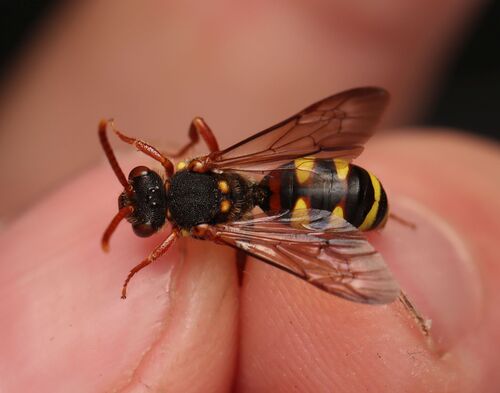
Nomada stigma
Overview
A detailed profile for this species is sourced from the IUCN Red List of Threatened Species as assessments become available.
Nomada stigma faces significant threats from the intensification of agricultural practices and widespread use of pesticides, which directly impact both the bee itself and its host species. The species' specialized parasitic lifestyle makes it particularly vulnerable to the decline of its host bee populations, creating a cascading effect where threats to host species directly translate to threats for this cuckoo bee. Habitat fragmentation and loss of flower-rich meadows and grasslands further compound these pressures by reducing available nesting sites and foraging resources.
Habitat
Nomada stigma inhabits flower-rich grasslands, meadows, and woodland edges across parts of Europe, particularly favoring areas with diverse wildflower communities. As a cuckoo bee, it requires proximity to the nesting sites of its host bee species, typically in sandy or well-drained soils where ground-nesting bees establish their colonies.
Other threatened species in Apidae
Threatened in Algeria


Frequently asked questions
Why is Nomada stigma classified as Vulnerable?
Where does Nomada stigma live?
What are the main threats to Nomada stigma?
Get weekly conservation intelligence
One short digest a week of the most striking species and country data we ship, plus breaking conservation news paired with our database where it matters.
Free, no spam. One-click unsubscribe in every email.