CRCritically Endangered

Fragrant Macewort

Mannia fragrans

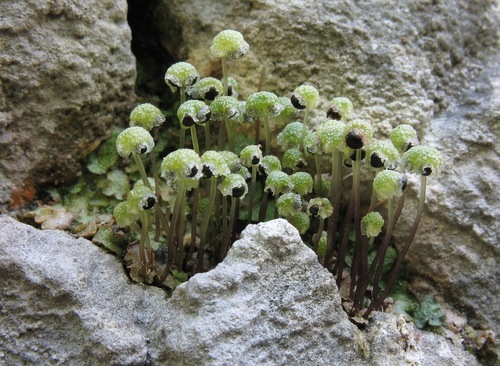
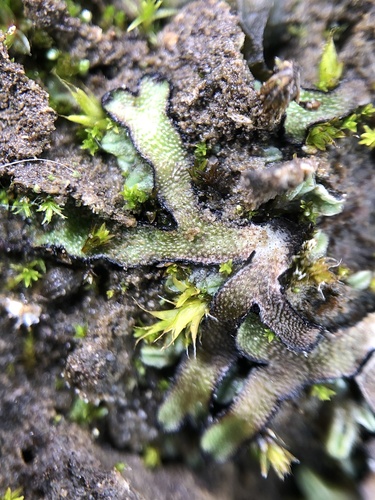
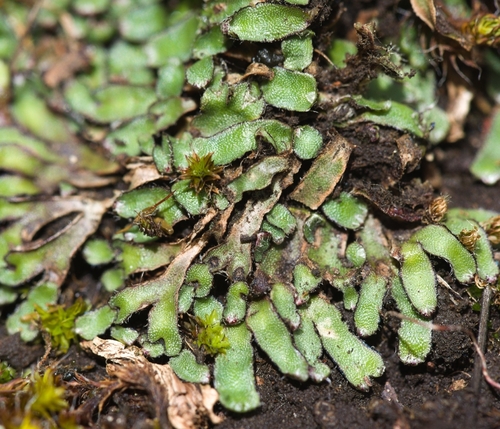
Fragrant Macewort (Mannia fragrans) is a small, delicate liverwort characterized by its distinctive aromatic compounds that give it a pleasant, sweet fragrance when crushed. This bryophyte forms thin, ribbon-like thalli with a glossy green surface and plays a crucial role in stabilizing soil and providing microhabitat for invertebrates in specialized ecological niches.

01Classification

Taxonomy & Classification

Kingdom

Plantae

Phylum

Marchantiophyta

Class

Marchantiopsida

Order

Marchantiales

Family

Aytoniaceae

Genus

Mannia

Fragrant Macewort belongs to the family Aytoniaceae, order Marchantiales, within the Marchantiopsida class.

02Description

Species Profile

Fragrant Macewort (Mannia fragrans) is a small, delicate liverwort characterized by its distinctive aromatic compounds that give it a pleasant, sweet fragrance when crushed. This bryophyte forms thin, ribbon-like thalli with a glossy green surface and plays a crucial role in stabilizing soil and providing microhabitat for invertebrates in specialized ecological niches.

Fragrant Macewort (Mannia fragrans) is critically endangered due to its extremely limited distribution and highly specialized habitat requirements. The species faces severe threats from habitat destruction, climate change impacts on its moisture-dependent environment, and human disturbance to its fragile bryophyte communities.

Key Facts

IUCN StatusCritically Endangered (CR)
GroupPlants
03Habitat

Habitat & Distribution

Fragrant Macewort grows exclusively on moist, shaded limestone outcrops and cave entrances where consistent humidity and filtered light create optimal conditions. It is typically found in narrow crevices and overhangs where water seepage maintains year-round moisture without direct exposure to rainfall.

04Threats

Threats

!

IUCN Red List: Critically Endangered

Fragrant Macewort (Mannia fragrans) is critically endangered due to its extremely limited distribution and highly specialized habitat requirements. The species faces severe threats from habitat destruction, climate change impacts on its moisture-dependent environment, and human disturbance to its fragile bryophyte communities.

Climate change and altered moisture regimes

HighOngoing

Extremely small population size

HighOngoing

Habitat loss and degradation

HighOngoing

Air pollution and atmospheric changes

MediumOngoing

Human disturbance and trampling

MediumOngoing
07National Status

National vs Global Threat Status

How this species is assessed at the national level compared to its IUCN global status (CR).

CountryNational StatusGlobal StatusComparison
EUVUVulnerableCRCritically EndangeredLower local risk

National Red List data sourced from the National Red List Project (nationalredlist.org, ZSL) and country-specific Red List authorities.

Community

Community Sightings

Report a sighting

No community sightings yet. Be the first to report!

07Sources

Sources & Attribution

How to Cite

IUCN: IUCN (2025). The IUCN Red List of Threatened Species. Version 2025-1. Available at: https://www.iucnredlist.org. doi:10.2305/IUCN.UK.2025-1.RLTS

GBIF: GBIF.org (2025). GBIF Home Page. Available at: https://www.gbif.org

National Red Lists: ZSL (2025). National Red List. Zoological Society of London. Available at: https://www.nationalredlist.org

This page: SpeciesRadar (2025). Fragrant Macewort (Mannia fragrans). SpeciesRadar: Intelligence for Earth's Biodiversity. Available at: https://speciesradar.org/species/fragrant-macewort

Full citation guide & data usage terms