
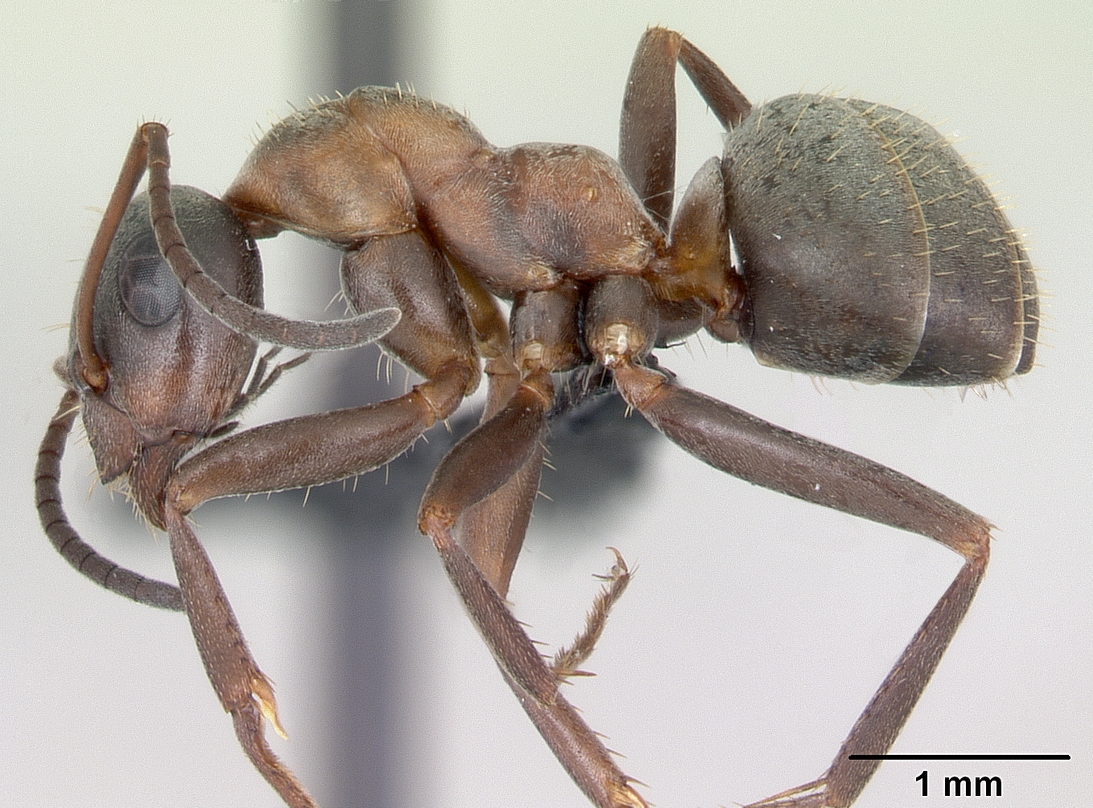
Formica cunicularia
Photo: Wikimedia Commons (CC) via https://en.wikipedia.org/wiki/Formica_cunicularia
Overview
Formica cunicularia is a species of ant found all over Europe. They are especially common in western Europe and southern England, but they can be found from southern Scandinavia to northern Africa and from Portugal to the Urals. In England, Donisthorpe records the species as having occurred as far north as Bewdley in Worcestershire.
In Formica cunicularia, the worker is an ashy grey black color and is usually 4.0–6.5 mm long. The males are found to have a uniformly dark body and are 8.0–9.0 mm long. The queen is yellowish red to dark black and is 7.5–9.0 mm.
Formica cunicularia faces significant population declines primarily due to habitat loss from agricultural intensification and urban development across its European range. Climate change and the use of pesticides in agricultural areas further threaten remaining populations by altering suitable nesting sites and reducing prey availability.
Habitat
F. cunicularia has habitat ranging from open to relatively cluttered to visually rich. In Finland, Albrecht found that all nests were small, with single entrances in dry, hot environments with low vegetation. They nest under stones or in small earth mounds. Nests are usually separate, containing one queen. F. cunicularia, unlike most other Formica fusca-group species, can form noticeable hillocks...
Other threatened species in Formicidae

Threatened in Afghanistan

Frequently asked questions
Why is Formica cunicularia classified as Endangered?
Where does Formica cunicularia live?
What are the main threats to Formica cunicularia?
Get weekly conservation intelligence
One short digest a week of the most striking species and country data we ship, plus breaking conservation news paired with our database where it matters.
Free, no spam. One-click unsubscribe in every email.