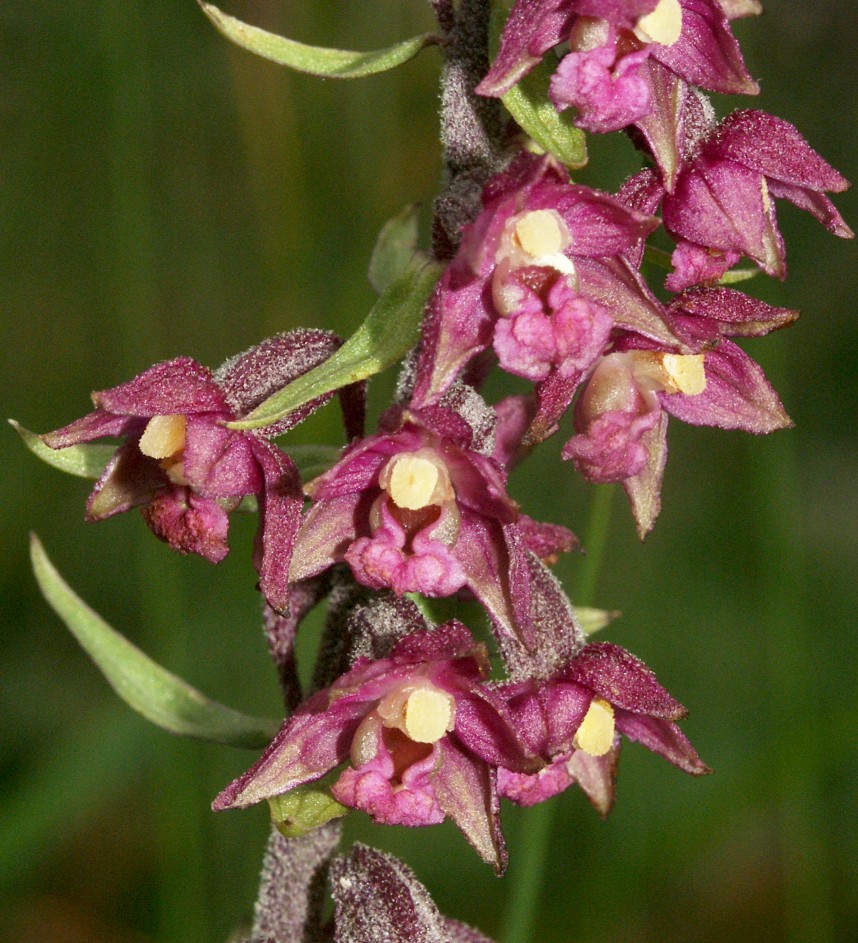
Fragrant Orchid
CRCritically Endangered

Fragrant Orchid

Gymnadenia conopsea

Gymnadenia conopsea, commonly known as the fragrant orchid or chalk fragrant orchid, is a herbaceous plant of the family Orchidaceae native to northern Europe.

Photo: Wikimedia Commons (CC) via https://en.wikipedia.org/wiki/Gymnadenia_conopsea

01Classification

Taxonomy & Classification

Kingdom

Plantae

Phylum

Tracheophyta

Class

Liliopsida

Order

Asparagales

Family

Orchidaceae

Genus

Gymnadenia

Fragrant Orchid belongs to the family Orchidaceae, order Asparagales, within the Liliopsida class.

02Description

Species Profile

Gymnadenia conopsea, commonly known as the fragrant orchid or chalk fragrant orchid, is a herbaceous plant of the family Orchidaceae native to northern Europe.

The Fragrant Orchid faces severe population declines primarily due to habitat loss and degradation of its preferred grassland and meadow ecosystems. Agricultural intensification, including increased fertilizer use and conversion of traditional hay meadows to intensive farming, has eliminated much of its suitable habitat. Climate change and reduced grazing pressure that maintains the open habitats this species requires further compound these threats.

Key Facts

IUCN StatusCritically Endangered (CR)
GroupPlants
03Habitat

Habitat & Distribution

The species is almost exclusively pollinated by moths (Lepidoptera). The most common pollinators are the small elephant hawk-moth (Deilephila porcellus), hummingbird hawk-moth (Macroglossum stellatarum), silver Y (Autographa gamma), burnished brass (Diachrysia chrysitis) and large yellow underwing (Noctua pronuba). Fruit set is high with an average of 73%. The seed's germination is conditioned...

04Threats

Threats

!

IUCN Red List: Critically Endangered

The Fragrant Orchid faces severe population declines primarily due to habitat loss and degradation of its preferred grassland and meadow ecosystems. Agricultural intensification, including increased fertilizer use and conversion of traditional hay meadows to intensive farming, has eliminated much of its suitable habitat. Climate change and reduced grazing pressure that maintains the open habitats this species requires further compound these threats.

Fertilizer application and nutrient enrichment

HighOngoing

Grassland degradation and abandonment

HighOngoing

Habitat loss from agricultural intensification

HighOngoing

Climate change impacts

MediumOngoing

Reduced traditional grazing management

MediumOngoing
07National Status

National vs Global Threat Status

How this species is assessed at the national level compared to its IUCN global status (CR).

CountryNational StatusGlobal StatusComparison
EULCLeast ConcernCRCritically EndangeredLower local risk

National Red List data sourced from the National Red List Project (nationalredlist.org, ZSL) and country-specific Red List authorities.

Community

Community Sightings

Report a sighting

No community sightings yet. Be the first to report!

07Sources

Sources & Attribution

How to Cite

IUCN: IUCN (2025). The IUCN Red List of Threatened Species. Version 2025-1. Available at: https://www.iucnredlist.org. doi:10.2305/IUCN.UK.2025-1.RLTS

GBIF: GBIF.org (2025). GBIF Home Page. Available at: https://www.gbif.org

National Red Lists: ZSL (2025). National Red List. Zoological Society of London. Available at: https://www.nationalredlist.org

This page: SpeciesRadar (2025). Fragrant Orchid (Gymnadenia conopsea). SpeciesRadar: Intelligence for Earth's Biodiversity. Available at: https://speciesradar.org/species/fragrant-orchid

Full citation guide & data usage terms