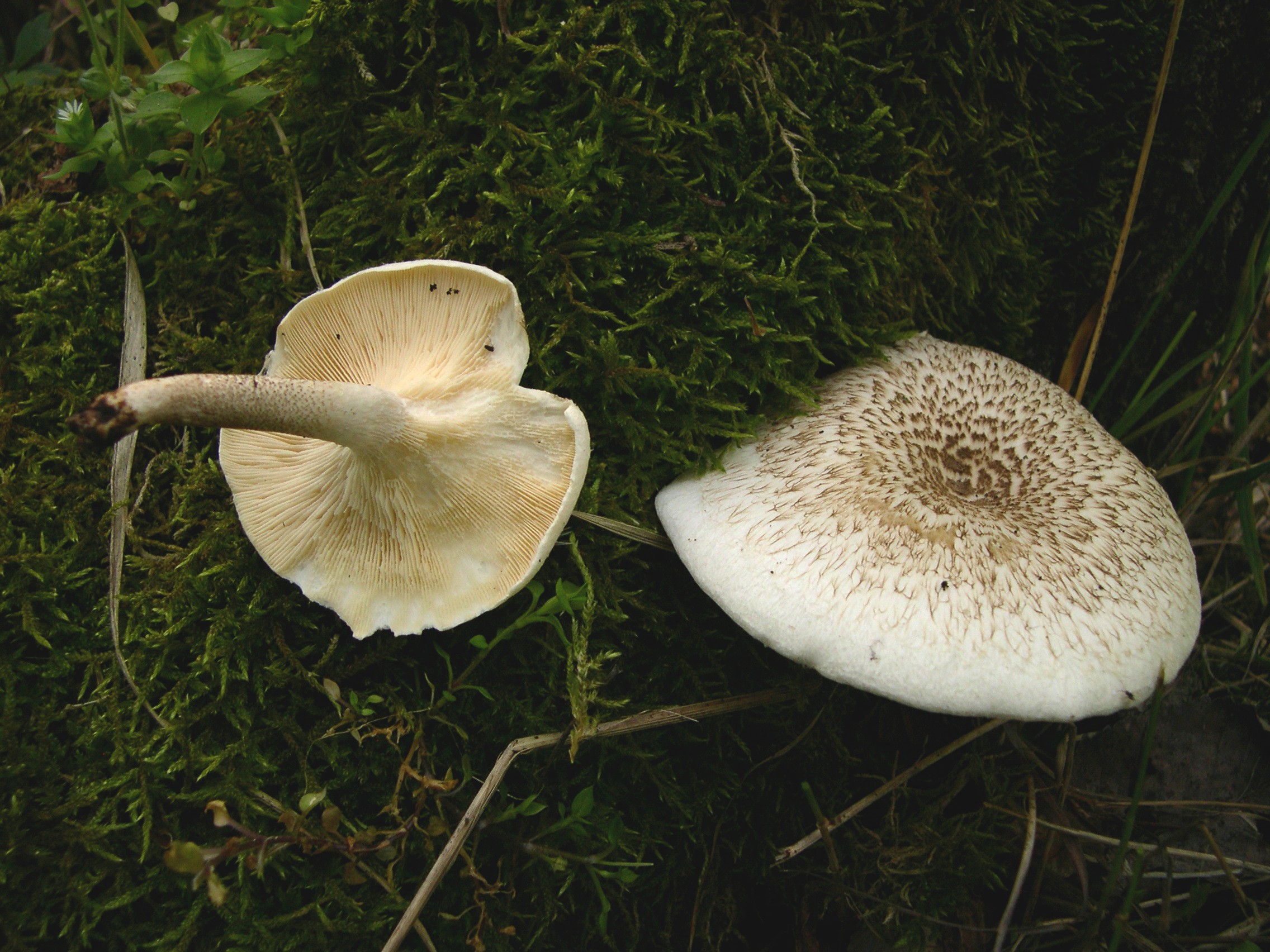
Tiger Sawgill
Lentinus tigrinus
Photo: Wikimedia Commons (CC) via https://en.wikipedia.org/wiki/Lentinus_tigrinus
Overview
The Tiger Sawgill (Lentinus tigrinus) is a distinctive bracket fungus characterized by its striking tiger-like striped pattern of alternating light and dark bands across its fan-shaped fruiting body. This saprotrophic species typically measures 5-15 centimeters across, with a tough, leathery texture and prominent gill-like pores on the underside that give it its common name. The Tiger Sawgill inhabits temperate and subtropical forests across Southeast Asia, particularly in Malaysia, Thailand, and southern China, where it grows on decaying hardwood logs and stumps in primary and secondary forest ecosystems.
As a Critically Endangered (CR) species, Lentinus tigrinus faces severe population pressures from rapid deforestation and habitat fragmentation throughout its native range. The fungus plays a crucial ecological role as a primary decomposer, breaking down woody debris and recycling nutrients back into forest ecosystems. Its specialized habitat requirements make it particularly vulnerable to logging activities and forest conversion for agriculture and development.
Recent mycological surveys have documented the species from fewer than ten locations across its historical range, with most populations restricted to protected forest reserves. Encouragingly, several specimens have been successfully maintained in culture collections, and conservation mycologists are developing protocols for habitat restoration that could support natural population recovery. The species' distinctive appearance makes it relatively easy to identify in the field, facilitating targeted conservation monitoring efforts.
The Tiger Sawgill faces its greatest threat from widespread deforestation across Southeast Asian tropical forests, which eliminates the mature hardwood substrates essential for its reproduction and survival. Selective logging practices that remove large decaying logs and stumps directly destroy the microhabitats where this fungus establishes and spreads. Additionally, forest fragmentation isolates remaining populations, preventing spore dispersal between suitable habitat patches and reducing genetic diversity within surviving colonies.
Habitat
Lentinus tigrinus inhabits mature tropical and subtropical hardwood forests, growing exclusively on decaying logs and stumps of broadleaf tree species in areas with high humidity and stable microclimatic conditions. The species requires well-established forest ecosystems with abundant coarse woody debris and minimal human disturbance.
Other threatened species in Polyporaceae

Threatened in Afghanistan

Frequently asked questions
Why is Tiger Sawgill classified as Critically Endangered?
Where does Tiger Sawgill live?
What are the main threats to Tiger Sawgill?
Get weekly conservation intelligence
One short digest a week of the most striking species and country data we ship, plus breaking conservation news paired with our database where it matters.
Free, no spam. One-click unsubscribe in every email.