
Tawny Pipit
Anthus campestris
Photo: Wikimedia Commons (CC) via https://en.wikipedia.org/wiki/Tawny_pipit
Overview
Tawny Pipit (Anthus campestris)
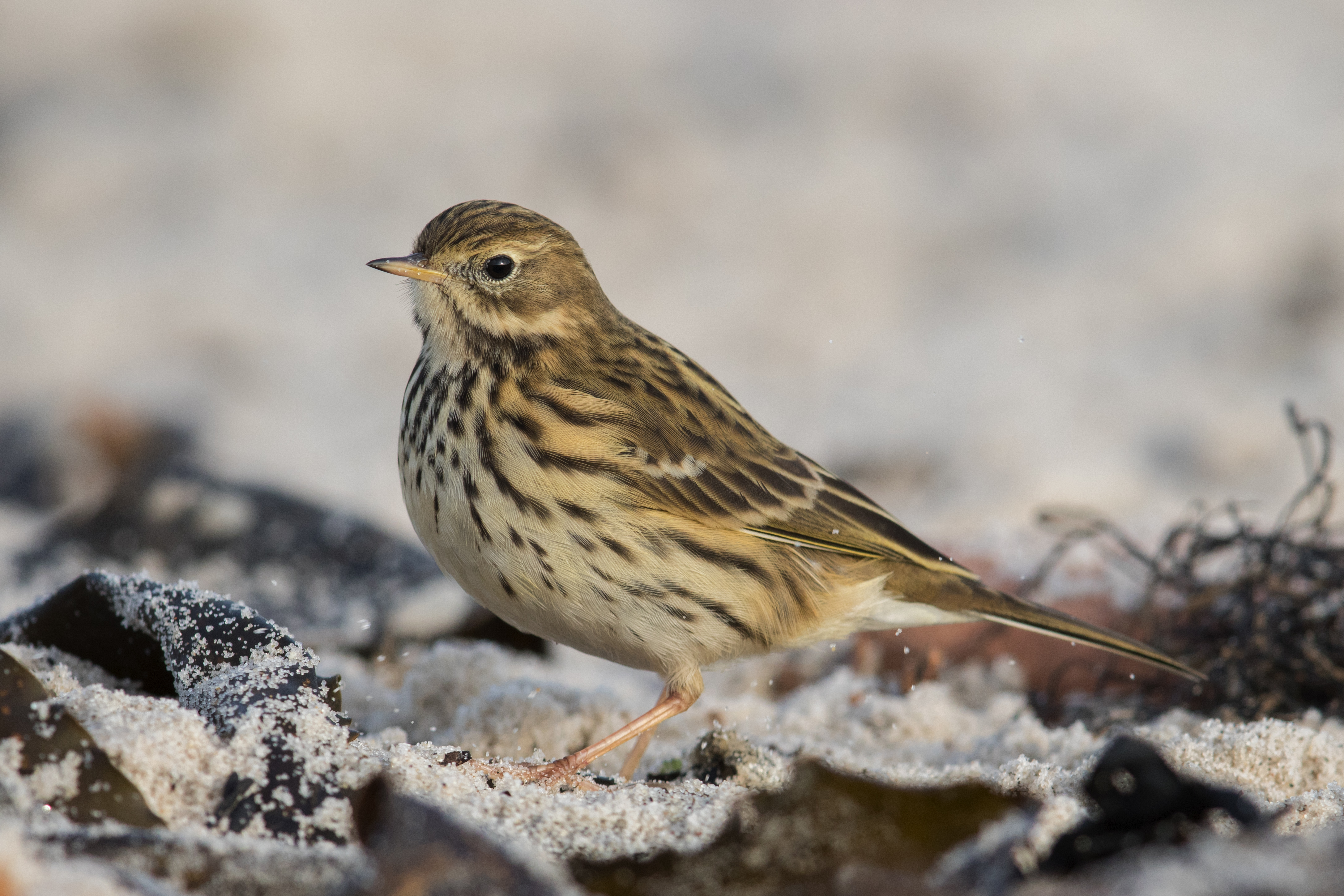
The Tawny Pipit is a medium-sized songbird measuring 15-18 cm in length, characterized by its pale sandy-brown plumage, long legs, and distinctive upright posture. Unlike other pipits, adults show minimal streaking on their underparts and have a relatively long, straight bill. These ground-dwelling birds inhabit open, sparsely vegetated landscapes where they forage for insects, spiders, and small invertebrates.
They play an important ecological role as both predators of invertebrates and prey for larger birds and mammals.
This species breeds across a vast range from Western Europe through Central Asia, with populations extending from Scandinavia to Mongolia and south to North Africa and the Indian subcontinent. Tawny Pipits prefer dry, open habitats including steppes, semi-deserts, sandy heathlands, and extensively grazed grasslands. European populations are migratory, wintering primarily in sub-Saharan Africa.
The species faces significant pressure from habitat loss due to agricultural intensification, particularly the conversion of extensive grazing systems to intensive farming. Urban development and infrastructure projects have fragmented remaining suitable habitats. Climate change may be altering precipitation patterns in both breeding and wintering areas, potentially affecting food availability.
Conservation efforts focus primarily on habitat protection through designation of protected areas and agri-environmental schemes that maintain extensive grazing systems. Some countries have implemented specific management plans for key breeding sites, though coordination across the species' vast range remains challenging.
The current outlook for Tawny Pipits is concerning, with continued habitat degradation across much of their range likely to maintain downward population pressure despite localized conservation successes.
The Tawny Pipit faces severe population declines primarily due to widespread habitat loss from agricultural intensification and urban development across its breeding and wintering ranges. Climate change is altering precipitation patterns and vegetation structure in its preferred open habitats, while increased pesticide use reduces insect prey availability.
Habitat
Other threatened species in Motacillidae


Threatened in Afghanistan

Frequently asked questions
Why is Tawny Pipit classified as Endangered?
Where does Tawny Pipit live?
What are the main threats to Tawny Pipit?
Get weekly conservation intelligence
One short digest a week of the most striking species and country data we ship, plus breaking conservation news paired with our database where it matters.
Free, no spam. One-click unsubscribe in every email.