Species Explorer
Browse and search species from the IUCN Red List and GBIF.
54,666 species
Verdolaga
ENTricerma phyllanthoides
vergeten molspin
VURobertus neglectus
veritöpökiiluri
VUChrysotus laesus

Vermilion Cardinal
VUCardinalis phoeniceus

Vesce des buissons, Tremblarète
VUVicia dumetorum
vesslefibbla
VUHieracium chloromaurum

Vetch midget
VUPhyllonorycter nigrescentella
vezelkopsatijnzwam
ENEntoloma hispidulum
Vielgestaltige Tramete
CRAntrodia heteromorpha
Antrodia heteromorpha faces severe decline primarily due to the destruction and fragmentation of old-growth forests containing the large, dead or dying deciduous trees it requires for survival. The species' extremely limited distribution and specialized habitat requirements make it particularly vulnerable to logging activities and forest management practices that remove dead wood.
Vielgestaltiger Klumpfuß
ENCortinarius multiformium
Vigueta Hembra
ENDiospyros caribaea

Vijfdoornkruiper
CRHarpalus modestus
Harpalus modestus faces severe population declines due to intensive agricultural practices and habitat conversion that have eliminated much of its specialized ground beetle habitat. The species is particularly vulnerable to pesticide applications and soil disturbance from modern farming techniques, while urban development continues to fragment remaining suitable areas.
Vikkehvepsebi
ENNomada villosa
Vildsvine-slørhat
VUCortinarius aprinus

Vingerzeggegrasmineermot
ENElachista occidentalis
Viol-vokshat
CRChromosera viola
Viol-vokshat faces severe population declines due to widespread habitat destruction from agricultural expansion and urban development across its limited range. Climate change is altering the specific environmental conditions this species requires, while invasive plant species are degrading the quality of remaining habitat patches.

Violet Crowncup
VUSarcosphaera coronaria

Violet Crystalwort
CRRiccia huebeneriana
Violet Crystalwort faces severe threats from habitat destruction and degradation of its specialized wetland environments. The species' extremely limited distribution and specific ecological requirements make it highly vulnerable to environmental changes, with remaining populations at risk from agricultural conversion, water pollution, and climate-induced alterations to moisture regimes.
Violetstokket slørhat
VUCortinarius venustus
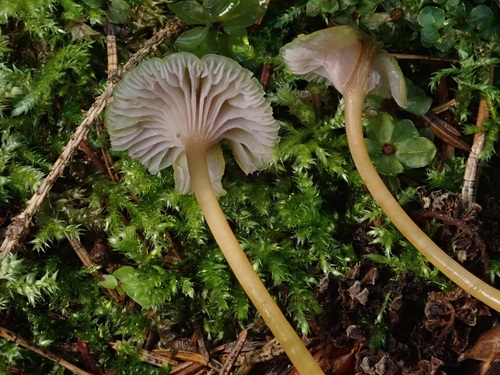
Violettblättriger Nabeling
CRChromosera cyanophylla
Chromosera cyanophylla faces severe population declines due to widespread deforestation and habitat fragmentation across its limited range. The species' specialized ecological requirements make it particularly vulnerable to environmental changes, while its small population size increases extinction risk from stochastic events.
violettbrun skivlav
ENLecanographa amylacea

Violetter Wurzeltöter
ENHypochnella violacea
Violettgerandeter Klumpfuß
ENCortinarius pseudoglaucopus
Violettgrauer Klumpfuß
VUCortinarius caesiocanescens
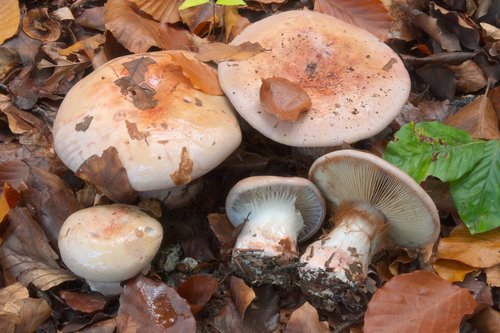
Violettroter Klumpfuß
CRCortinarius rufo-olivaceus
Cortinarius rufo-olivaceus faces severe threats from habitat loss due to deforestation and forest fragmentation, which destroys the specific mycorrhizal relationships this fungus requires with its host trees. Climate change is altering temperature and moisture regimes in its native forest ecosystems, while pollution and soil contamination further degrade the delicate conditions necessary for its survival.

Viper's Bugloss Moth
ENEthmia bipunctella

Viper's Bugloss Small-mason
VUHoplitis anthocopoides
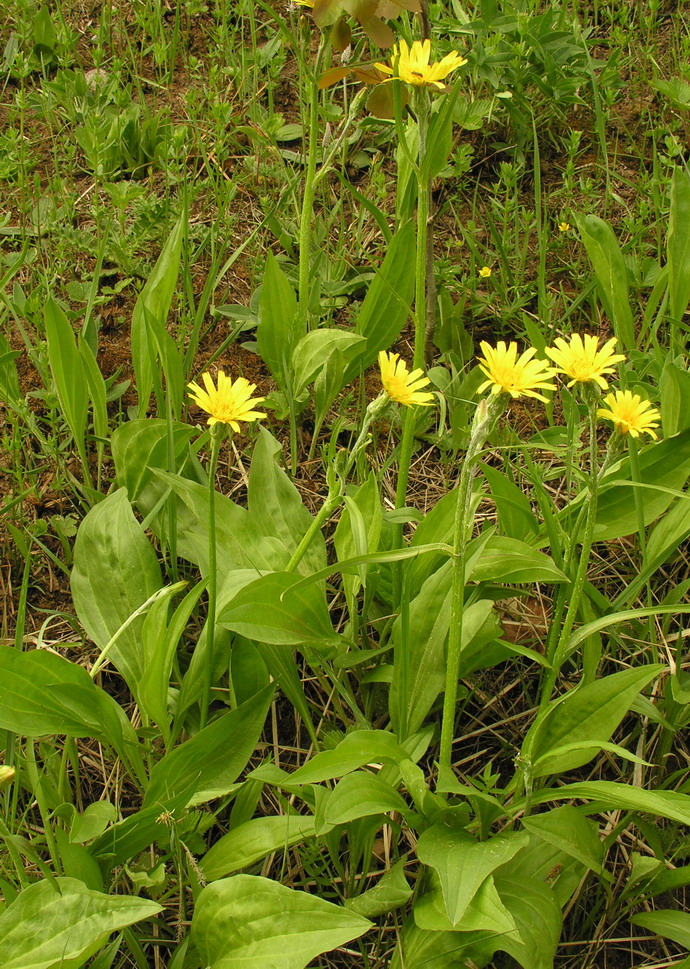
Viper's-grass
ENScorzonera humilis
vit knagglav
CRThalloidima candidum
Thalloidima candidum faces severe threats from habitat loss due to deforestation and urban development, which has fragmented its remaining populations. Climate change is altering the specific microhabitat conditions this lichen requires, while air pollution from industrial activities is degrading the air quality essential for its survival.
vitbandad lundstjärnblommal
ENCaryocolum cassella

vitfläckig gråvivel
VUBrachyderes lusitanicus
vithornad barkskinnbagge
ENAradus signaticornis
Vitreous Scallop
VUDelectopecten vitreus

vitribbat strandfly
VUConisania leineri
vitsprötad skogspuckeldansfluga
VULeptodromiella crassiseta
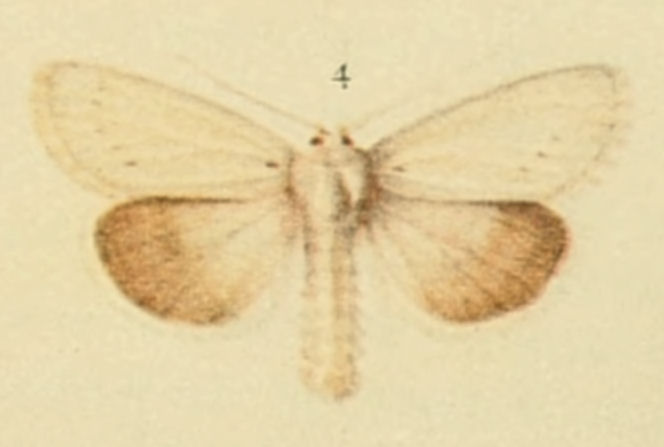
vitt stråfly
ENPhotedes morrisii
vitt vaxskinn
VUPhlebia subulata
Vizcaína
VUCurimata mivartii
vlierhaarmuts
VUOrthotrichum consimile
Volga shad
ENAlosa volgensis

Vomerina
VUPhocoena phocoena
Vortet skållav
VUMelanohalea exasperata

Vraie Lepture noire
CRLeptura aethiops
Leptura aethiops faces severe population declines due to widespread habitat loss from deforestation and forest fragmentation across its European range. The species' dependence on mature deciduous and mixed forests with specific deadwood requirements makes it particularly vulnerable to intensive forest management practices and climate change impacts on forest ecosystems.
Vrydaghs rookvliegje
VUMicrosania vrydaghi

Wall Goosefoot
CRChenopodiastrum murale
Wall Goosefoot faces severe population declines due to widespread habitat destruction from urban development and agricultural intensification across its range. The species' dependence on disturbed soils and waste ground makes it particularly vulnerable to changes in land management practices and the increasing use of herbicides in urban and agricultural areas.

Wallum Froglet
VUCrinia tinnula

Wallum Rocketfrog
VULitoria freycineti
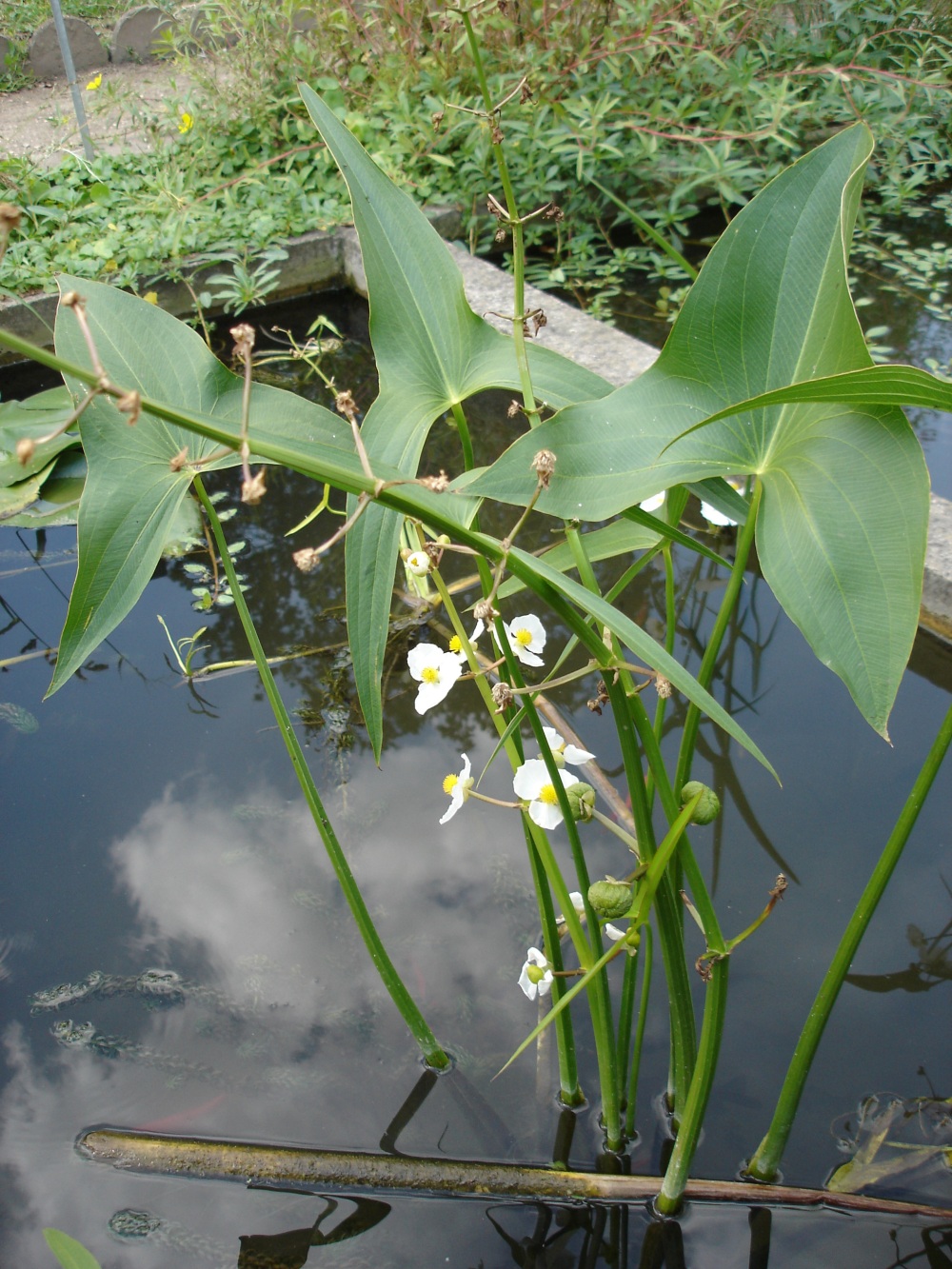
Wapato
CRSagittaria latifolia
Wapato faces severe threats from wetland habitat destruction and degradation due to agricultural conversion, urban development, and water management practices that alter natural hydrology. Pollution from agricultural runoff and invasive species competition further compromise remaining populations, while climate change threatens to disrupt the specific water level conditions this species requires for reproduction.
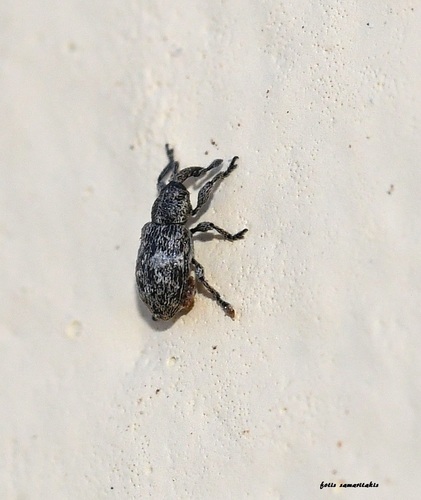
warkruidsnuittorretje
CRSmicronyx jungermanniae
The primary threats to this species include habitat loss through wetland drainage and agricultural intensification, which eliminates the specialized plant communities it depends on. Water management practices and urban development further fragment and degrade remaining suitable habitats. The species' highly specialized ecological requirements and limited dispersal ability make it extremely vulnerable to these environmental changes.
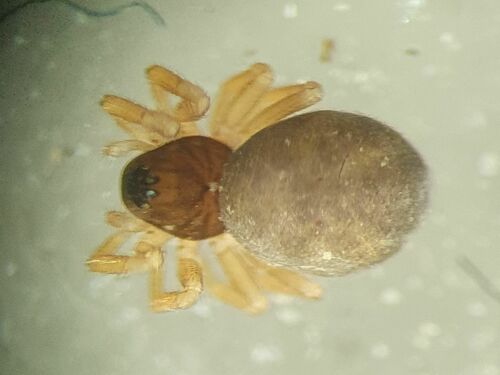
Wärmeliebendes Einzahnspinnchen
CRSilometopus bonessi
The primary threats to Silometopus bonessi include habitat destruction from agricultural practices and urban development, which eliminate the warm, dry grassland environments essential for its survival. Climate change poses additional risks by altering the temperature and moisture conditions of its specialized microhabitats. The species' limited dispersal ability and small population size make it highly vulnerable to local extinctions from these environmental pressures.