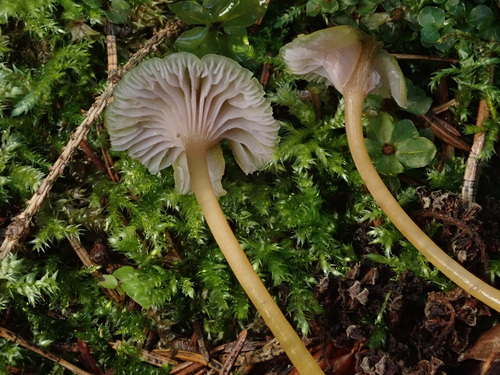
Chromosera cyanophylla
Photo: (c) Иван Матершев, some rights reserved (CC BY-NC), uploaded by Иван Матершев
Overview
Chromosera cyanophylla is a species of fungus in the genus Chromosera. It is the type species of Chromosera. In young specimens, the slimy cap and stem are yellow, and the gills are of a violet or lilac hue. The species can be found growing in small groups on the wood of conifers. It may resemble Gliophorus laetus.
Chromosera cyanophylla faces severe population declines due to widespread deforestation and habitat fragmentation across its limited range. The species' specialized ecological requirements make it particularly vulnerable to environmental changes, while its small population size increases extinction risk from stochastic events.
Habitat
Inhabits temperate and subtropical montane forests with dense canopy cover, typically found at elevations between 800-2000m. The species shows strong preference for old-growth forest areas with high humidity and specific microclimate conditions.
Other threatened species in Hygrophoraceae

Frequently asked questions
Why is Chromosera cyanophylla classified as Critically Endangered?
Where does Chromosera cyanophylla live?
What are the main threats to Chromosera cyanophylla?
Get weekly conservation intelligence
One short digest a week of the most striking species and country data we ship, plus breaking conservation news paired with our database where it matters.
Free, no spam. One-click unsubscribe in every email.