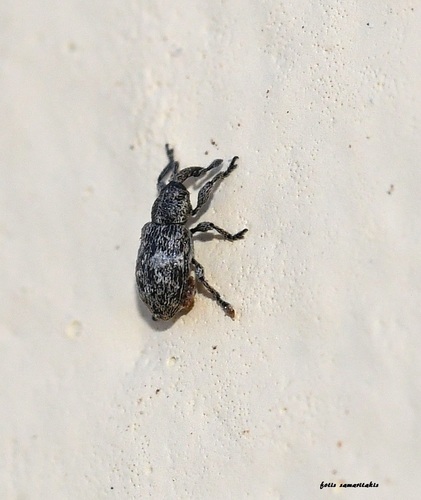
warkruidsnuittorretje
Smicronyx jungermanniae
Photo: (c) fotis-samaritakis, some rights reserved (CC BY-NC), uploaded by fotis-samaritakis
Overview
The warkruidsnuittorretje (Smicronyx jungermanniae) is a small weevil species belonging to the family Curculionidae. This specialized beetle is endemic to the Netherlands, where it has an extremely restricted distribution and is considered one of the country's rarest insects. The species is closely associated with specific host plants in the Apiaceae family, particularly water dropwort species, where both larvae and adults complete their life cycle.
The weevil's larvae develop within the stems and seed heads of these plants, making it entirely dependent on the presence and health of its host vegetation. The species inhabits wetland environments, including marshes, wet meadows, and areas along waterways where its host plants naturally occur. Its critical endangerment status reflects the severe decline and fragmentation of suitable wetland habitats across its range.
Agricultural intensification, drainage of wetlands, water management practices, and urban development have significantly reduced the availability of appropriate habitat. The species' highly specialized ecological requirements and limited dispersal ability make it particularly vulnerable to environmental changes. Conservation efforts focus on habitat protection and restoration of wetland areas, including maintaining appropriate water levels and preserving native plant communities.
Monitoring programs track remaining populations, though the species' small size and cryptic nature make detection challenging. Collaborative efforts between conservation organizations, land managers, and researchers aim to identify and protect critical habitat areas while working to restore degraded wetland ecosystems that could support population recovery.
The primary threats to this species include habitat loss through wetland drainage and agricultural intensification, which eliminates the specialized plant communities it depends on. Water management practices and urban development further fragment and degrade remaining suitable habitats. The species' highly specialized ecological requirements and limited dispersal ability make it extremely vulnerable to these environmental changes.
Habitat
This weevil inhabits wetland environments including marshes, wet meadows, and areas along waterways where its host plants in the Apiaceae family naturally occur. The species requires specific moisture conditions and native plant communities to complete its life cycle.
Other threatened species in Curculionidae
Threatened in Armenia


Frequently asked questions
Why is warkruidsnuittorretje classified as Critically Endangered?
Where does warkruidsnuittorretje live?
What are the main threats to warkruidsnuittorretje?
Get weekly conservation intelligence
One short digest a week of the most striking species and country data we ship, plus breaking conservation news paired with our database where it matters.
Free, no spam. One-click unsubscribe in every email.