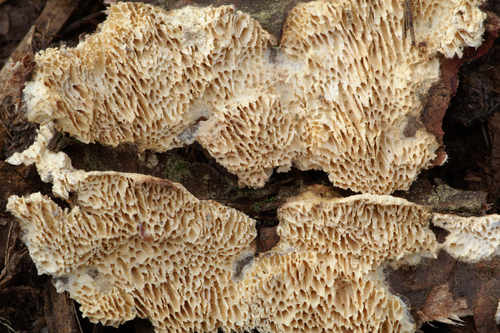
Antrodia heteromorpha
Photo: Photo: (c) John Plischke, niektoré práva vyhradené (CC BY-NC), uploaded by John Plischke
Overview
Antrodia heteromorpha, commonly known as Vielgestaltige Tramete, is a critically endangered (CR) polypore fungus belonging to the family Fomitopsidaceae. This wood-decomposing species produces distinctive bracket-like fruiting bodies that emerge from dead or dying coniferous trees, particularly spruce and fir species. The fungal brackets display a characteristic white to cream-colored pore surface underneath, while the upper surface ranges from pale brown to grayish-brown with a somewhat velvety texture when fresh.
The species exhibits the variable morphology suggested by its German common name, with fruiting bodies ranging from small, shelf-like projections to larger, more robust brackets depending on substrate conditions. Antrodia heteromorpha inhabits old-growth and mature coniferous forests across central Europe, with confirmed populations in Germany, Austria, and parts of the Czech Republic. The fungus plays a crucial ecological role as a brown-rot decomposer, breaking down cellulose and hemicellulose in dead wood while leaving behind the lignin-rich brown residue characteristic of this decay type.
This decomposition process is essential for nutrient cycling in forest ecosystems and creates microhabitats for numerous invertebrate species. The species appears to require specific microclimate conditions found in undisturbed forest environments, including consistent moisture levels and minimal human disturbance. Recent mycological surveys have identified several previously unknown populations in protected forest reserves, offering hope for the species' long-term survival.
Conservation efforts now focus on maintaining old-growth forest corridors and implementing sustainable forestry practices that preserve the dead wood substrates essential for this remarkable fungus.
The primary threat to Antrodia heteromorpha stems from intensive forestry practices that remove dead and dying trees before the fungus can complete its reproductive cycle. Habitat fragmentation has isolated remaining populations in small forest patches, reducing genetic diversity and limiting spore dispersal between suitable substrates. Climate change poses an additional challenge by altering the moisture regimes and temperature patterns that this species requires for successful fruiting and establishment.
Habitat
Antrodia heteromorpha inhabits mature and old-growth coniferous forests, specifically growing on dead or dying spruce and fir trees in cool, humid environments. The species requires stable forest microclimates with consistent moisture levels and minimal disturbance, typically found in elevations between 400-1200 meters across central European mountain regions.
Other threatened species in Fomitopsidaceae
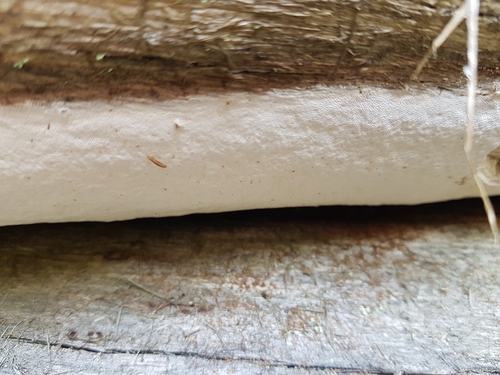

Threatened in Åland Islands


Frequently asked questions
Why is Antrodia heteromorpha classified as Critically Endangered?
Where does Antrodia heteromorpha live?
What are the main threats to Antrodia heteromorpha?
Get weekly conservation intelligence
One short digest a week of the most striking species and country data we ship, plus breaking conservation news paired with our database where it matters.
Free, no spam. One-click unsubscribe in every email.