
Tinkling Froglet
Crinia tinnula
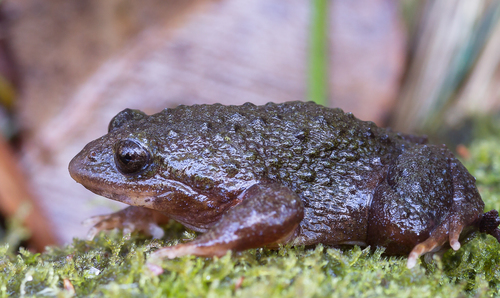
Photo: Wikimedia Commons (CC) via https://en.wikipedia.org/wiki/Wallum_froglet
Overview
Crinia tinnula is a small ground-dwelling frog in the family Myobatrachidae, rarely exceeding 2 cm in body length. Its coloration is typically grey or brown with darker markings, providing camouflage among vegetation in damp, low-lying habitats. Males produce a distinctive high-pitched "tink" call, from which the common name derives, most often heard during and after rain when breeding activity peaks.
Like other myobatrachid frogs, it plays a role in local food webs as both insectivore and prey for birds, reptiles, and larger amphibians, while its larvae contribute to nutrient cycling in the aquatic systems where they develop.
The species is restricted to coastal regions of eastern Australia, where it inhabits swamps, heathland, sedgelands, and other wetland-associated environments, typically breeding in shallow, acidic, still or slow-moving water bodies.
Its Vulnerable status stems from a combination of pressures. Coastal residential and commercial development has fragmented and destroyed breeding habitat, while agricultural and aquaculture expansion has altered surrounding land use. Drainage works and wetland modification directly degrade the still-water habitats the species depends on for reproduction.
Altered fire regimes affect vegetation structure in heathland habitats, and climate change, including shifts in rainfall patterns and increased severity of storms, poses an additional ongoing risk to breeding cycles tied to seasonal moisture.
Conservation attention has focused on habitat protection within existing coastal reserves and consideration of the species in environmental assessments for coastal development projects, though a dedicated recovery plan specific to this species is not comprehensively documented.
Population trend data remains unknown, limiting precise assessment of trajectory. Given the continued, unaddressed nature of the threats identified, the species' outlook remains uncertain without stronger habitat safeguards along the Australian coast.
The Tinkling Froglet's swampy and coastal wetland homes are being lost as land is cleared for housing, businesses, and farming, while drainage projects dry out or alter the wetlands it depends on for breeding. It also faces growing dangers from climate change, including more extreme storms and shifting weather patterns, as well as changes in how often and severely fires occur in its habitat. These threats are ongoing and show signs of intensifying, particularly as development pressure and climate-related impacts continue to grow.
Habitat
The Wallum Froglet inhabits acidic, ephemeral pools and swamps within wallum heathland ecosystems along the eastern Australian coast. These specialized wetlands occur in sandy, nutrient-poor soils dominated by tea-tree and sedge communities, typically found within 50 kilometers of the coastline.
Other threatened species in Myobatrachidae

Threatened in Australia
Frequently asked questions
Why is Tinkling Froglet classified as Vulnerable?
Where does Tinkling Froglet live?
What are the main threats to Tinkling Froglet?
Get weekly conservation intelligence
One short digest a week of the most striking species and country data we ship, plus breaking conservation news paired with our database where it matters.
Free, no spam. One-click unsubscribe in every email.