
Largebrain Root Coral
Lobophyllia hemprichii
Photo: Wikimedia Commons (CC) via https://en.wikipedia.org/wiki/Lobophyllia_hemprichii
Overview
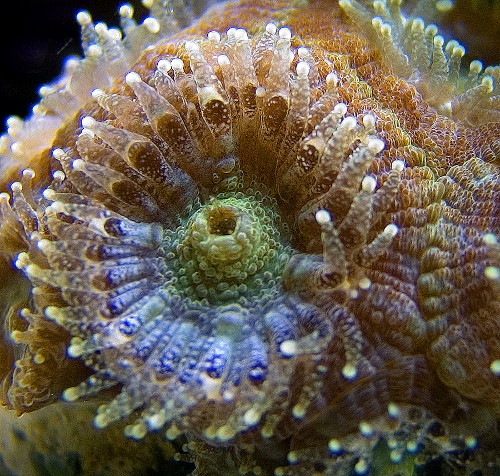
Lobophyllia hemprichii is a large polyp stony coral recognized by its fleshy, meandering valleys and thick, rounded septal walls, which give colonies a brain-like or lobed appearance in shades of green, brown, red, or grey. It is typically found as flabello-meandroid or plocoid colonies and can grow to substantial sizes on reef substrates. Its polyps extend tentacles at night to capture zooplankton, supplementing energy gained from photosynthetic symbiotic algae (zooxanthellae) housed within its tissues.
As a reef-building species, it contributes to structural complexity that provides shelter and habitat for numerous reef-associated fish and invertebrates.
This coral occupies marine neritic waters across the Indo-Pacific, with recorded populations in Australia, Vietnam, Taiwan, China, India, Japan, and Guam, generally inhabiting shallow reef slopes and lagoons.
The species faces a wide array of ongoing pressures. Coastal mining and quarrying degrade reef substrate, while fishing and harvesting activities cause direct physical damage. Recreational activities, including diving and tourism infrastructure, add further stress.
Runoff from agricultural operations and non-timber crop cultivation, combined with domestic wastewater and solid waste pollution, degrades water quality. Disease outbreaks and competition or predation from problematic native species, alongside invasive species, compound these impacts, and broader habitat alteration continues to reduce suitable reef area.
Conservation responses include inclusion in marine protected areas across parts of its range, regulation under international trade frameworks, and ongoing reef monitoring programs. Population trends are documented as decreasing, and the species is currently classified as Endangered, reflecting sustained cumulative pressure from multiple, overlapping anthropogenic threats without clear indication of recovery.
Largebrain Root Coral faces damage from coastal construction and mining activities that disturb reef habitats, along with pollution from sewage, farm runoff, and solid waste that degrades water quality. It is also harmed directly by fishing and harvesting practices, physical disturbance from recreational activities like diving and tourism, and biological pressures including disease and competition from other species. These combined pressures appear to be ongoing and persistent rather than easing, suggesting a stable but continuously damaging level of threat.
Habitat
Conservation measures underway
Other threatened species in LOBOPHYLLIIDAE
Threatened in Australia
Frequently asked questions
Why is Largebrain Root Coral classified as Endangered?
Where does Largebrain Root Coral live?
What are the main threats to Largebrain Root Coral?
Get weekly conservation intelligence
One short digest a week of the most striking species and country data we ship, plus breaking conservation news paired with our database where it matters.
Free, no spam. One-click unsubscribe in every email.