Copper Shark
Carcharhinus brachyurus
Overview
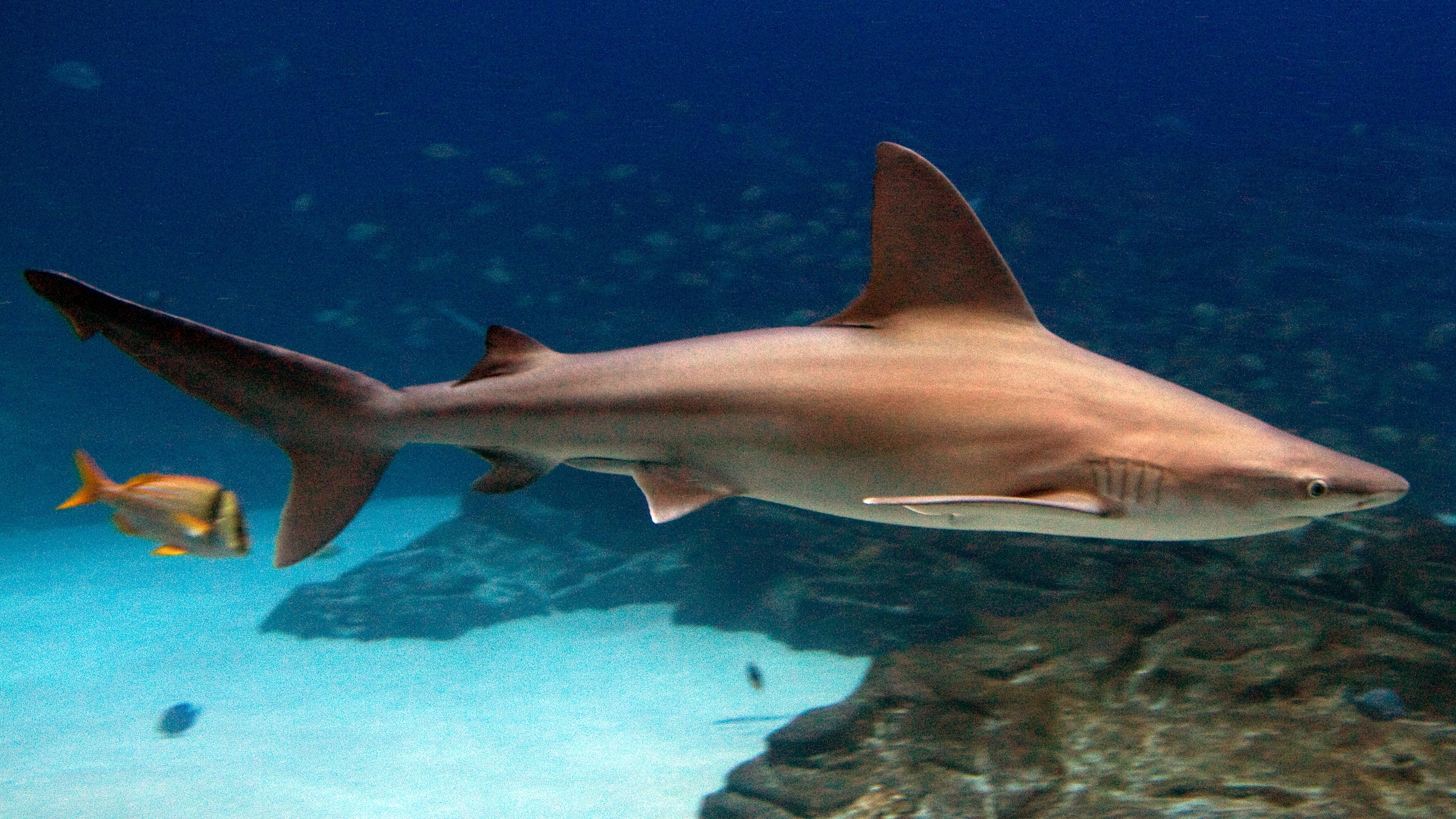
Carcharhinus brachyurus is a large, stout-bodied shark reaching up to 3 meters in length, distinguished by its lack of an interdorsal ridge and a narrow, hook-shaped upper tooth structure suited for grasping fast-moving prey. It is a highly mobile predator, often forming large aggregations to hunt schooling fish such as sardines and anchovies, and occasionally cephalopods. As a mid-to-upper trophic level predator, it plays an important role in regulating prey populations and maintaining balance within coastal marine food webs.
This species has a wide but patchy distribution across temperate and subtropical waters, including the coastlines of South Africa, Australia, New Zealand, Japan, the Americas, and parts of the Mediterranean. It favors coastal and shelf habitats, including rocky reefs, estuaries, bays, and occasionally penetrates brackish or inland wetland systems, particularly as nursery areas for juveniles.
The species is classified as Vulnerable, with populations in decline. The primary threat is targeted and incidental capture in commercial and recreational fisheries, as it is caught for its meat, fins, and liver oil, and is also vulnerable to bycatch in gillnets and longlines. Coastal habitat degradation linked to logging and associated sediment runoff affects nursery grounds in estuarine and wetland areas, reducing juvenile survival.
Conservation measures vary by region and include catch limits, protected marine areas, and some national-level fishing restrictions in countries such as Australia and South Africa. However, enforcement and data collection remain inconsistent across much of its range. Given continued fishing pressure and slow reproductive rates typical of this genus, the population trajectory is expected to remain downward without stronger, coordinated international management.
Copper Sharks are mainly threatened by ongoing commercial and recreational fishing, which catches them both directly and as accidental bycatch in nets and lines. Logging and wood harvesting activities near coastal or river habitats may also degrade the waters they depend on. Both threats are currently classified as ongoing, indicating a stable but persistent level of pressure rather than a clear increase or decrease.
Habitat
Conservation measures underway
Other threatened species in CARCHARHINIDAE


Threatened in Argentina

Frequently asked questions
Why is Copper Shark classified as Vulnerable?
Where does Copper Shark live?
What are the main threats to Copper Shark?
Get weekly conservation intelligence
One short digest a week of the most striking species and country data we ship, plus breaking conservation news paired with our database where it matters.
Free, no spam. One-click unsubscribe in every email.