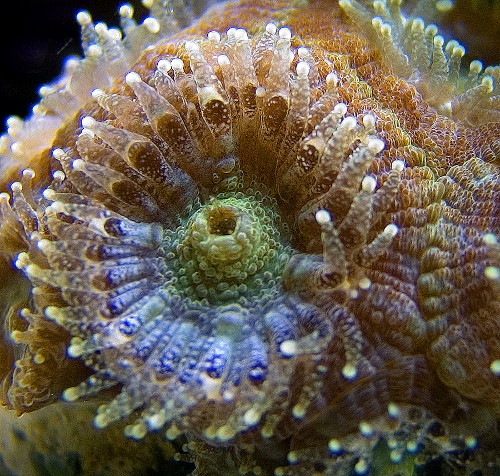
Micromussa lordhowensis
Photo: Wikimedia Commons (CC) via https://en.wikipedia.org/wiki/Micromussa_lordhowensis
Overview
Micromussa lordhowensis is a small polyp stony coral belonging to the family Lobophylliidae, recognized for its densely packed, fleshy polyps that display vivid combinations of green, orange, and red coloration, often with contrasting oral discs. Like other scleractinian corals, it builds calcium carbonate skeletons that contribute to reef structure, providing habitat complexity for fish and invertebrates. It hosts symbiotic zooxanthellae, algae that supply the coral with energy through photosynthesis, and it feeds opportunistically on plankton using its tentacles.
The species occupies shallow marine neritic waters across the western Pacific, with recorded populations in Australia, Japan, China, South Korea, and the Solomon Islands. It typically inhabits reef environments where water clarity and stable temperatures support zooxanthellae activity.
The species is classified as Endangered, with a decreasing population trend. Threats include harvesting for the aquarium trade and recreational reef activities, both of which cause direct physical damage and localized population depletion. Water quality degradation from domestic wastewater, agricultural runoff, and non-timber crop cultivation contributes to sedimentation and nutrient pollution, stressing coral colonies and promoting disease.
Invasive species and native disease agents further compound mortality, while broader habitat alteration linked to coastal development and climate-related shifts reduces suitable reef habitat.
Conservation measures include regulation of coral collection for trade under international agreements, marine protected areas within parts of its range, and reef monitoring programs tracking coral cover and health. Restoration efforts, including coral propagation, are underway in some regions, though implementation varies by country.
Given continuing pollution, habitat degradation, and extraction pressures, the species' outlook remains concerning, with no clear evidence of population stabilization across its range.
This coral species faces ongoing pressure from fishing and harvesting activities, damage from recreational activities like diving and boating, and pollution from sewage, agricultural runoff, and farming operations near coastal areas. It's also threatened by invasive species, disease, harmful native species interactions, and broader changes to its reef habitat caused by climate-related shifts. These threats are currently ongoing and show no signs of easing.
Habitat
Conservation measures underway
Other threatened species in LOBOPHYLLIIDAE

Threatened in Australia
Frequently asked questions
Why is Micromussa lordhowensis classified as Endangered?
Where does Micromussa lordhowensis live?
What are the main threats to Micromussa lordhowensis?
Get weekly conservation intelligence
One short digest a week of the most striking species and country data we ship, plus breaking conservation news paired with our database where it matters.
Free, no spam. One-click unsubscribe in every email.