Lobophyllia dentata
Overview
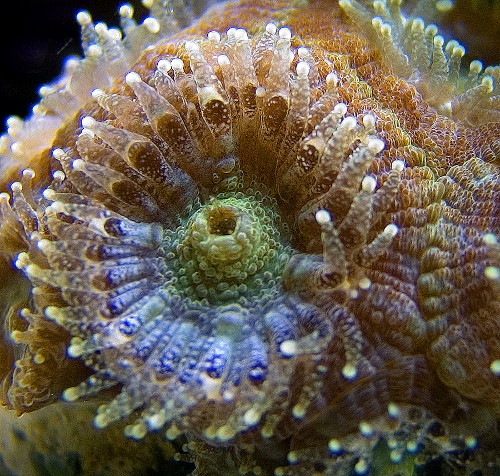
Lobophyllia dentata is a large polyp stony coral characterized by fleshy, meandering polyps and pronounced tooth-like septal projections along the corallite walls, a feature reflected in the species name. Colonies typically form flat to dome-shaped structures with an expanded, brain-like or valley pattern surface, displaying muted greens, browns, or reddish tones. Like other scleractinian corals, it hosts photosynthetic zooxanthellae within its tissues, relying on this symbiosis for the majority of its energy needs while also capturing zooplankton at night with extended tentacles.
As a reef-building species, it contributes to the structural complexity of coral reef ecosystems, providing habitat and shelter for numerous marine invertebrates and fish.
The species occupies marine neritic waters across parts of the Indo-Pacific, with recorded populations in Australia, Palau, Malaysia, and the Marshall Islands, generally inhabiting shallow reef environments.
Its large fleshy polyps make it a target for the aquarium trade, contributing to collection pressure through fishing and harvesting activities, compounded by damage from recreational reef use such as diving and anchoring. Coral disease outbreaks and pressure from problematic native species, including predatory invertebrates, add further strain. Land-based pollution—from domestic wastewater, agricultural runoff, and non-timber crop cultivation—degrades water quality, while habitat alteration and unspecified pollution sources continue to erode reef condition.
Conservation efforts include inclusion in international trade monitoring frameworks and marine protected areas within parts of its range, alongside broader reef management and water quality initiatives in affected countries. Population-specific recovery programs targeting this species specifically remain limited.
Given ongoing habitat degradation, collection pressure, and disease, combined with a documented decreasing population trend, the species' near-term outlook remains concerning, with continued decline expected absent stronger reef protection and pollution control measures.
Lobophyllia dentata, a type of reef-building coral, faces ongoing harm from being collected or harvested (including for the aquarium trade), damage from divers and other recreational activities, and pollution from sewage, farm runoff, and crop-growing near coastlines. It is also threatened by disease, competition or damage from other invasive or native species, and broader changes to its reef habitat, such as those caused by climate-related shifts. These combined pressures appear to be ongoing and persistent rather than easing, suggesting the threats are stable to intensifying rather than decreasing.
Habitat
Conservation measures underway
Other threatened species in LOBOPHYLLIIDAE

Threatened in Australia
Frequently asked questions
Why is Lobophyllia dentata classified as Endangered?
Where does Lobophyllia dentata live?
What are the main threats to Lobophyllia dentata?
Get weekly conservation intelligence
One short digest a week of the most striking species and country data we ship, plus breaking conservation news paired with our database where it matters.
Free, no spam. One-click unsubscribe in every email.