Lobed Cactus Coral
Lobophyllia serrata
Overview
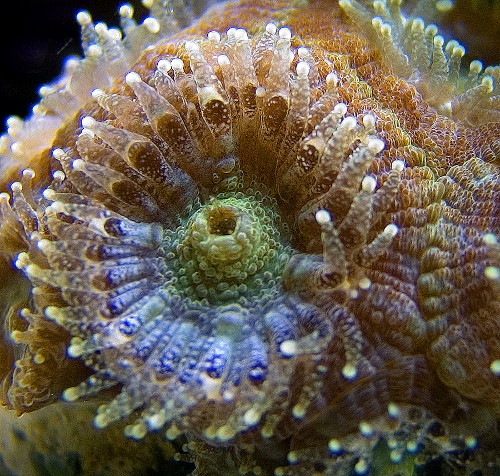
Lobophyllia serrata is a large, reef-building stony coral known for its fleshy, lobed colony structure, formed by rounded or flattened corallites with thick, often brightly colored tissue in shades of green, brown, or red. It is a hermatypic (reef-building) coral, hosting symbiotic algae (zooxanthellae) that supply it with energy through photosynthesis, while its polyps extend at night to capture plankton. As a component of coral reef architecture, it contributes structural complexity that supports fish and invertebrate communities and participates in reef calcification processes.
The species occurs in the Indo-Pacific region, with confirmed populations in Australia, Papua New Guinea, and the Solomon Islands. It inhabits marine neritic zones, typically on reef slopes and in lagoons at moderate depths.
Lobophyllia serrata faces numerous ongoing pressures. It is targeted by the aquarium trade and harvested for other purposes, and is vulnerable to physical damage from recreational activities such as diving and boating. Land-based pollution—including domestic and urban wastewater, agricultural runoff, and solid waste—degrades water quality on reefs where it lives.
It is also affected by disease, competition or predation from problematic native species, and biological invasions. Broader habitat alteration and shifting environmental conditions, linked to climate-driven changes, compound these localized stressors.
Conservation efforts include its listing under CITES Appendix II, which regulates international trade, alongside marine protected areas established across parts of its range that limit extractive activities and reef disturbance. Water quality management initiatives in some coastal areas aim to reduce runoff impacts.
The population trend is decreasing, and the species is currently classified as Endangered. Given the combination of persistent local threats and larger-scale reef degradation, its long-term outlook remains concerning without sustained mitigation.
Lobed Cactus Coral faces ongoing pressure from pollution running off farms and cities, along with trash and wastewater entering its habitat, all of which degrade water quality. It's also harmed by people fishing and collecting it, damage from recreational activities like diving or boating, disease outbreaks, competition from invasive species, and broader changes to its reef environment caused by climate-related shifts. These threats are all currently active and show no signs of stopping, suggesting a stable but persistent level of risk to the species.
Habitat
Conservation measures underway
Other threatened species in LOBOPHYLLIIDAE

Threatened in Australia
Frequently asked questions
Why is Lobed Cactus Coral classified as Endangered?
Where does Lobed Cactus Coral live?
What are the main threats to Lobed Cactus Coral?
Get weekly conservation intelligence
One short digest a week of the most striking species and country data we ship, plus breaking conservation news paired with our database where it matters.
Free, no spam. One-click unsubscribe in every email.