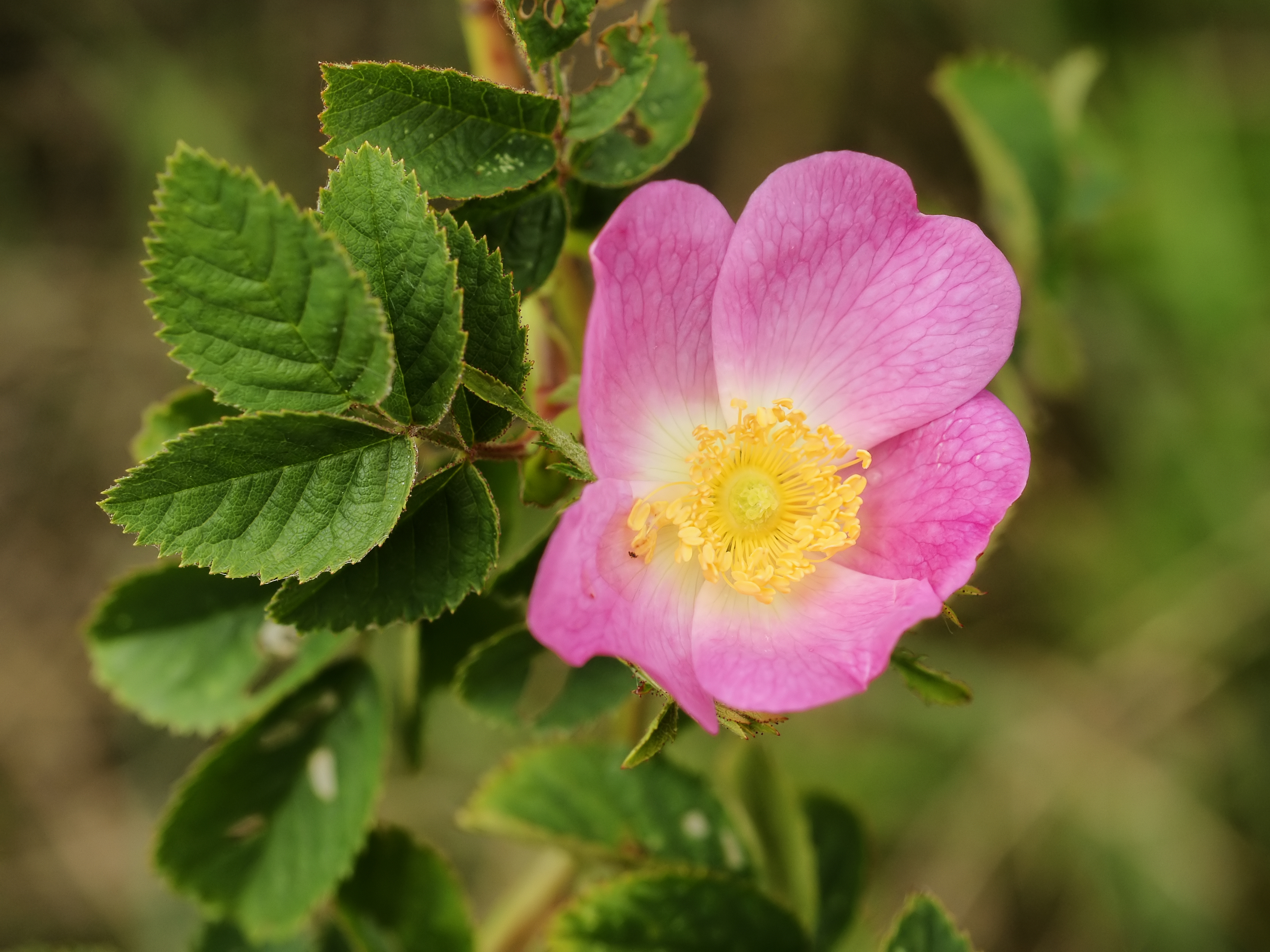
Harsh Downy-rose
Rosa tomentosa
Photo: Wikimedia Commons (CC) via https://en.wikipedia.org/wiki/Rosa_tomentosa
Overview
Rosa tomentosa, otherwise known as the harsh downy-rose, is a species of wild rose. It is a shrub growing to about 3 metres (10 ft). It is found in Asia Minor, the Caucasus, and much of Europe: the British Isles, France, Central Europe, northern Spain, Italy, and the Balkans . On the British Isles it can be found in hedgerows and woodland margins, and it typically flowers between June and July. Further south, in Bulgaria, it flowers in May.
Rosa tomentosa faces severe population declines due to habitat loss from agricultural expansion and urban development, particularly affecting its specialized shrubland and woodland edge habitats. Hybridization with other Rosa species and invasive plant competition further threaten the genetic integrity and survival of remaining populations. Conservation status may vary by region or assessment authority.
Habitat
Occupies woodland edges, scrublands, hedgerows, and rocky slopes typically between 200-1500m elevation, preferring calcareous soils and semi-open habitats with moderate moisture. Found in temperate deciduous and mixed forests margins, often in areas with some human disturbance but not intensive agriculture.
Other threatened species in Rosaceae


Threatened in Åland Islands



Frequently asked questions
Why is Harsh Downy-rose classified as Critically Endangered?
Where does Harsh Downy-rose live?
What are the main threats to Harsh Downy-rose?
Get weekly conservation intelligence
One short digest a week of the most striking species and country data we ship, plus breaking conservation news paired with our database where it matters.
Free, no spam. One-click unsubscribe in every email.