
Ship Sturgeon
Acipenser nudiventris
Photo: Wikimedia Commons (CC) via https://en.wikipedia.org/wiki/Bastard_sturgeon
Overview
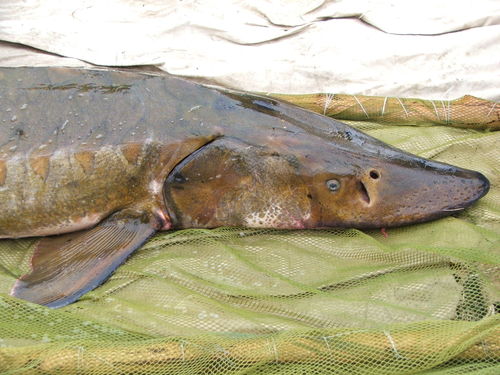
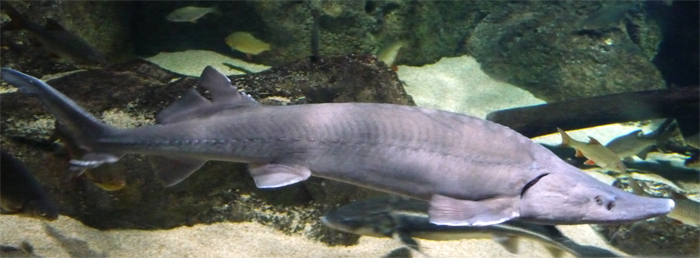
Acipenser nudiventris, commonly known as the fringebarbel sturgeon or ship sturgeon, is a large anadromous fish species native to the Caspian, Black, and Azov Sea basins. This ancient fish species can reach lengths of up to 2 meters and weights exceeding 80 kilograms, with a distinctive elongated body and cartilaginous skeleton characteristic of sturgeons. The species is highly valued for its roe, which is processed into caviar, and its meat.
Historically, fringebarbel sturgeon populations were abundant throughout their range, supporting significant commercial fisheries. However, the species has experienced catastrophic population declines over the past century due to multiple anthropogenic pressures. Overfishing for caviar production has been the primary driver of decline, with illegal fishing continuing to pose a major threat.
Dam construction and river regulation have severely impacted spawning migrations and access to traditional breeding grounds. Habitat degradation from pollution, particularly in the Caspian Sea region, has further compromised population recovery. The species' slow maturation rate, with individuals not reaching sexual maturity until 10-16 years of age, makes populations particularly vulnerable to overexploitation.
Conservation efforts include fishing moratoriums, artificial reproduction programs, and habitat restoration initiatives in several range countries. International cooperation through CITES regulations has attempted to control trade, though enforcement remains challenging. Despite these measures, wild populations continue to decline, making this species one of the most critically endangered sturgeons globally.
The fringebarbel sturgeon faces severe threats from overfishing driven by the valuable caviar trade, with illegal fishing continuing despite regulations. Dam construction has blocked traditional spawning routes and degraded river habitats essential for reproduction. Pollution in the Caspian Sea basin has further compromised the species' marine habitat and food sources.
Habitat
Fringebarbel sturgeon inhabit coastal marine waters of the Caspian, Black, and Azov Seas, migrating into rivers for spawning. They prefer deep waters with sandy or muddy bottoms and require access to free-flowing rivers with gravel beds for successful reproduction.
Conservation measures underway
Other threatened species in ACIPENSERIDAE


Threatened in Austria
Frequently asked questions
Why is Ship Sturgeon classified as Critically Endangered?
Where does Ship Sturgeon live?
What are the main threats to Ship Sturgeon?
Get weekly conservation intelligence
One short digest a week of the most striking species and country data we ship, plus breaking conservation news paired with our database where it matters.
Free, no spam. One-click unsubscribe in every email.