
Russian Sturgeon
Acipenser gueldenstaedtii
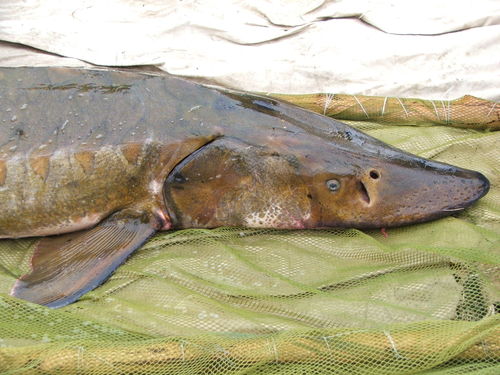
Photo: Wikimedia Commons (CC) via https://en.wikipedia.org/wiki/Russian_sturgeon
Overview
Acipenser gueldenstaedtii, commonly known as the Russian sturgeon, is a large anadromous fish species native to the Caspian, Black, and Azov Sea basins. This ancient fish can reach lengths of up to 2 meters and weights exceeding 100 kilograms, with a distinctive elongated body covered in bony plates called scutes. Russian sturgeon are highly valued for their roe, which produces Ossetra caviar, one of the most prized types of caviar in international markets.
The species exhibits complex life cycles, spending most of their adult lives in marine or brackish waters before migrating to freshwater rivers to spawn. Sexual maturity occurs late, with females typically not reproducing until 10-16 years of age. The primary threats to Russian sturgeon include overfishing driven by the lucrative caviar trade, habitat degradation, and dam construction that blocks spawning migrations.
Illegal fishing and poaching remain significant problems despite regulatory efforts. Water pollution and climate change further compound these pressures. Conservation efforts include artificial breeding programs, restocking initiatives, and international trade regulations under CITES.
Several countries have established captive breeding facilities to support population recovery, while fishing moratoriums have been implemented in some regions. However, enforcement challenges and continued illegal harvesting hamper recovery efforts. The species' slow reproductive rate makes population recovery particularly difficult, requiring sustained long-term conservation commitment across its range.
Russian sturgeon face severe pressure from overfishing driven by the valuable caviar trade, with illegal poaching remaining a persistent problem despite regulations. Dam construction blocks critical spawning migrations, while habitat degradation and pollution further reduce suitable breeding areas.
Habitat
Russian sturgeon inhabit the Caspian, Black, and Azov Sea basins, spending most of their lives in marine and brackish waters. They migrate to freshwater rivers for spawning, requiring access to clean gravel beds in flowing water.
Conservation measures underway
Other threatened species in ACIPENSERIDAE


Threatened in Argentina

Frequently asked questions
Why is Russian Sturgeon classified as Critically Endangered?
Where does Russian Sturgeon live?
What are the main threats to Russian Sturgeon?
Get weekly conservation intelligence
One short digest a week of the most striking species and country data we ship, plus breaking conservation news paired with our database where it matters.
Free, no spam. One-click unsubscribe in every email.