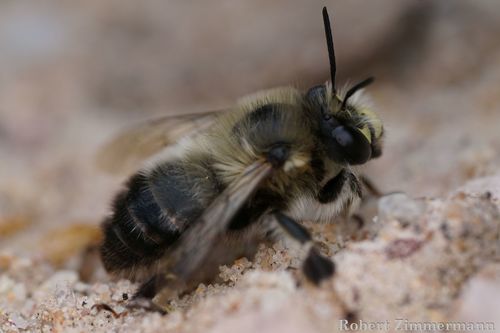
Anthophora aestivalis
Photo: iNaturalist: (c) Robert Zimmermann, some rights reserved (CC BY-NC-SA), uploaded by Robert Zimmermann
Overview
Anthophora aestivalis, commonly known as Anthophore estivale, is a robust solitary bee species belonging to the family Apidae. This medium-sized bee displays the characteristic features of the Anthophora genus, with a densely hairy body ranging from dark brown to black coloration, and females possessing specialized pollen-collecting structures called scopae on their hind legs. Males are typically smaller and more slender than females, with longer antennae and distinctive pale facial markings.
The species exhibits ground-nesting behavior, with females excavating burrows in sandy or clay soils where they provision individual cells with pollen and nectar for their developing larvae. Active during late spring and early summer months, these bees demonstrate strong fidelity to specific flowering plants, making them important pollinators for native wildflower communities. Anthophora aestivalis is currently classified as Critically Endangered (CR) by the IUCN, reflecting severe population declines and restricted distribution.
The species appears to have historically occurred across limited regions of Europe, though precise range boundaries remain poorly documented. Despite its precarious conservation status, recent targeted surveys have successfully relocated small populations in protected areas, and specialized habitat management programs are showing promise for supporting remaining colonies. Conservation efforts focusing on maintaining suitable nesting sites and preserving native flowering plant communities offer hope for this rare pollinator's recovery.
Anthophora aestivalis faces severe threats from agricultural intensification that has eliminated the diverse wildflower meadows essential for its specialized foraging requirements. Urban development and infrastructure projects have destroyed critical nesting habitats, particularly the specific soil types required for successful burrow construction. The species' narrow flight period and apparent dependence on particular flowering plants make it extremely vulnerable to phenological mismatches caused by climate change, where warming temperatures disrupt the synchronization between bee emergence and peak flower availability.
Habitat
This species inhabits open grasslands, meadows, and scrubland areas with sandy or well-drained clay soils suitable for excavating nesting burrows. The habitat must support diverse native flowering plants that bloom during the bee's active period in late spring and early summer.
Other threatened species in Apidae
Threatened in Albania

Frequently asked questions
Why is Anthophora aestivalis classified as Critically Endangered?
Where does Anthophora aestivalis live?
What are the main threats to Anthophora aestivalis?
Get weekly conservation intelligence
One short digest a week of the most striking species and country data we ship, plus breaking conservation news paired with our database where it matters.
Free, no spam. One-click unsubscribe in every email.