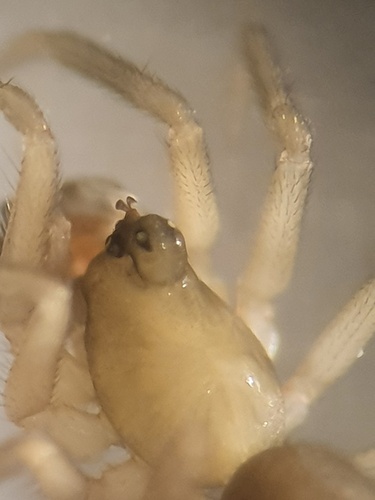
Walckenaeria alticeps
Photo: iNaturalist: (c) Matt, some rights reserved (CC BY-NC), uploaded by Matt
Overview
Walckenaeria alticeps, commonly known as agnhodeedderkopp, is a critically endangered sheet weaver spider belonging to the family Linyphiidae. This diminutive arachnid measures approximately 2-3 millimeters in body length, displaying the characteristic dark brown to black coloration typical of its genus, with males featuring a distinctive elevated cephalic region that gives the species its name 'alticeps' meaning 'high head'. The spider constructs delicate horizontal sheet webs close to the ground, often incorporating small dome-like structures above the main catching surface.
Endemic to specific montane regions of northern Europe, this species inhabits moss-rich microhabitats within old-growth coniferous forests, particularly favoring areas with stable moisture levels and minimal disturbance. The spider's preference for ancient forest floor communities makes it extremely sensitive to habitat modifications and climate fluctuations. As a specialist predator of small springtails and other soil-dwelling arthropods, W.
alticeps plays a crucial role in forest floor ecosystem dynamics. The species is classified as Critically Endangered by the IUCN, reflecting its extremely restricted range and declining habitat quality. Recent conservation efforts have focused on protecting remaining old-growth forest patches within its known range, and several nature reserves now specifically manage habitat conditions to benefit this and other rare forest floor invertebrates.
Encouraging signs include the species' apparent ability to persist in well-managed forest reserves where traditional logging practices have been modified to maintain critical microhabitat conditions.
The primary threat to Walckenaeria alticeps stems from the conversion and fragmentation of old-growth coniferous forests, which eliminates the stable moss layer communities essential for the species' survival. Climate change poses an additional significant risk, as rising temperatures and altered precipitation patterns disrupt the precise moisture conditions required for both the spider and its springtail prey. Intensive forestry practices, including clear-cutting and soil compaction from heavy machinery, destroy the delicate forest floor structure that supports the species' web-building behavior and hunting success.
Habitat
Walckenaeria alticeps inhabits the moss layer of undisturbed old-growth coniferous forests, typically at elevations between 400-800 meters. The species requires stable microclimatic conditions with consistent moisture levels and dense bryophyte coverage that supports abundant springtail populations.
Other threatened species in Linyphiidae
Threatened in Åland Islands


Frequently asked questions
Why is Walckenaeria alticeps classified as Critically Endangered?
Where does Walckenaeria alticeps live?
What are the main threats to Walckenaeria alticeps?
Get weekly conservation intelligence
One short digest a week of the most striking species and country data we ship, plus breaking conservation news paired with our database where it matters.
Free, no spam. One-click unsubscribe in every email.