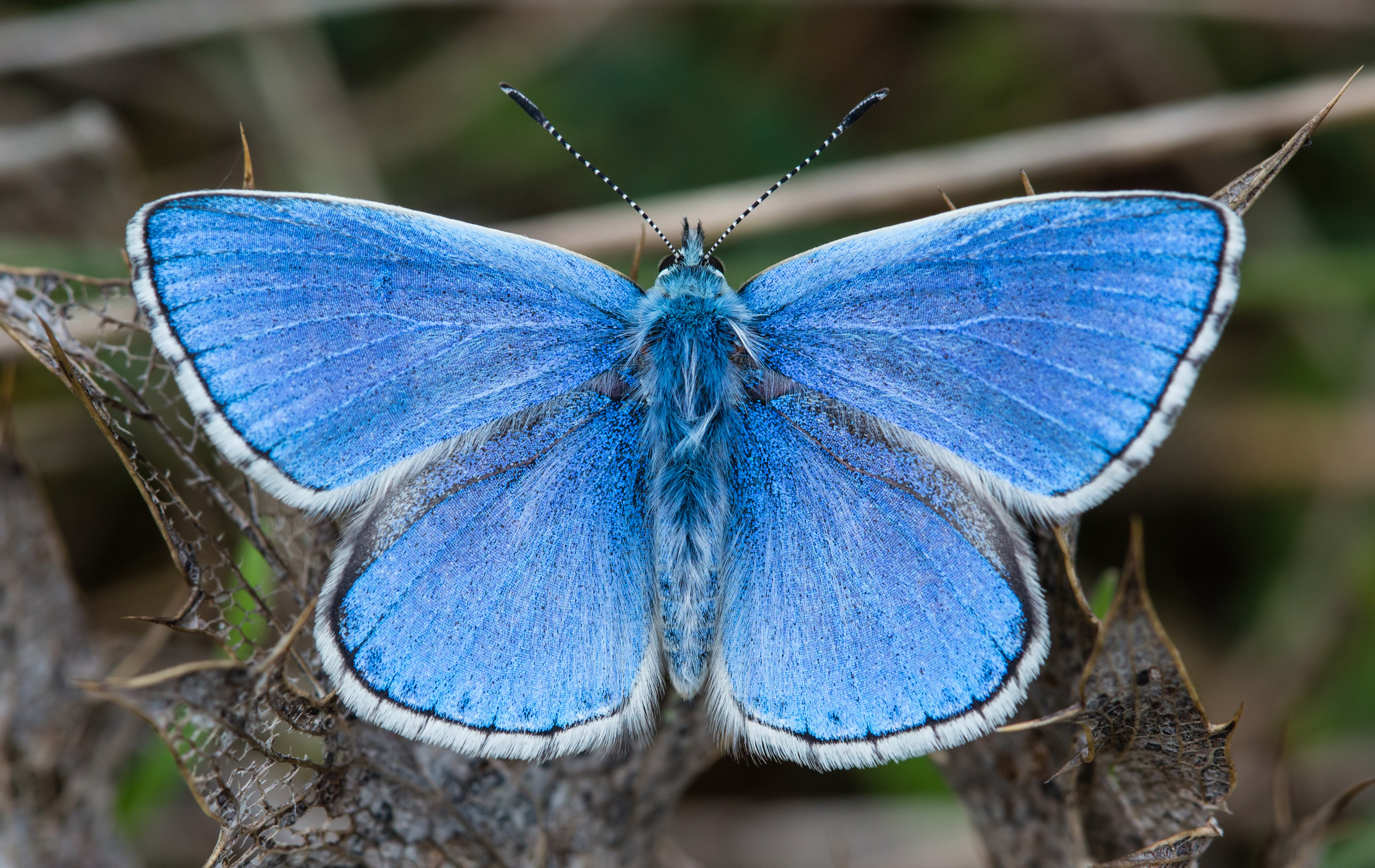
Lysandra bellargus
Local name: Chapman´s Blue
Photo: Wikimedia Commons (CC) via https://en.wikipedia.org/wiki/Adonis_blue
Overview
The Adonis Blue (Lysandra bellargus) is a striking butterfly species distinguished by the males' brilliant azure-blue wings with narrow black borders and white fringes, while females display brown wings with orange spots along the hindwing margins. This small butterfly, with a wingspan of 30-36mm, belongs to the Lycaenidae family and is classified as Vulnerable (VU) by the IUCN. The species inhabits chalk downlands, limestone grasslands, and coastal cliffs across southern and central Europe, with populations extending from southern England through France, Germany, and into the Mediterranean region.
Adonis Blues demonstrate a fascinating relationship with their environment, requiring short, flower-rich grassland maintained by grazing where their larvae feed exclusively on horseshoe vetch (Hippocrepis comosa). The species exhibits a complex life cycle with typically two broods per year in favorable conditions, flying from May to June and again from August to September. Adults are often observed basking on bare ground or feeding on various wildflowers including marjoram, thyme, and bird's-foot trefoil.
The butterfly's survival depends critically on the presence of specific ant species, particularly Lasius niger, which tend the larvae in exchange for honeydew secretions. Despite facing significant population declines across much of its range, successful conservation efforts in southern England have demonstrated that targeted habitat management, including appropriate grazing regimes and scrubland clearance, can effectively restore Adonis Blue populations. Several nature reserves now support thriving colonies through collaborative conservation programs between wildlife organizations and local land managers.
The Adonis Blue faces severe population declines primarily due to the abandonment of traditional grazing practices on chalk downlands, leading to scrubland encroachment that eliminates the short grassland habitat essential for horseshoe vetch growth. Agricultural intensification has resulted in widespread loss of species-rich calcareous grasslands, while remaining fragments often become isolated, preventing genetic exchange between populations. Climate change poses additional challenges by altering the delicate timing relationships between the butterfly, its host plant, and mutualistic ant species that are crucial for larval survival.
Habitat
Adonis Blues inhabit short, species-rich calcareous grasslands on chalk downs, limestone hills, and coastal clifftops where horseshoe vetch grows abundantly. These habitats require active management through grazing or mowing to maintain the open, flower-rich conditions with patches of bare ground essential for the species' survival.
Other threatened species in Lycaenidae


Threatened in Albania

Frequently asked questions
Why is Chapman´s Blue classified as Vulnerable?
Where does Chapman´s Blue live?
What are the main threats to Chapman´s Blue?
Get weekly conservation intelligence
One short digest a week of the most striking species and country data we ship, plus breaking conservation news paired with our database where it matters.
Free, no spam. One-click unsubscribe in every email.