
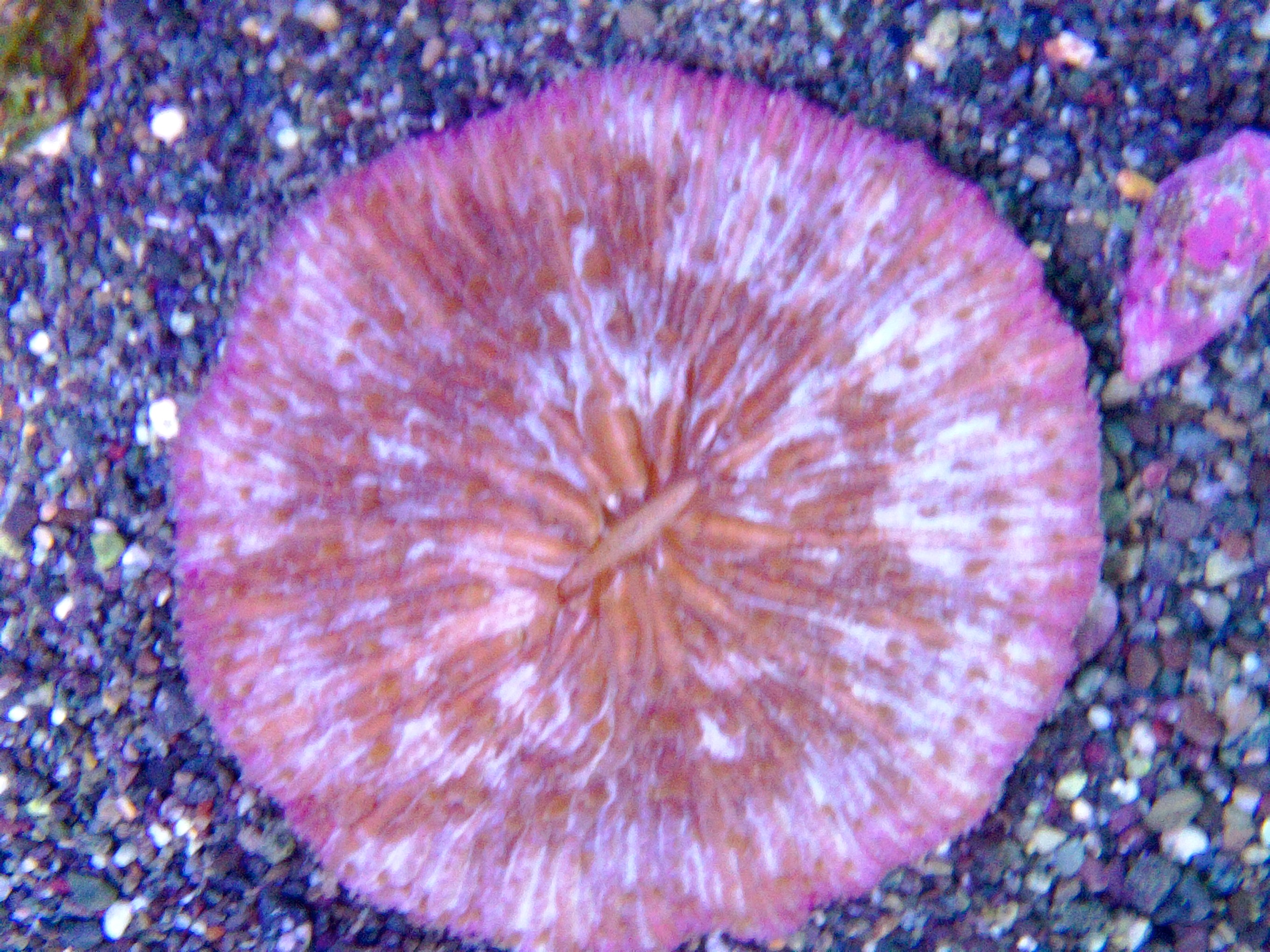
Lithophyllon repanda
Photo: Wikimedia Commons (CC) via https://en.wikipedia.org/wiki/Lithophyllon_repanda
Overview
Lithophyllon repanda is a species of stony coral in the family Fungiidae, known for its flattened, encrusting to sub-massive growth form with distinctive radiating septa visible across its surface. Like other scleractinian corals, it builds a calcium carbonate skeleton and hosts symbiotic zooxanthellae, which supply the coral with energy through photosynthesis in exchange for shelter. Colonies contribute to the physical structure of reef habitats, providing surface area and microhabitat complexity that supports associated invertebrate and fish communities.
The species inhabits shallow marine neritic waters and is found across a broad Indo-Pacific range, with confirmed occurrence in Australia, Thailand, Taiwan, China, and Japan. It typically occurs on reef flats and slopes where light penetration supports its photosynthetic symbionts.
The species faces a wide array of ongoing pressures. Coastal development and urban expansion degrade nearshore reef habitat, while land-based pollution—domestic wastewater, agricultural runoff, and solid waste—reduces water quality. Fishing and harvesting activities, along with recreational use of reef areas, cause direct physical damage.
Coral disease, competition or predation from problematic native species, and impacts from invasive species add further biological stress. Storms and flooding events, intensified by broader climate-driven habitat shifting, cause episodic destruction, compounding the effects of chronic disturbance.
Conservation efforts rely primarily on broader marine protected area networks and reef management programs across its range countries, including water quality regulation and fisheries controls, though species-specific interventions for Lithophyllon repanda are limited. Population trends are documented through regional reef monitoring under IUCN assessment frameworks.
The population is currently assessed as Endangered with a decreasing trend. Given the persistence and multiplicity of ongoing threats, the species' outlook remains unfavorable without substantial improvements in regional reef protection and water quality management.
This coral faces pressure from coastal development and pollution, including sewage, farm runoff, and solid waste washing into its reef habitat, as well as damage from tourism, fishing activities, and disease. Climate-related impacts such as storms, flooding, and broader habitat changes add further strain, compounding harm from invasive species and other native species that outcompete or damage it. These combined ongoing threats suggest conditions are intensifying rather than stabilizing.
Habitat
Conservation measures underway
Other threatened species in FUNGIIDAE
Threatened in Australia
Frequently asked questions
Why is Lithophyllon repanda classified as Endangered?
Where does Lithophyllon repanda live?
What are the main threats to Lithophyllon repanda?
Get weekly conservation intelligence
One short digest a week of the most striking species and country data we ship, plus breaking conservation news paired with our database where it matters.
Free, no spam. One-click unsubscribe in every email.