Lithophyllon concinna
Overview
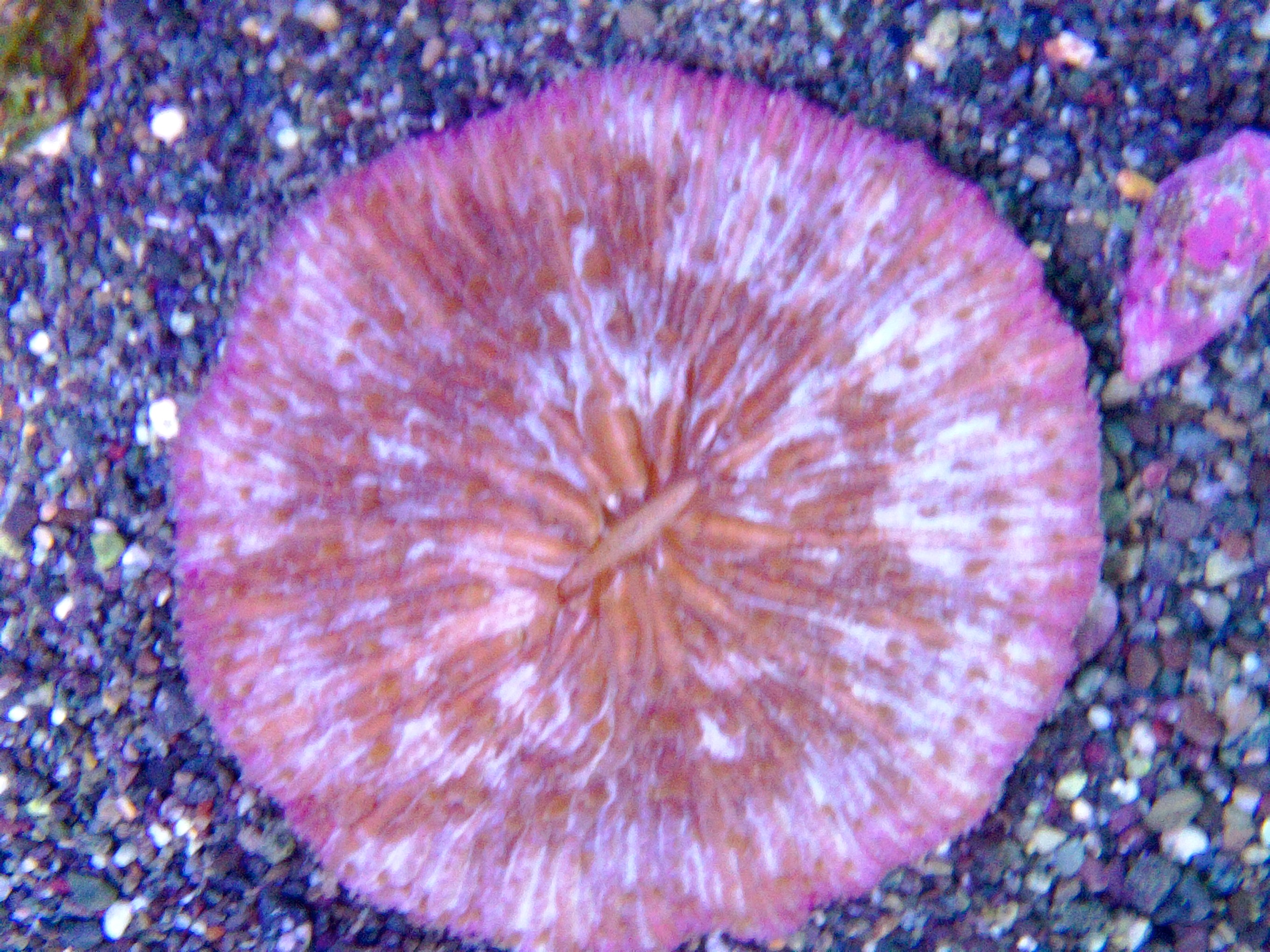
This coral belongs to the family Fungiidae, a group known for producing free-living or solitary polyps in many species, though Lithophyllon concinna forms encrusting to laminar colonial growths rather than existing as a single mobile disc. Its skeleton forms flattened, plate-like structures with radiating septa visible across the colony surface. Like other scleractinian corals, it hosts symbiotic zooxanthellae within its tissues, which supply energy through photosynthesis while the coral itself captures plankton using its tentacles, primarily at night.
As a reef-building species, it contributes calcium carbonate structure to reef systems, offering habitat complexity that supports associated invertebrates and fish.
The species occupies shallow marine neritic waters and is recorded across a wide swath of the Indo-Pacific, including the United States, Australia, Thailand, Taiwan, China, and Japan, typically in reef environments where light penetration supports its photosynthetic symbionts.
Its listing as Endangered reflects a convergence of pressures. Fishing and harvesting activities, along with recreational use, physically damage colonies, while coastal development and other ecosystem modifications degrade surrounding reef habitat. Water quality is compromised by agricultural runoff, urban wastewater discharge, and solid waste pollution, all of which stress coral tissue and encourage disease.
Invasive species and native pest outbreaks compound these effects, and broader habitat shifts linked to climate change add further strain.
Conservation efforts affecting this species are largely embedded within broader coral reef protection frameworks, including marine protected areas, water quality regulation, and international trade oversight under CITES, since Fungiidae corals are commonly traded.
Population trends are currently decreasing, and given the combination of localized and widespread ongoing threats, the species' outlook remains concerning without stronger habitat and water quality safeguards across its range.
This coral is threatened by pollution from sewage, farm runoff, and garbage washing into the ocean, as well as damage from fishing activities, tourism and recreation, and coastal development that alters its reef habitat. It also faces pressure from competing or harmful native species, invasive species, and disease, along with broader changes to its environment linked to climate-related shifts. These combined pressures appear to be ongoing and show no signs of easing.
Habitat
Conservation measures underway
Other threatened species in FUNGIIDAE

Threatened in Australia
Frequently asked questions
Why is Lithophyllon concinna classified as Endangered?
Where does Lithophyllon concinna live?
What are the main threats to Lithophyllon concinna?
Get weekly conservation intelligence
One short digest a week of the most striking species and country data we ship, plus breaking conservation news paired with our database where it matters.
Free, no spam. One-click unsubscribe in every email.