Ctenactis albitentaculata
Overview
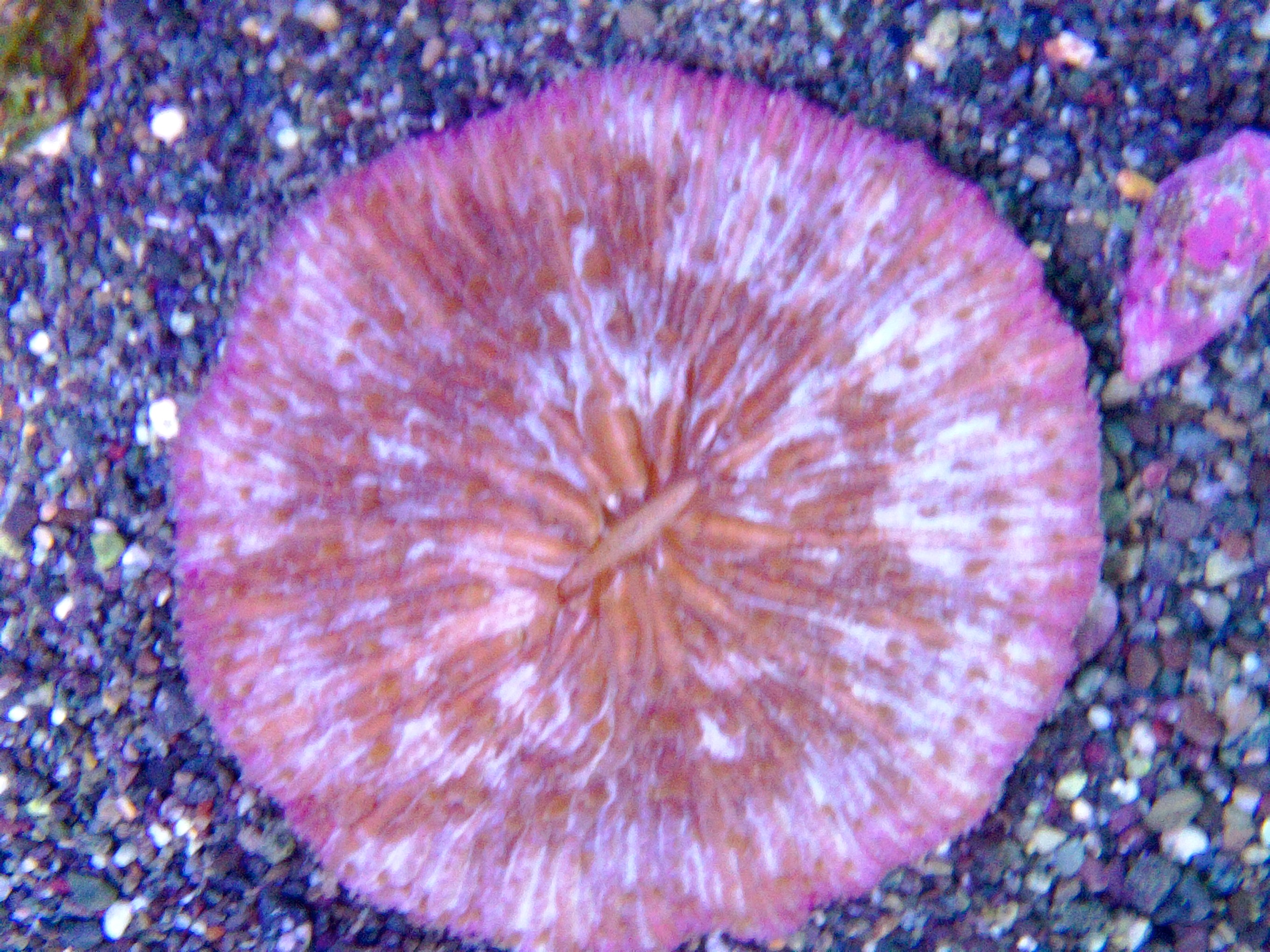
Ctenactis albitentaculata is a solitary stony coral belonging to the family Fungiidae, distinguished by an elongated, often curved skeleton with tentacles tipped in white, a feature reflected in its species name. Unlike colonial reef-building corals, individuals of this genus are free-living as adults, unattached to the substrate, and capable of limited movement across the seafloor. This mobility allows them to right themselves if overturned by wave action or sediment shifts, an adaptation shared among fungiid corals.
As with other scleractinians, it hosts symbiotic zooxanthellae that provide energy through photosynthesis, and it contributes to the structural and biological complexity of reef habitats, offering microhabitat for small invertebrates.
The species occupies marine neritic waters across the Indo-Pacific, with recorded populations in Australia, Papua New Guinea, New Caledonia, the Philippines, Singapore, Malaysia, Vanuatu, Brunei, Japan, and Palau, generally on shallow reef flats and slopes.
Its listing as Endangered reflects a combination of pressures. Fishing and harvesting activities damage reef substrates and disturb populations directly, while disease and outbreaks of problematic native species, such as coral-eating invertebrates, add further mortality. Habitat alteration from coastal development and sedimentation, along with unspecified pollution sources, compound these stresses across its range.
Conservation efforts rely largely on broader coral reef protections, including marine protected areas within its range states and international trade regulation under CITES, which covers all scleractinian corals. Species-specific monitoring remains limited.
Given ongoing habitat degradation and multiple concurrent threats without targeted management programs, the population trend is decreasing, and the species' outlook remains precarious without stronger reef protection measures.
This coral species is being affected by fishing and harvesting activities in its ocean habitat, along with damage from disease-causing organisms and native species that harm it. Its habitat is also changing due to shifting environmental conditions, and pollution of an unspecified type continues to affect the areas where it lives. All of these threats are currently ongoing, suggesting a stable but persistent level of pressure on the species rather than a clear increase or decrease.
Habitat
Conservation measures underway
Other threatened species in FUNGIIDAE

Threatened in Australia
Frequently asked questions
Why is Ctenactis albitentaculata classified as Endangered?
Where does Ctenactis albitentaculata live?
What are the main threats to Ctenactis albitentaculata?
Get weekly conservation intelligence
One short digest a week of the most striking species and country data we ship, plus breaking conservation news paired with our database where it matters.
Free, no spam. One-click unsubscribe in every email.