
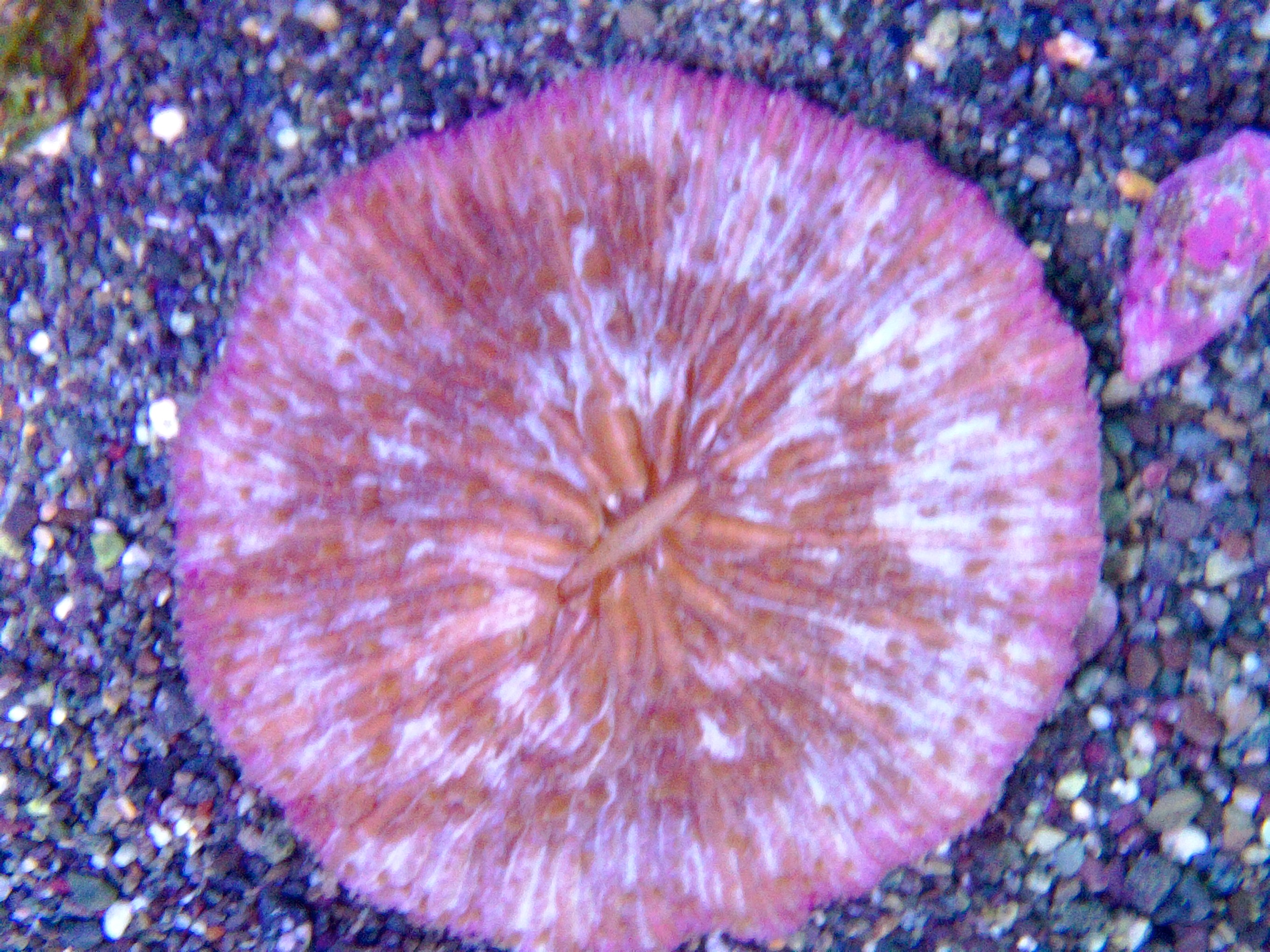
Danafungia scruposa
Photo: Wikimedia Commons (CC) via https://en.wikipedia.org/wiki/Danafungia_scruposa
Overview
Danafungia scruposa is a solitary, free-living stony coral belonging to the family Fungiidae, commonly known as mushroom corals. Unlike most reef-building corals, this species is not permanently attached to the substrate as an adult, allowing it to reposition itself if disturbed or partially buried by sediment. Its skeleton forms a rounded, disc-like structure with radiating septa resembling the gills of a mushroom.
As a photosynthetic coral hosting symbiotic zooxanthellae, it contributes to reef productivity and provides microhabitat structure for small invertebrates and fish on the reef floor.
The species is found in shallow marine neritic waters across the Indo-Pacific, including reef habitats in Australia, Thailand, Vietnam, Taiwan, China, and Japan, typically in lagoons and reef flats where light penetration supports its symbiotic algae.
Its population is in decline due to a combination of pressures. Fishing and harvesting practices, including destructive methods, damage colonies directly, while recreational activities such as diving, snorkeling, and boating cause physical breakage. Coral disease and pressure from problematic native species compound these impacts.
Water quality is degraded by domestic and urban wastewater, agricultural runoff from non-timber crop cultivation, and other pollutants, contributing to reduced growth and reproductive success. Habitat alteration and shifting environmental conditions, linked to broader reef degradation, further reduce suitable living space.
Conservation efforts for this species occur mainly within the broader framework of marine protected areas and reef management programs across its range countries, along with regional water quality initiatives and regulations on coral harvesting and trade. Species-specific interventions remain limited.
Given the combination of ongoing habitat degradation, pollution, and direct human pressures, the population trend remains decreasing, and the species is currently assessed as Endangered with no clear indication of recovery.
This coral species faces pressure from fishing activities, boat-based recreation, and pollution from sewage, agricultural runoff, and farming activities near coastal areas. It's also threatened by invasive species, disease, and shifting ocean conditions that alter its habitat. These combined ongoing pressures suggest the threats are stable but persistent, with no clear signs of easing.
Habitat
Conservation measures underway
Other threatened species in FUNGIIDAE
Threatened in Australia
Frequently asked questions
Why is Danafungia scruposa classified as Endangered?
Where does Danafungia scruposa live?
What are the main threats to Danafungia scruposa?
Get weekly conservation intelligence
One short digest a week of the most striking species and country data we ship, plus breaking conservation news paired with our database where it matters.
Free, no spam. One-click unsubscribe in every email.