
Heather Ladybird
Chilocorus bipustulatus
Photo: Wikimedia Commons (CC) via https://en.wikipedia.org/wiki/Chilocorus_bipustulatus
Overview
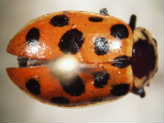
The Heather Ladybird is a small beetle measuring 3-4mm in length, distinguished by its glossy black wing covers marked with two distinctive red or orange spots. Unlike many ladybird species that feed on aphids, this specialist predator primarily consumes scale insects and mealybugs found on heather and other ericaceous plants. The species plays a crucial role in controlling these pest insects within heathland ecosystems.
This ladybird inhabits heathlands, moorlands, and areas dominated by heather (Calluna vulgaris) across an extensive range spanning Europe, North America, parts of Asia, and North Africa. Despite its wide distribution across over 50 countries, the species shows significant regional variations in abundance and faces localized declines in several areas.
The primary threat to Heather Ladybirds stems from the widespread loss and fragmentation of heathland habitats. Agricultural conversion, urban development, and changes in land management practices have substantially reduced suitable breeding and feeding areas. Additionally, the species' specialized diet makes it particularly vulnerable to habitat quality changes, as it depends heavily on the presence of its specific prey insects on heather plants.
Conservation efforts focus primarily on heathland habitat restoration and protection programs across Europe, where the species has experienced notable declines. Several countries have incorporated heathland conservation into broader landscape management strategies, though specific monitoring programs for the Heather Ladybird remain limited.
The species' current outlook remains uncertain due to insufficient population monitoring data. While its extensive global range provides some resilience, continued habitat loss in key regions suggests ongoing vulnerability, particularly in areas where heathland ecosystems face intensive development pressure.
The Heather Ladybird faces significant population declines primarily due to habitat loss from agricultural intensification and urban development, which has reduced the availability of heathland and moorland ecosystems where it specializes. Climate change and the widespread use of pesticides in agricultural areas have further contributed to its vulnerable status by altering prey availability and directly impacting survival rates.
Other threatened species in Coccinellidae


Threatened in Åland Islands


Frequently asked questions
Why is Heather Ladybird classified as Vulnerable?
Where does Heather Ladybird live?
What are the main threats to Heather Ladybird?
Get weekly conservation intelligence
One short digest a week of the most striking species and country data we ship, plus breaking conservation news paired with our database where it matters.
Free, no spam. One-click unsubscribe in every email.