
spike lichen
Calicium quercinum
Photo: Wikimedia Commons (CC) via https://en.wikipedia.org/wiki/Calicium_quercinum
Overview
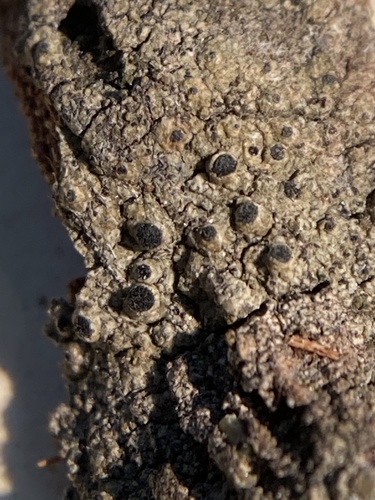
Calicium quercinum is a distinctive crustose lichen species that forms thin, grayish-white crusts on the bark of oak trees and other hardwoods. This stalked pin lichen produces characteristic black, pin-like fruiting bodies (mazaedia) that rise above the thallus surface, making it readily identifiable in the field. It plays an important ecological role as a pioneer species in forest ecosystems and contributes to nutrient cycling through its symbiotic relationship with photosynthetic algae.
Calicium quercinum faces significant threats primarily from habitat loss due to deforestation and the decline of old-growth forests where it depends on mature oak trees as substrate. Air pollution and acid rain further compromise the lichen's ability to survive, as these organisms are highly sensitive to atmospheric changes and chemical pollutants.
Habitat
This crustose lichen species grows exclusively on the bark of mature oak trees (Quercus species) in old-growth deciduous and mixed forests. It typically occurs in well-established woodland ecosystems with stable microclimatic conditions and low levels of atmospheric pollution.
Other threatened species in Caliciaceae
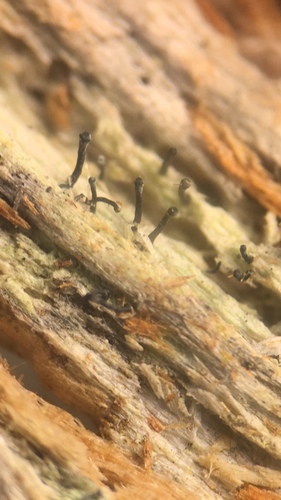
Threatened in Åland Islands


Frequently asked questions
Why is spike lichen classified as Vulnerable?
Where does spike lichen live?
What are the main threats to spike lichen?
Get weekly conservation intelligence
One short digest a week of the most striking species and country data we ship, plus breaking conservation news paired with our database where it matters.
Free, no spam. One-click unsubscribe in every email.