
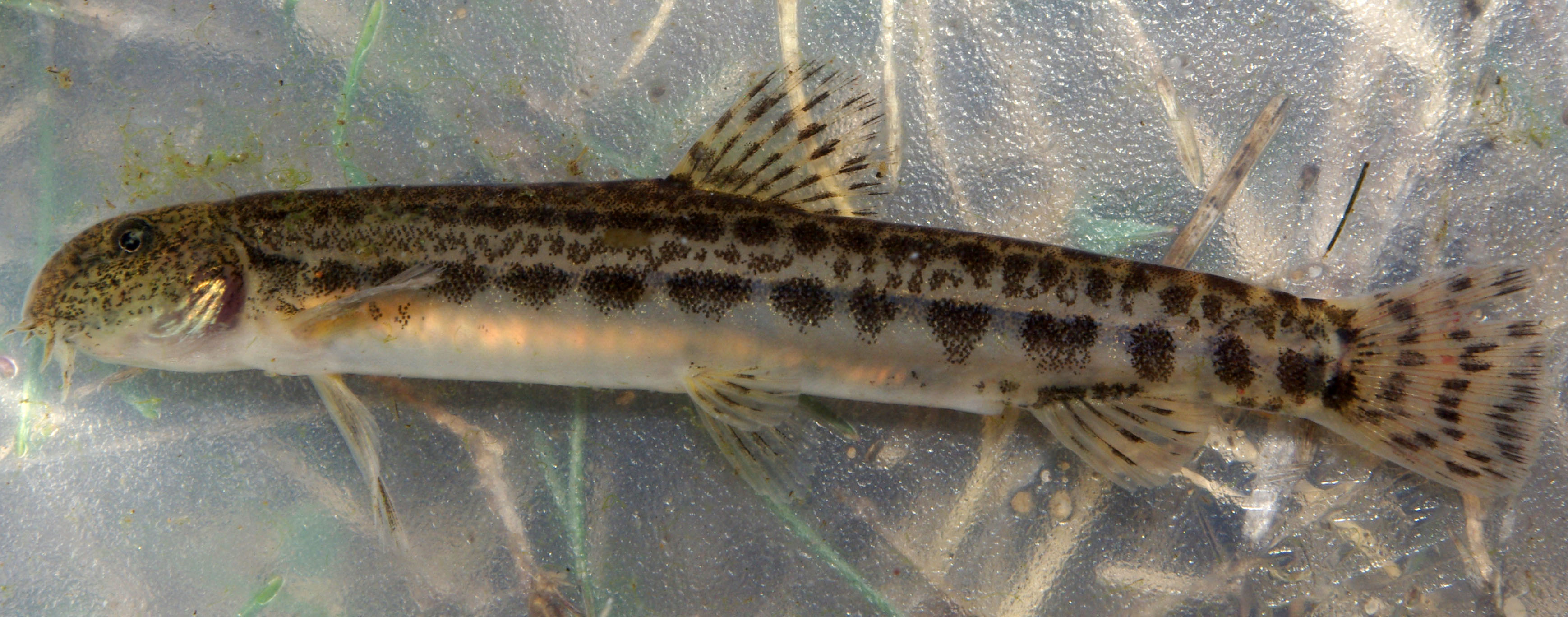
European Weather Loach
Misgurnus fossilis
Photo: Wikimedia Commons (CC) via https://en.wikipedia.org/wiki/Misgurnus_fossilis
Overview
The weatherfish is a species of true loach that has a wide range in Europe and some parts of Asia. It is an omnivorous scavenger bottom feeder, using its sensitive barbels to find edible items. The diet mostly consists of small aquatic invertebrates along with some detritus.
The weatherfish is long and thin which allows it to burrow through the substrate and navigate through places that deeper bodied fish would have trouble with. It grows up to 30 cm (12 in) in total length, though there are fishermen who say they have caught longer, up to 45 cm (17.7 in). If true, this would make Misgurnus fossilis the largest species of true loach.
The Weatherfish faces severe population declines across its range due to widespread habitat destruction and degradation of freshwater ecosystems. Agricultural intensification, urban development, and water pollution have dramatically reduced suitable breeding and feeding habitats, while climate change and altered hydrological regimes further threaten remaining populations.
Habitat
Shallow, muddy freshwater habitats including floodplains, marshes, ponds, and slow-flowing rivers with soft substrates. The species particularly depends on seasonal wetlands and areas with dense aquatic vegetation that provide shelter and feeding opportunities.
Other threatened species in Cobitidae
Threatened in Austria
Frequently asked questions
Why is European Weather Loach classified as Critically Endangered?
Where does European Weather Loach live?
What are the main threats to European Weather Loach?
Get weekly conservation intelligence
One short digest a week of the most striking species and country data we ship, plus breaking conservation news paired with our database where it matters.
Free, no spam. One-click unsubscribe in every email.