
Mixophyes balbus
Photo: Wikimedia Commons (CC) via https://en.wikipedia.org/wiki/Stuttering_frog
Overview
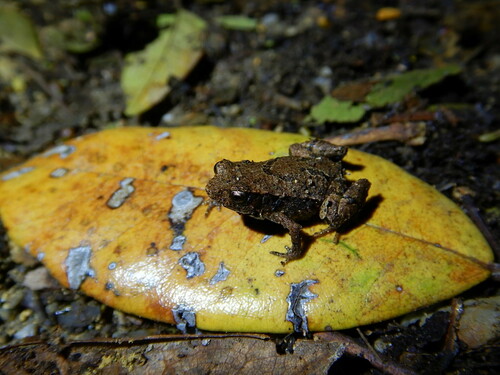
Mixophyes balbus, commonly known as the stuttering frog, is a large ground-dwelling frog belonging to the family Myobatrachidae. Adults are robust, with muscular limbs, prominent eyes, and mottled brown-grey skin that provides camouflage against leaf litter and stream substrates. The species is named for its distinctive stuttering call, produced by males to attract mates.
Tadpoles are unusually large and take over a year to metamorphose, making them highly dependent on stable stream conditions. As both predator and prey, this frog plays a role in regulating invertebrate populations while serving as a food source for larger vertebrates.
The species occurs along the eastern coast of Australia, inhabiting subtropical and temperate rainforest, wet sclerophyll forest, and moist lowland forest, typically in close association with permanent rivers and streams. It requires clean, well-oxygenated water for breeding and shaded riparian vegetation for shelter.
Population decline is driven by a combination of pressures: land clearing for housing, agriculture, and livestock grazing has fragmented habitat, while logging alters forest structure and stream conditions. Chytrid fungus, a problematic pathogen affecting amphibians globally, has been strongly implicated in the species' decline. Altered water flows from dam construction, prolonged drought, and increasingly severe bushfires further degrade breeding habitat, and sedimentation from disturbed catchments affects tadpole survival.
Conservation efforts include habitat protection within national parks and reserves, disease monitoring programs, and research into chytrid-resistant populations. Riparian restoration projects aim to improve stream water quality across parts of its range.
Given ongoing habitat degradation, disease pressure, and climate-related threats, the species' population trend remains decreasing, and its long-term recovery depends on sustained habitat management and disease mitigation.
This frog is losing its habitat as land is cleared for housing, farming, and logging, while dams and water management alter the streams it depends on. It also faces harm from diseases, introduced predators, droughts, fires, and crop farming, all of which shrink and degrade the places it lives. Since nearly all of these pressures are ongoing at once, the overall threat level appears to be intensifying rather than easing.
Habitat
Conservation measures underway
Other threatened species in MYOBATRACHIDAE

Threatened in Australia
Frequently asked questions
Why is Mixophyes balbus classified as Vulnerable?
Where does Mixophyes balbus live?
What are the main threats to Mixophyes balbus?
Get weekly conservation intelligence
One short digest a week of the most striking species and country data we ship, plus breaking conservation news paired with our database where it matters.
Free, no spam. One-click unsubscribe in every email.