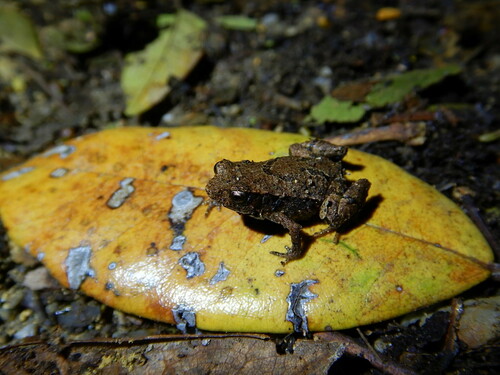
Mount Wollumbin Hip-pocket Frog
Assa wollumbin
Photo: Photo: (c) Michele Lockwood, all rights reserved, uploaded by Michele Lockwood
Overview
Assa wollumbin is a small ground-dwelling frog distinguished by its unusual reproductive strategy: males possess hip pockets, skin-lined pouches on their flanks into which hatched froglets crawl and complete their development, bypassing an aquatic tadpole stage entirely. Adults are cryptically coloured, typically brown or grey with mottled patterning that allows them to blend into leaf litter, and they lack a free-swimming larval stage altogether, laying eggs directly in moist substrate. As a leaf-litter invertebrate predator, the species contributes to nutrient cycling and pest regulation within its forest floor microhabitat.
The species is restricted to a small area of subtropical and temperate rainforest around Mount Warning (Wollumbin) in northeastern New South Wales, Australia, where it inhabits moist forest floor and adjacent wetland-influenced leaf litter zones.
Its extremely restricted range makes it vulnerable to a combination of pressures. Logging and associated wood harvesting degrade forest structure and leaf litter moisture, while altered fire regimes and fire suppression practices change habitat composition. Invasive species and pathogens, including chytrid fungus, pose ongoing risks, compounded by problematic native species interactions.
Litter and solid waste accumulation affect habitat quality, and broader habitat shifting linked to climate change and recurring drought reduce the moisture-dependent conditions this frog requires for its non-aquatic breeding mode.
Conservation attention includes habitat protection within existing reserve systems, ongoing population monitoring, and research into disease dynamics and microhabitat requirements. Population numbers are not precisely quantified, but the trend is currently assessed as stable. Given its narrow distribution and reliance on specific moisture conditions, the species remains classified as Critically Endangered, with its long-term outlook closely tied to habitat integrity and climate stability in its limited range.
The Mount Wollumbin Hip-pocket Frog faces ongoing threats from logging and forest clearing, bushfires and the way they're managed, and litter and waste polluting its habitat. It also struggles with harmful diseases and competition from introduced species, as well as pressures from native species, changing habitat conditions, and increasingly severe droughts. These combined threats appear to be ongoing and stable, though climate-related pressures like drought and fire may be gradually intensifying.
Habitat
Conservation measures underway
Other threatened species in MYOBATRACHIDAE
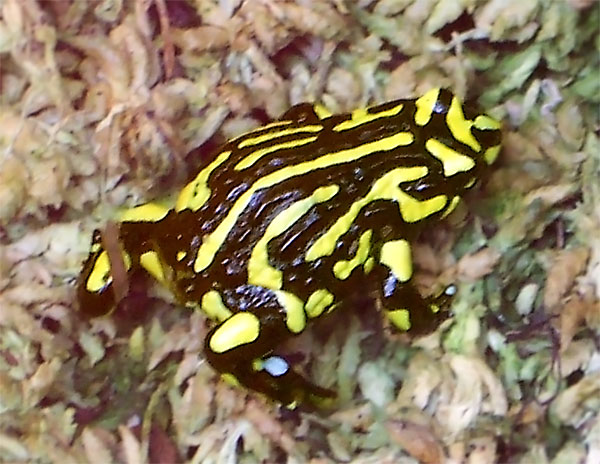


Threatened in Australia
Frequently asked questions
Why is Mount Wollumbin Hip-pocket Frog classified as Critically Endangered?
Where does Mount Wollumbin Hip-pocket Frog live?
What are the main threats to Mount Wollumbin Hip-pocket Frog?
Get weekly conservation intelligence
One short digest a week of the most striking species and country data we ship, plus breaking conservation news paired with our database where it matters.
Free, no spam. One-click unsubscribe in every email.