
White-bellied Frog
Anstisia alba
Photo: Wikimedia Commons (CC BY-SA) — Species of amphibian
Overview
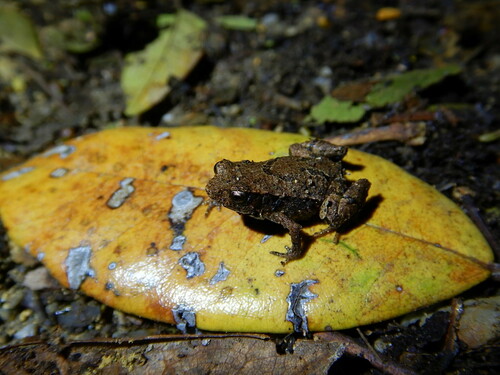
This small ground-dwelling frog is endemic to southwestern Australia, distinguished by its pale, whitish underside contrasting with a mottled brown or grey dorsal surface, an adaptation suited to its secretive, burrowing lifestyle. Anstisia alba spends much of its life sheltering beneath leaf litter, vegetation, and soil in damp microhabitats, emerging to breed in ephemeral or semi-permanent water bodies. As with many myobatrachid frogs, it plays a role in local food webs as both predator of invertebrates and prey for larger vertebrates, while its larvae contribute to nutrient cycling in freshwater systems.
Its range is restricted to a small area of inland wetlands—bogs, swamps, marshes, and fens—along with adjacent coastal habitats in Western Australia. This limited distribution makes the species highly vulnerable to localized environmental change.
The species faces a convergence of pressures: land clearing for livestock grazing and crop agriculture has degraded and fragmented its wetland habitats, while altered hydrology from dams and water management has disrupted breeding sites. Urban and infrastructure development further reduces available habitat. Invasive species and disease, including chytrid fungus, pose direct threats to survival, compounded by fire and altered fire regimes.
Climate-induced shifts in rainfall and temperature threaten to dry out the ephemeral wetlands the species depends on, while population isolation has led to genetic bottlenecks, reducing resilience.
Conservation efforts include habitat protection within its known range, monitoring of remaining populations, and research into breeding site management and disease mitigation. Some areas have been targeted for restoration of wetland hydrology.
Given its restricted range, ongoing habitat degradation, and compounding threats, the species' population continues to decline. Without sustained habitat protection and threat mitigation, its long-term survival prospects remain precarious.
The White-bellied Frog is mainly threatened by the clearing and draining of its wetland habitat for farming, livestock grazing, and urban development, which also breaks its remaining habitat into small, isolated patches. It faces further pressure from changes in water supply due to dams and water management, disease, invasive species, and more frequent or intense fires, all of which make it harder for isolated populations to survive and maintain healthy genetic diversity. Climate change is also shifting the conditions the species depends on, and overall these combined threats appear to be intensifying.
Habitat
Anstisia alba inhabits specialized microhabitats within temperate forest ecosystems, typically found in areas with specific soil chemistry and moisture conditions. The species requires undisturbed forest floor environments with particular vegetation associations that provide both shelter and food resources.
Conservation measures underway
Other threatened species in MYOBATRACHIDAE

Threatened in Australia
Frequently asked questions
Why is White-bellied Frog classified as Critically Endangered?
Where does White-bellied Frog live?
What are the main threats to White-bellied Frog?
Get weekly conservation intelligence
One short digest a week of the most striking species and country data we ship, plus breaking conservation news paired with our database where it matters.
Free, no spam. One-click unsubscribe in every email.