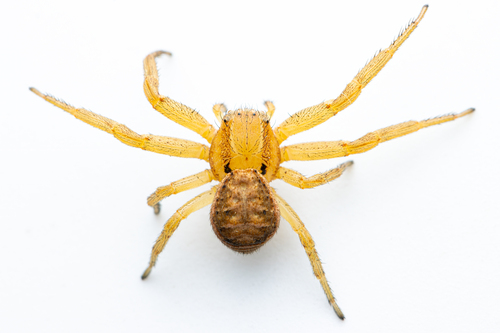
Double-banded Crab-spider
Xysticus bifasciatus
Photo: (c) Frederik Leck Fischer, all rights reserved, uploaded by Frederik Leck Fischer
Overview
The steppekrabspin (Xysticus bifasciatus) is a crab spider species belonging to the family Thomisidae, characterized by its ability to change color to match its surroundings while hunting prey. This small arachnid is native to steppe and grassland environments in parts of Europe, where it plays a role as an ambush predator of flying insects. The species exhibits the typical crab spider behavior of waiting motionlessly on flowers or vegetation to capture unsuspecting prey.
Currently classified as Critically Endangered by the IUCN, X. bifasciatus faces severe population pressures, though the exact population trend remains unknown due to limited monitoring data. The primary threats to this species include habitat loss and fragmentation caused by agricultural intensification, urban development, and changes in land use practices that have significantly reduced suitable steppe habitats.
Climate change may also be affecting the species through alterations to its preferred grassland ecosystems and the availability of prey species. The conversion of natural grasslands to monoculture crops and the increased use of pesticides in agricultural areas further compound the threats to remaining populations. Conservation efforts for this species are currently limited, reflecting the broader challenge of protecting invertebrate species that often receive less attention than larger, more charismatic fauna.
Habitat preservation and restoration of steppe ecosystems are essential for the species' survival, along with improved monitoring to better understand population dynamics and distribution patterns.
The steppekrabspin faces severe threats from habitat loss and fragmentation due to agricultural intensification and urban development that have destroyed much of its native steppe habitat. Pesticide use in agricultural areas and climate change impacts on grassland ecosystems further threaten the remaining populations.
Habitat
This species inhabits steppe and grassland environments where it hunts on flowers and low vegetation. It requires natural grassland ecosystems with diverse plant communities that support adequate prey populations.
Other threatened species in Thomisidae
Threatened in Åland Islands


Frequently asked questions
Why is Double-banded Crab-spider classified as Critically Endangered?
Where does Double-banded Crab-spider live?
What are the main threats to Double-banded Crab-spider?
Get weekly conservation intelligence
One short digest a week of the most striking species and country data we ship, plus breaking conservation news paired with our database where it matters.
Free, no spam. One-click unsubscribe in every email.