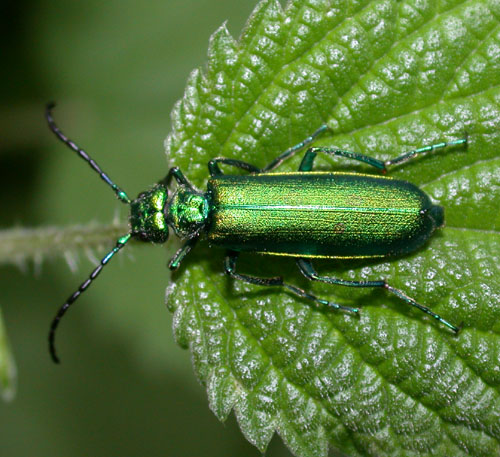
Spanish Fly
Lytta vesicatoria
Photo: Wikimedia Commons (CC) via https://en.wikipedia.org/wiki/Lytta_vesicatoria
Overview
The Spanish Fly (Lytta vesicatoria) is a blister beetle species belonging to the family Meloidae, historically found across parts of southern and central Europe. Despite its common name, this metallic green beetle is not actually a fly but gained notoriety for containing cantharidin, a toxic compound once used in folk medicine and as an aphrodisiac. The species typically measures 12-20mm in length and displays an iridescent emerald coloration.
Spanish Flies inhabit deciduous forests and woodland edges, where adults feed primarily on ash tree leaves (Fraxinus species) and occasionally on lilac and privet. The larvae are parasitoids of ground-nesting bees, playing an ecological role in regulating bee populations. Currently classified as Critically Endangered, L.
vesicatoria faces severe population declines across its historical range, with many local extinctions reported throughout Europe. The species has become increasingly rare due to habitat loss from deforestation, agricultural intensification, and urban development. Climate change may further impact the specialized relationship between the beetles and their host ash trees.
Additionally, the decline of ground-nesting bee populations affects larval survival. Conservation efforts remain limited, though some European countries have implemented habitat protection measures in areas where remnant populations persist. Research into the species' current distribution and population status is urgently needed to develop effective conservation strategies and prevent complete extinction of this ecologically and historically significant beetle species.
The Spanish Fly faces critical threats from widespread habitat loss due to deforestation and agricultural conversion of deciduous woodlands. The decline of ground-nesting bee populations, which serve as hosts for the beetle's parasitoid larvae, further threatens species survival. Climate change may disrupt the specialized feeding relationship between adults and ash trees.
Habitat
Spanish Flies inhabit deciduous forests and woodland edges, particularly areas with abundant ash trees (Fraxinus species) on which adults feed. The species requires proximity to ground-nesting bee populations, as larvae develop as parasitoids within bee nests.
Other threatened species in Meloidae

Threatened in Albania

Frequently asked questions
Why is Spanish Fly classified as Critically Endangered?
Where does Spanish Fly live?
What are the main threats to Spanish Fly?
Get weekly conservation intelligence
One short digest a week of the most striking species and country data we ship, plus breaking conservation news paired with our database where it matters.
Free, no spam. One-click unsubscribe in every email.