Sierra Nevadan Pygmy Wart-biter
Ctenodecticus major
Overview
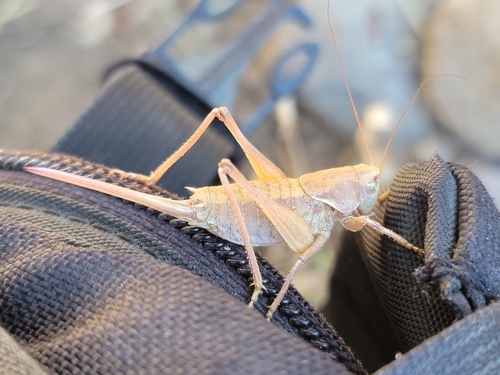
The Sierra Nevadan Pygmy Wart-biter (Ctenodecticus major) is a small, flightless bush-cricket endemic to high-altitude massifs of the Sierra Nevada range in southern Spain. Like other members of the Ctenodecticus genus, it has a robust, spiny build, short vestigial wings unsuited for flight, and a mottled brown-and-ochre coloration that provides camouflage against rocky, sparsely vegetated slopes. It inhabits alpine and subalpine grassland and scree habitats typically above 2,000 meters, where it shelters among cushion-forming plants and rock crevices to survive extreme temperature swings.
Classified as Critically Endangered (CR) by the IUCN, this species faces a decreasing population trend driven by its extremely restricted range and the fragility of its mountaintop ecosystem. Its entire known distribution spans only a handful of isolated peaks, making it acutely vulnerable to any single adverse event affecting its habitat. Climate warming is a particular concern for this cold-adapted, high-elevation specialist, as rising temperatures compress the alpine zones it depends on and increase competition from lowland species shifting upslope.
Livestock grazing pressure and infrastructure development linked to tourism, including ski facilities, further degrade the sparse vegetation it relies on for shelter and food. Because it cannot fly or disperse over long distances, populations on separate peaks are effectively isolated, limiting genetic exchange and recovery potential after local declines. On a more encouraging note, portions of its range fall within the Sierra Nevada National Park, a protected area that restricts development and grazing intensity in core zones, and ongoing monitoring by Spanish entomologists has improved understanding of its distribution and habitat needs.
Continued survey work and habitat protection within this park offer a meaningful foundation for safeguarding the species' remaining strongholds.
Ctenodecticus major faces severe population decline due to extensive habitat destruction from agricultural expansion and urban development across its limited range. The species' specialized ecological requirements make it particularly vulnerable to environmental changes, with fragmented populations unable to maintain genetic diversity. Mining activities and infrastructure development have further reduced available habitat, while climate change alters the specific microhabitat conditions this species requires for survival.
Habitat
Ctenodecticus major inhabits specialized microhabitats within arid and semi-arid regions, typically found in areas with specific soil composition and vegetation structure. The species requires particular environmental conditions that are highly sensitive to disturbance and climate variation.
Conservation measures underway
Other threatened species in TETTIGONIIDAE
Threatened in Spain
Frequently asked questions
Why is Sierra Nevadan Pygmy Wart-biter classified as Critically Endangered?
Where does Sierra Nevadan Pygmy Wart-biter live?
What are the main threats to Sierra Nevadan Pygmy Wart-biter?
Get weekly conservation intelligence
One short digest a week of the most striking species and country data we ship, plus breaking conservation news paired with our database where it matters.
Free, no spam. One-click unsubscribe in every email.