Arboreal Seedpod Shieldback
Thoracistus arboreus
Overview
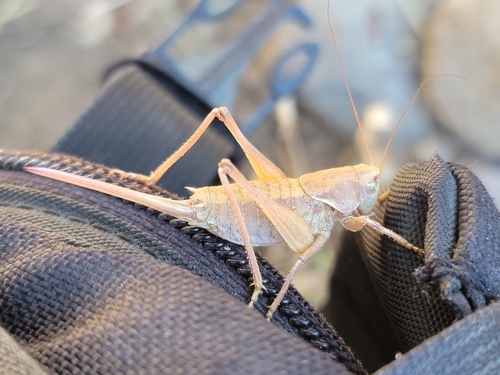
Thoracistus arboreus is a critically endangered katydid species belonging to the family Tettigoniidae, distinguished by its arboreal lifestyle and specialized morphological adaptations for life in forest canopies. This medium-sized orthopteran exhibits the characteristic elongated antennae and powerful hind legs typical of bush crickets, with a robust build suited for navigating through dense vegetation. The species displays cryptic coloration that provides excellent camouflage among leaves and bark, featuring mottled green and brown patterns that vary seasonally.
Endemic to specific montane forest ecosystems, T. arboreus inhabits the upper canopy layers of primary tropical forests, where it feeds primarily on young leaves, flowers, and occasionally small insects. The species demonstrates remarkable acoustic communication, producing distinctive chirping patterns during mating seasons that differ significantly from related katydid species.
Males establish territories in the forest canopy and engage in complex courtship behaviors involving both sound production and visual displays. Females lay their eggs in bark crevices or hollow stems, showing strong site fidelity to particular tree species. The species is classified as Critically Endangered by the IUCN, reflecting severe population declines and habitat fragmentation across its limited range.
Current populations are restricted to isolated forest fragments, making the species particularly vulnerable to environmental changes and human disturbance. However, recent conservation efforts have identified several previously unknown populations in protected areas, and local communities have begun participating in habitat restoration projects that specifically benefit canopy-dwelling insects like T. arboreus, offering hope for the species' long-term survival.
The primary threat to Thoracistus arboreus stems from rapid deforestation and forest fragmentation, which destroys the continuous canopy habitat essential for the species' survival and reproduction. Logging operations specifically target the mature trees that provide optimal nesting sites and food resources for this specialized katydid. Climate change poses an additional threat through altered precipitation patterns and temperature fluctuations that disrupt the species' breeding cycles and food plant phenology. Agricultural expansion into remaining forest areas further isolates populations and reduces genetic connectivity between surviving groups.
Habitat
Thoracistus arboreus inhabits the upper canopy layers of primary montane tropical forests, typically at elevations between 800-1,500 meters. The species shows strong preference for mature forest stands with dense canopy cover and high humidity levels, particularly favoring areas with abundant epiphytic vegetation and diverse tree species composition.
Conservation measures underway
Other threatened species in TETTIGONIIDAE
Threatened in South Africa


Frequently asked questions
Why is Arboreal Seedpod Shieldback classified as Critically Endangered?
Where does Arboreal Seedpod Shieldback live?
What are the main threats to Arboreal Seedpod Shieldback?
Get weekly conservation intelligence
One short digest a week of the most striking species and country data we ship, plus breaking conservation news paired with our database where it matters.
Free, no spam. One-click unsubscribe in every email.