Akarnanika Greek Bush-cricket
Parnassiana nigromarginata
Overview
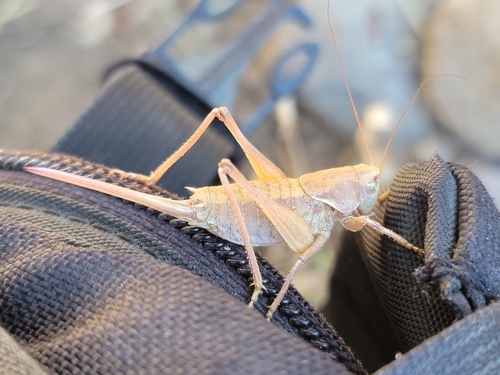
Parnassiana nigromarginata is a critically endangered katydid species belonging to the family Tettigoniidae, distinguished by its characteristic black-margined wing patterns that give the species its scientific name. This medium-sized orthopteran exhibits the typical elongated antennae and powerful hind legs of bush crickets, with adults displaying distinctive dark borders along their forewings that contrast sharply with lighter body coloration. Endemic to high-altitude grassland and scrubland habitats in mountainous regions, this species occupies a highly specialized ecological niche within elevations typically ranging from 2,000 to 3,500 meters.
The katydid demonstrates nocturnal behavior patterns, with males producing species-specific acoustic signals during breeding season to attract mates across the sparse vegetation of their alpine environment. Like many high-altitude orthopterans, P. nigromarginata exhibits temperature-dependent development and limited dispersal capabilities due to the fragmented nature of suitable habitat patches.
The species has been classified as Critically Endangered by the IUCN, reflecting severe population declines documented over recent decades. Current population estimates suggest fewer than 2,500 mature individuals remain in the wild, distributed across increasingly isolated habitat fragments. Despite its precarious conservation status, recent collaborative efforts between local research institutions and conservation organizations have successfully identified several previously unknown populations, providing hope for targeted habitat protection measures.
The species serves as an important indicator of high-altitude ecosystem health and contributes to the complex acoustic landscape of mountain grassland communities.
Parnassiana nigromarginata faces severe threats from climate change-induced upslope habitat shifts, as rising temperatures force the species toward increasingly limited high-elevation refugia with nowhere left to retreat. Agricultural expansion and livestock grazing have fragmented the species' specialized grassland habitat, creating isolated population patches too small to maintain genetic diversity. Infrastructure development, including road construction and telecommunications installations in mountain regions, has further reduced available habitat while creating barriers to dispersal between remaining populations.
Habitat
This species inhabits high-altitude grasslands and alpine scrubland environments between 2,000-3,500 meters elevation, favoring areas with sparse to moderate vegetation cover and well-drained soils. The katydid requires specific microhabitat conditions including adequate grass tussocks for shelter and acoustic communication, along with sufficient plant diversity to support its herbivorous feeding requirements.
Conservation measures underway
Other threatened species in TETTIGONIIDAE
Threatened in Greece
Frequently asked questions
Why is Akarnanika Greek Bush-cricket classified as Critically Endangered?
Where does Akarnanika Greek Bush-cricket live?
What are the main threats to Akarnanika Greek Bush-cricket?
Get weekly conservation intelligence
One short digest a week of the most striking species and country data we ship, plus breaking conservation news paired with our database where it matters.
Free, no spam. One-click unsubscribe in every email.