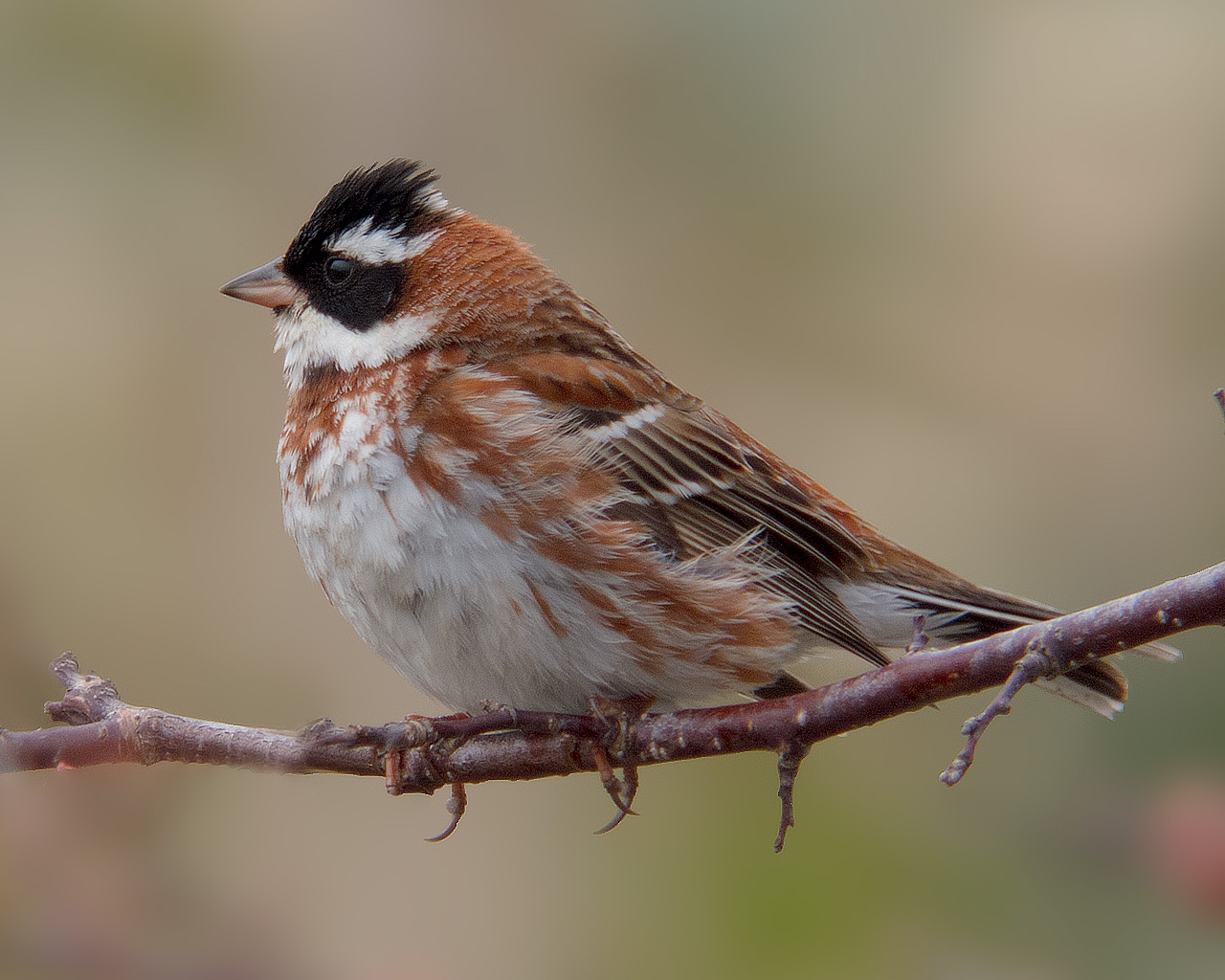
Rustic Bunting
Emberiza rustica
Photo: Wikimedia Commons (CC) via https://en.wikipedia.org/wiki/Rustic_bunting
Overview
Rustic Bunting (Emberiza rustica)
The Rustic Bunting is a small passerine bird measuring 14-15 cm in length. Males display distinctive breeding plumage with a black head marked by white eyebrows and throat patches, chestnut upperparts, and streaked underparts. Females and non-breeding males show more subdued brown and buff coloration with prominent streaking. These birds primarily feed on seeds, insects, and berries, playing a role in seed dispersal and insect population control within their ecosystems.
This species breeds across the boreal forests of northern Eurasia, from Scandinavia through Siberia to the Russian Far East. It inhabits taiga regions with mixed coniferous and deciduous woodland, particularly areas with birch and willow. During winter, Rustic Buntings migrate to East and Southeast Asia, including China, Japan, and Korea, where they occupy scrubland, agricultural areas, and forest edges.
The Rustic Bunting has experienced severe population declines, particularly in its western range. In Finland, breeding populations have virtually disappeared since the 1980s. The primary threats include habitat loss through intensive forestry practices, agricultural intensification in wintering grounds, and climate change affecting boreal forest composition.
Changes in forest management reducing understory vegetation and edge habitats have significantly impacted breeding success.
Conservation efforts focus on habitat protection in key breeding areas and monitoring migration routes. Some countries have implemented forest management guidelines to maintain suitable breeding habitat, while research continues into migration patterns and wintering ground requirements.
The species' outlook remains concerning, with continued declines reported across much of its range despite conservation attention.
The Rustic Bunting has experienced severe population declines across its range, with breeding populations in Europe and Asia declining by over 90% in recent decades. The primary drivers of decline include habitat loss from agricultural intensification and forest management changes in breeding areas, as well as trapping pressure and habitat degradation in wintering grounds in Southeast Asia.
Other threatened species in Emberizidae


Threatened in Åland Islands


Frequently asked questions
Why is Rustic Bunting classified as Vulnerable?
Where does Rustic Bunting live?
What are the main threats to Rustic Bunting?
Get weekly conservation intelligence
One short digest a week of the most striking species and country data we ship, plus breaking conservation news paired with our database where it matters.
Free, no spam. One-click unsubscribe in every email.