
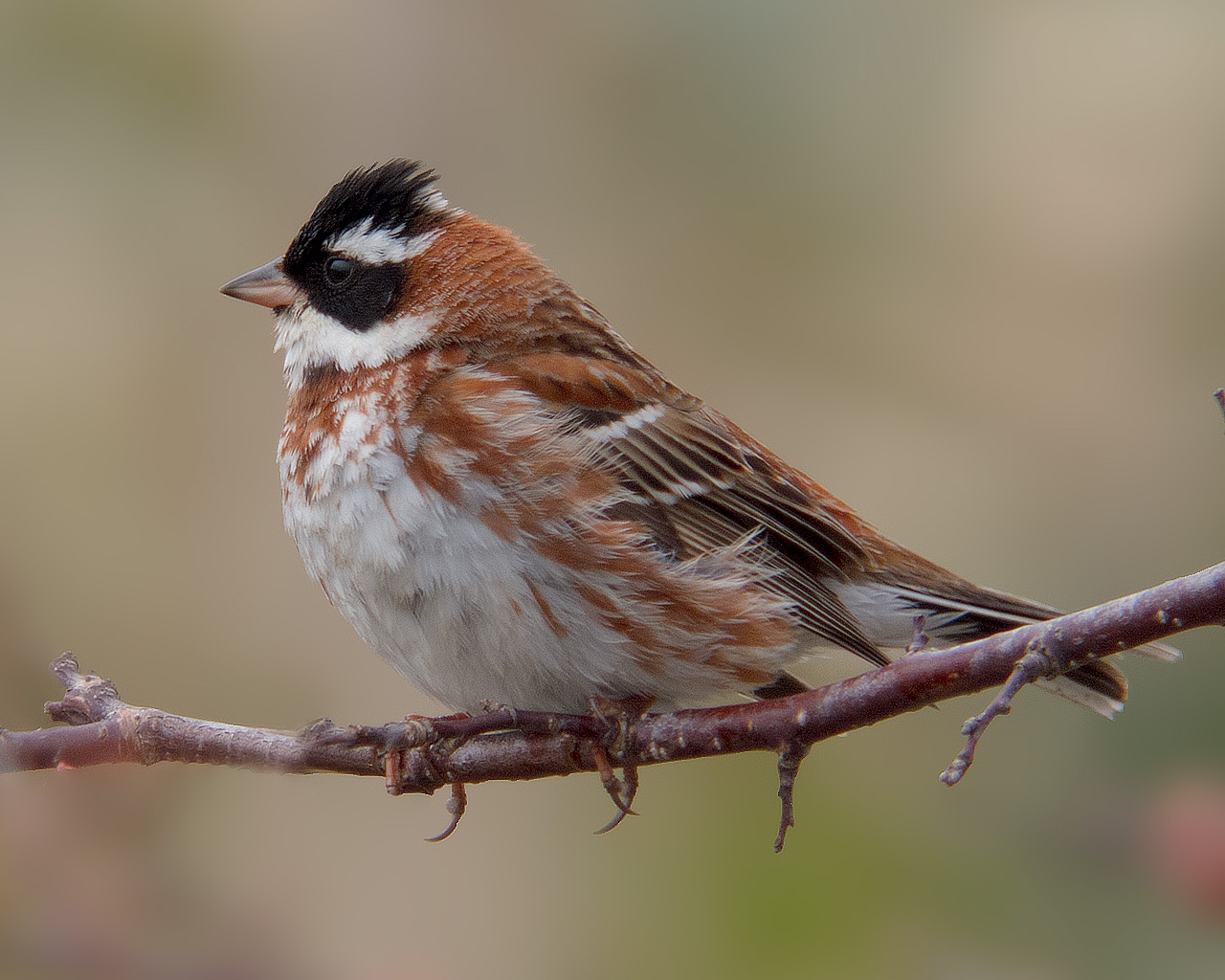
Little Bunting
Emberiza pusilla
Photo: Wikimedia Commons (CC) via https://en.wikipedia.org/wiki/Little_bunting
Overview
A detailed profile for this species is sourced from the IUCN Red List of Threatened Species as assessments become available.
The Little Bunting faces severe population declines primarily due to intensive agricultural practices across its breeding and wintering ranges, with pesticide use and habitat conversion eliminating crucial foraging areas. Climate change is altering the timing of insect emergence in its Arctic breeding grounds, creating mismatches with peak chick-rearing periods. Trapping for the illegal songbird trade in parts of Southeast Asia adds additional pressure to already declining populations.
Habitat
The Little Bunting breeds in open taiga, forest edges, and scrubland with scattered trees across northern Eurasia, preferring areas with dense ground vegetation for nesting. During winter, it inhabits grasslands, agricultural areas, and open woodlands from India through Southeast Asia to southern China.
Other threatened species in Emberizidae



Frequently asked questions
Why is Little Bunting classified as Vulnerable?
Where does Little Bunting live?
What are the main threats to Little Bunting?
Get weekly conservation intelligence
One short digest a week of the most striking species and country data we ship, plus breaking conservation news paired with our database where it matters.
Free, no spam. One-click unsubscribe in every email.