Northern Tinker Frog
Taudactylus rheophilus
Overview
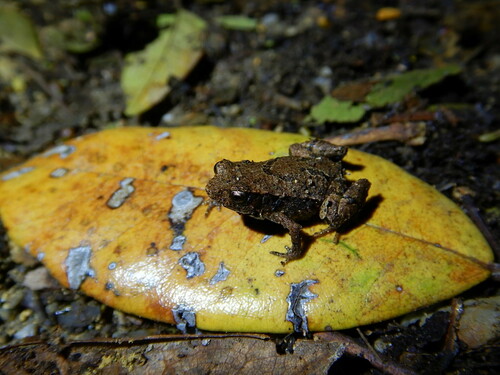
This small, cryptic amphibian is a member of the family Myobatrachidae, endemic to the upland rainforest streams of Australia. Adults are typically mottled brown or grey, providing camouflage against wet rock surfaces, and they lack the extensive webbing seen in more aquatic frog species, reflecting their strong association with fast-flowing rocky streams rather than still water. Males produce soft, insect-like calls, often from concealed positions among rocks and boulders, which makes the species difficult to detect and survey.
As with other stream-dwelling frogs, it likely plays a role in nutrient cycling and serves as a food source for native predators, while its larvae contribute to grazing on algae and biofilm in stream habitats.
The species is restricted to high-elevation subtropical and tropical moist rainforest in northern Queensland, where it is closely tied to rocky stream margins and moist boulder fields.
Its decline has been driven by chytrid fungus infection, a pathogen linked to amphibian declines worldwide, compounded by drought conditions that reduce stream flow and habitat availability. Habitat degradation from logging, agricultural land clearing, and water diversion or dam construction has further fragmented suitable stream habitat, while agricultural runoff introduces pollutants into remaining watercourses. Shifting rainfall patterns associated with climate change add additional pressure on an already narrow habitat range.
Conservation attention has focused on monitoring remaining populations, protecting rainforest catchments within reserves, and broader regional efforts to manage chytrid fungus impacts on Australian frog species. No population figures are available, and the population trend is currently listed as unknown. Given the combination of disease pressure, climate sensitivity, and a highly restricted range, the species' long-term outlook remains precarious, with continued vulnerability to further localized extinctions absent sustained habitat and disease management.
This tiny frog is threatened by disease (including the deadly chytrid fungus), competition from invasive species, and changing rainfall patterns and droughts linked to climate change, which affect the mountain streams it depends on. Its habitat is also being damaged by logging, land clearing for farming, dam construction and water diversion, and pollution from agricultural runoff. These threats are ongoing and, given the compounding effects of climate change on an already restricted mountain habitat, appear to be intensifying rather than easing.
Habitat
This species inhabits fast-flowing rocky streams and adjacent riparian vegetation in montane rainforests of northeastern Queensland, Australia. It requires clean, well-oxygenated water with rocky substrates and is typically found at elevations between 300-1200 meters in areas with permanent water flow.
Conservation measures underway
Other threatened species in MYOBATRACHIDAE

Threatened in Australia
Frequently asked questions
Why is Northern Tinker Frog classified as Critically Endangered?
Where does Northern Tinker Frog live?
What are the main threats to Northern Tinker Frog?
Get weekly conservation intelligence
One short digest a week of the most striking species and country data we ship, plus breaking conservation news paired with our database where it matters.
Free, no spam. One-click unsubscribe in every email.