
Magnificent Broodfrog
Pseudophryne covacevichae
Photo: Wikimedia Commons (CC) via https://en.wikipedia.org/wiki/Magnificent_brood_frog
Overview
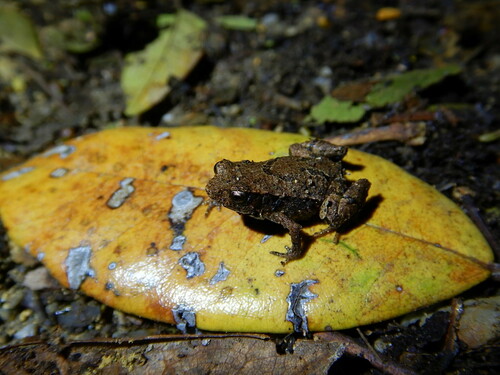
Pseudophryne covacevichae is a small ground-dwelling frog in the family Myobatrachidae, distinguished by mottled brown, black, and yellow patterning on its back and flanks, a common feature among Pseudophryne species that provides camouflage against leaf litter and soil. Like other broodfrogs, males call from concealed sites on land and females lay terrestrial eggs in moist depressions, with larvae developing further only once rains flood the nest sites. As predators of small invertebrates, and as prey for larger invertebrates, reptiles, and birds, the species contributes to nutrient cycling and food web dynamics within its habitat.
The species is endemic to Australia, restricted to a limited range in northeastern Queensland, where it occurs in wet sclerophyll forest and woodland habitats associated with seasonal creeks and soaks.
Its decline is driven by multiple ongoing pressures: land clearing and habitat degradation from livestock grazing and ranching, fragmentation caused by road and rail infrastructure, disturbance from logging and timber harvesting, contamination from agricultural and forestry runoff, and accumulation of solid waste in habitat areas. Invasive species, potentially including pathogens and introduced predators or competitors, add further stress to already fragmented populations.
Conservation attention includes habitat protection within parts of its range, monitoring of known populations, and research into the ecological requirements and breeding biology of the species, though specific population figures are not well documented. Broader amphibian disease surveillance programs in Australia also apply to this species.
Given continuing habitat pressures and its restricted distribution, the species' population trend remains decreasing, and its long-term outlook depends on sustained habitat protection and management of the threats identified across its range.
The Magnificent Broodfrog faces ongoing pressure from cattle grazing and farming activity that damages its habitat, along with pollution runoff from farms and forestry operations seeping into its wetland environment. Road construction, logging, litter and waste buildup, and invasive species or diseases further degrade the areas where it lives and breeds. These threats appear to be persistent and ongoing rather than clearly increasing or decreasing based on current information.
Conservation measures underway
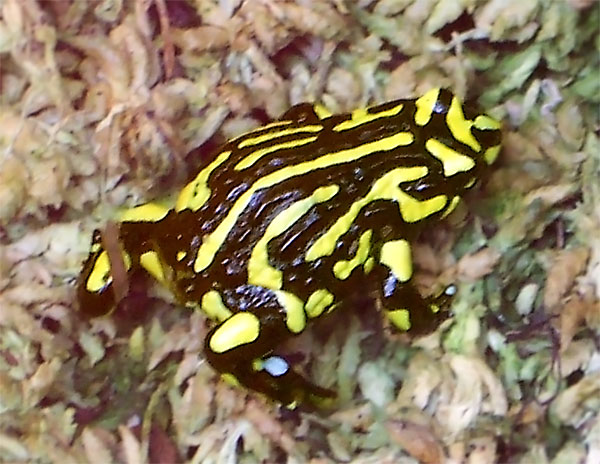
Other threatened species in MYOBATRACHIDAE

Threatened in Australia
Frequently asked questions
Why is Magnificent Broodfrog classified as Endangered?
Where does Magnificent Broodfrog live?
What are the main threats to Magnificent Broodfrog?
Get weekly conservation intelligence
One short digest a week of the most striking species and country data we ship, plus breaking conservation news paired with our database where it matters.
Free, no spam. One-click unsubscribe in every email.