Lobophyllia robusta
Overview
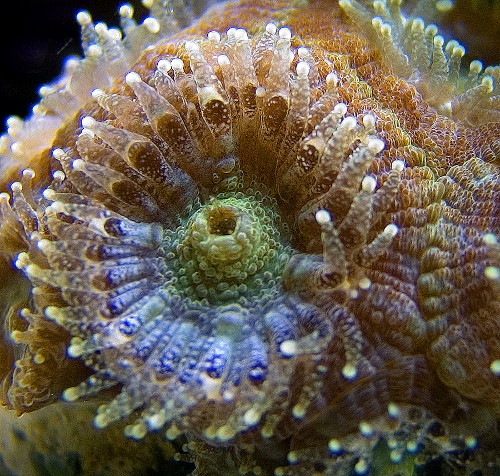
Lobophyllia robusta is a large-polyped stony coral in the family Lobophyllidae, recognized by its fleshy, meandering colonies formed of thick, rounded lobes or flabello-meandroid corallites. Its tissue often displays mottled greens, browns, or reds, and individual polyps expand tentacles at night to capture zooplankton, supplementing energy gained from symbiotic zooxanthellae during the day. As a reef-building coral, it contributes calcium carbonate structure to reef ecosystems and provides habitat complexity for associated invertebrates and fish.
The species inhabits shallow marine neritic waters across the Indo-Pacific, with recorded populations in American Samoa, New Caledonia, Australia, Vietnam, Taiwan, China, Japan, and Fiji, typically on reef slopes and lagoon environments.
Lobophyllia robusta is classified as Vulnerable, with a decreasing population trend. Its large, fleshy polyps make it a target for the aquarium trade and subsistence harvesting. Recreational diving and anchoring cause physical damage to colonies, while runoff from agricultural land and untreated domestic wastewater degrade water quality, promoting algal overgrowth and disease.
Coral diseases and outbreaks of native predators, such as corallivorous snails and sea stars, further stress colonies already weakened by shifting habitat conditions linked to warming seas and altered reef structure. Invasive species add additional competitive and ecological pressure in some locations.
Conservation efforts include the species' listing under CITES Appendix II, which regulates international trade, along with marine protected areas across parts of its range that limit harvesting and anchoring damage. Regional water-quality management programs aim to reduce land-based pollution inputs.
Given the combination of harvesting pressure, water quality decline, and disease, the species' outlook remains concerning, with continued population decline expected absent stronger reef management and pollution control.
Lobophyllia robusta, a type of coral, faces ongoing pressure from fishing and harvesting, damage from recreational activities like diving and boating, and pollution from sewage, agricultural runoff, and farming near coastlines. It is also threatened by invasive species, disease, and broader changes to its reef habitat driven by shifting ocean conditions. These combined pressures appear to be persistent and ongoing rather than lessening.
Habitat
Conservation measures underway
Other threatened species in LOBOPHYLLIIDAE

Threatened in American Samoa
Frequently asked questions
Why is Lobophyllia robusta classified as Vulnerable?
Where does Lobophyllia robusta live?
What are the main threats to Lobophyllia robusta?
Get weekly conservation intelligence
One short digest a week of the most striking species and country data we ship, plus breaking conservation news paired with our database where it matters.
Free, no spam. One-click unsubscribe in every email.