Lobed Cactus Coral
Lobophyllia diminuta
Overview
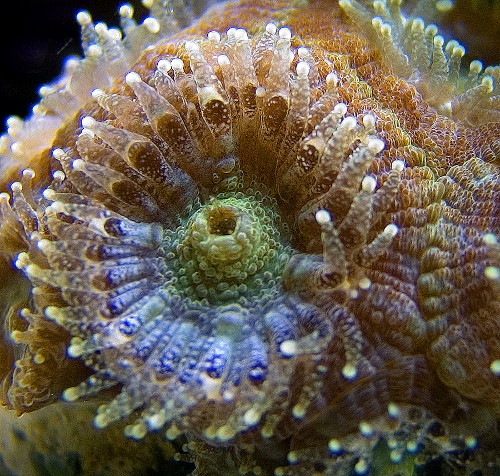
Lobophyllia diminuta is a stony coral belonging to the family Lobophylliidae, recognized by its large, fleshy polyps and distinctively lobed, meandering skeletal structure. Like other scleractinian corals, it secretes a calcium carbonate skeleton and hosts photosynthetic zooxanthellae, which supply the coral with energy while the coral itself extends feeding tentacles at night to capture plankton. As a reef-building species, it contributes structural complexity to reef habitats, providing shelter and substrate for numerous marine organisms.
This species occurs across the Indo-Pacific region, with recorded populations in Australia, Japan, Papua New Guinea, New Caledonia, the Solomon Islands, Indonesia, India, Palau, Thailand, Vanuatu, the Philippines, Micronesia, Malaysia, and Vietnam. It inhabits shallow marine neritic zones, typically on reef slopes and structures within coastal waters.
The species faces numerous ongoing pressures. Fishing and harvesting activities, along with recreational use of reef areas, cause direct physical damage. Water quality is degraded by domestic and urban wastewater, agricultural runoff, and solid waste pollution.
Coastal development linked to housing, urban expansion, and non-timber agricultural land use drives habitat alteration and sedimentation. The coral is also vulnerable to disease, competition or predation from problematic native and invasive species, and increasingly frequent storms and flooding events, compounded by broader ecosystem modifications.
Conservation responses include marine protected areas across parts of its range, international trade regulation under CITES, and reef monitoring programs tracking coral cover and disease incidence. Some local water quality and coastal management initiatives aim to reduce runoff and pollution inputs.
Given the breadth and persistence of these combined threats, the population trend remains decreasing, and the species is currently assessed as Endangered, with no clear indication of near-term recovery.
Lobed Cactus Coral faces pressure from coastal development and farming, which send pollution, sewage, and soil runoff into its reef habitat, while fishing activities and recreational use like tourism and diving cause direct physical damage. It also suffers from disease outbreaks, competition or predation from other species, and destructive changes to its ecosystem, all made worse by intense storms and flooding that can physically destroy coral colonies. These combined ongoing pressures suggest the threats to this coral are stable to intensifying, as most originate from continuous human activity and worsening climate-related events.
Habitat
Conservation measures underway
Other threatened species in LOBOPHYLLIIDAE

Threatened in Australia
Frequently asked questions
Why is Lobed Cactus Coral classified as Endangered?
Where does Lobed Cactus Coral live?
What are the main threats to Lobed Cactus Coral?
Get weekly conservation intelligence
One short digest a week of the most striking species and country data we ship, plus breaking conservation news paired with our database where it matters.
Free, no spam. One-click unsubscribe in every email.