
Lesse Spotted Fritillary
Melitaea trivia
Photo: Wikimedia Commons (CC) via https://en.wikipedia.org/wiki/Melitaea_trivia
Overview
Lesser Spotted Fritillary (Melitaea trivia)
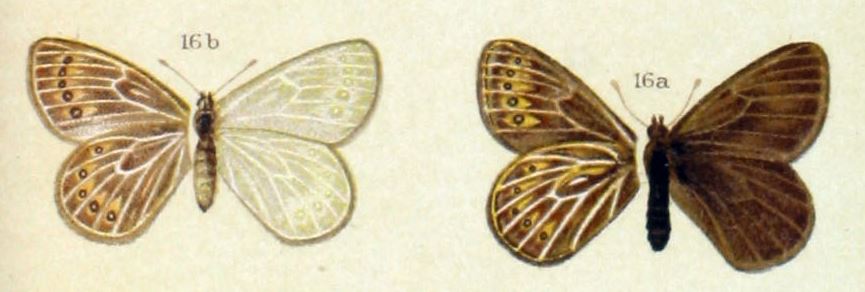
The Lesser Spotted Fritillary is a small butterfly with distinctive orange-brown wings marked by black spots and intricate checkered patterns. Adults typically have a wingspan of 32-42mm, with females generally larger than males. The species exhibits complex flight patterns during mating displays and feeds primarily on nectar from various wildflowers.
As pollinators, these butterflies contribute to plant reproduction across their range, while their caterpillars serve as food sources for birds and other predators.
This butterfly inhabits a remarkably broad geographic range, extending from Western Europe through the Balkans, Eastern Europe, Central Asia, and into parts of South Asia and China. The species typically occupies dry grasslands, meadows, hillsides, and forest clearings at elevations up to 2,000 meters. Its larvae feed on plantain species (Plantago) and other herbaceous plants.
Despite its extensive range, the Lesser Spotted Fritillary faces mounting pressures from habitat fragmentation and agricultural intensification. Traditional extensive farming practices that maintained suitable grassland habitats are declining across Europe. Climate change may also be affecting the species' distribution, though specific impacts remain poorly understood due to limited population monitoring.
Conservation efforts vary significantly across the species' range. Some European countries include the butterfly in habitat protection schemes, while systematic monitoring programs remain sparse in many regions. The species benefits from grassland restoration projects and maintenance of traditional farming practices in certain areas.
The current outlook remains uncertain due to insufficient population data across most of the range. While the species persists across numerous countries, local population trends and overall conservation status require enhanced monitoring to assess long-term viability.
Based on the available data, the specific threats facing the Lesser Spotted Fritillary butterfly have not yet been formally assessed or documented by conservation scientists. Without this threat assessment, it's not possible to identify what particular dangers this species may be facing, such as changes to the grasslands where it lives, climate impacts, or other environmental pressures. The current status of whether threats to this species are increasing, stable, or decreasing cannot be determined without proper scientific evaluation.
Other threatened species in Nymphalidae


Threatened in Afghanistan

Frequently asked questions
Why is Lesse Spotted Fritillary classified as Vulnerable?
Where does Lesse Spotted Fritillary live?
What are the main threats to Lesse Spotted Fritillary?
Get weekly conservation intelligence
One short digest a week of the most striking species and country data we ship, plus breaking conservation news paired with our database where it matters.
Free, no spam. One-click unsubscribe in every email.