Kroombit Tinker Frog
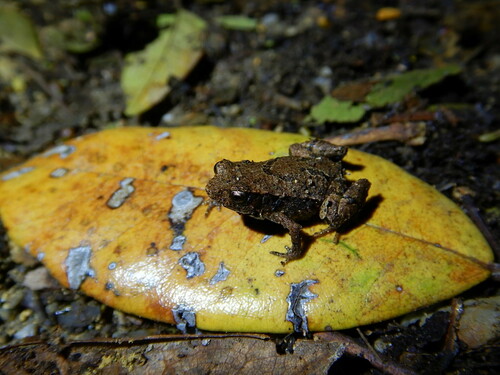
Taudactylus pleione
Overview
Taudactylus pleione is a small, ground-dwelling frog restricted to a single mountainous region of central Queensland, Australia. Like other members of the genus Taudactylus, it is a cryptic species associated with rocky, moist forest habitats rather than open water bodies, relying on seepages and rocky streamside microhabitats for breeding and shelter. Males call from concealed positions among rocks and leaf litter, and the species likely plays a role in local invertebrate population control and serves as prey for birds and reptiles within its ecosystem.
The species is confined to the Kroombit Tops area, occupying subtropical/tropical moist lowland and upland forest, permanent rivers and streams, and rocky terrain at a limited number of sites. This narrow endemism makes the entire population highly vulnerable to localized disturbance.
Its decline is driven by a combination of pressures: chytrid fungal disease (Batrachochytrium dendrobatidis) has been strongly implicated in the collapse of related Taudactylus species and continues to affect remaining populations. Habitat degradation from livestock grazing, altered fire regimes, and invasive plants has modified streamside vegetation structure, while climate change is shifting rainfall patterns critical to breeding cycles. Storms, flooding, and stream degradation further stress the limited habitat, and the small, fragmented population size itself heightens extinction risk from stochastic events.
Conservation efforts include habitat protection within the Kroombit Tops National Park, ongoing disease and population monitoring, feral pig and weed control, and fire management planning aimed at reducing habitat disturbance. Research into chytrid resistance and microhabitat requirements continues to inform management.
Population trends remain in decline, and given the species' extremely restricted range, reliance on a narrow set of habitat conditions, and susceptibility to multiple compounding threats, its long-term survival prospects remain precarious without sustained, targeted intervention.
The Kroombit Tinker Frog's habitat is being degraded by cattle grazing, weed invasion, litter, and damage to its streams, while wildfires and changing rainfall patterns from a shifting climate add further pressure. It also faces serious disease risks, particularly the deadly chytrid fungus, along with threats from invasive animals and competition or predation from other native species, all of which are especially dangerous given how small and vulnerable its population already is. Overall, these combined pressures appear to be stable to intensifying, with climate change and disease posing the greatest ongoing concern for this species' survival.
Habitat
This species inhabits rocky streams and adjacent wet sclerophyll forests in the mountainous regions of southeastern Queensland. It requires permanent or semi-permanent water sources with suitable rock crevices and vegetation cover for breeding and shelter.
Conservation measures underway
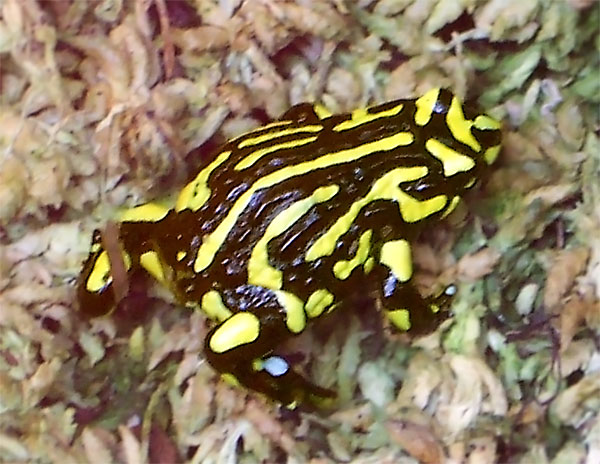
Other threatened species in MYOBATRACHIDAE

Threatened in Australia
Frequently asked questions
Why is Kroombit Tinker Frog classified as Critically Endangered?
Where does Kroombit Tinker Frog live?
What are the main threats to Kroombit Tinker Frog?
Get weekly conservation intelligence
One short digest a week of the most striking species and country data we ship, plus breaking conservation news paired with our database where it matters.
Free, no spam. One-click unsubscribe in every email.