Villa panisca
Overview
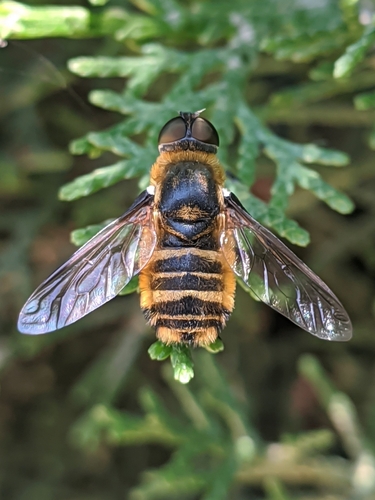
The kontrastsvart klarvingesvävfluga (Villa panisca) is a distinctive bee fly characterized by its contrasting dark body and clear, transparent wings that create a striking visual appearance in flight. This parasitoid fly plays a crucial ecological role as a natural biocontrol agent, with its larvae parasitizing various ground-dwelling beetle larvae and other soil-dwelling insects.
Villa panisca, a specialized bee fly, faces severe population declines primarily due to habitat loss and degradation of its preferred sandy heathland and coastal dune ecosystems. The species' parasitic lifestyle makes it particularly vulnerable to declines in its host bee populations, which are themselves threatened by agricultural intensification and pesticide use.
Habitat
Villa panisca inhabits sandy heathlands, coastal dunes, and open woodland edges with sparse vegetation and exposed soil patches where host beetles breed. The species requires areas with a mosaic of bare ground for egg-laying and nearby flowering plants that provide nectar sources for adults.
Other threatened species in Bombyliidae
Threatened in Austria
Frequently asked questions
Why is Villa panisca classified as Endangered?
Where does Villa panisca live?
What are the main threats to Villa panisca?
Get weekly conservation intelligence
One short digest a week of the most striking species and country data we ship, plus breaking conservation news paired with our database where it matters.
Free, no spam. One-click unsubscribe in every email.