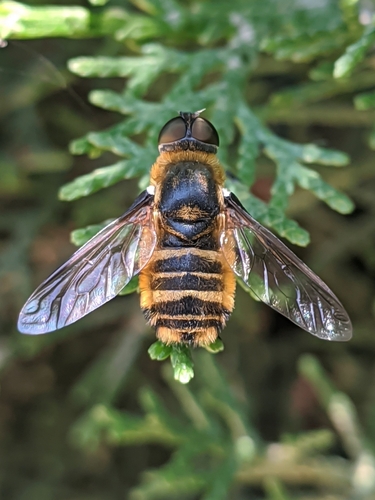
Villa fasciata
Overview
A detailed profile for this species is sourced from the IUCN Red List of Threatened Species as assessments become available.
Villa fasciata faces significant pressure from habitat degradation as traditional grazing practices decline across European grasslands and heathlands. The species' specialized parasitic lifestyle, targeting specific solitary bee hosts, makes it particularly vulnerable to disruptions in pollinator communities caused by agricultural intensification and pesticide use. Climate change poses an additional threat by altering the phenology of both the fly and its host species, potentially disrupting critical timing for successful parasitism.
Habitat
Villa fasciata inhabits flower-rich grasslands, heathlands, and coastal dunes where its solitary bee hosts are abundant. The species requires areas with diverse flowering plants that support both adult feeding and the prey species needed by its parasitic larvae.
Other threatened species in Bombyliidae
Threatened in Belgium

Frequently asked questions
Why is Villa fasciata classified as Vulnerable?
Where does Villa fasciata live?
What are the main threats to Villa fasciata?
Get weekly conservation intelligence
One short digest a week of the most striking species and country data we ship, plus breaking conservation news paired with our database where it matters.
Free, no spam. One-click unsubscribe in every email.