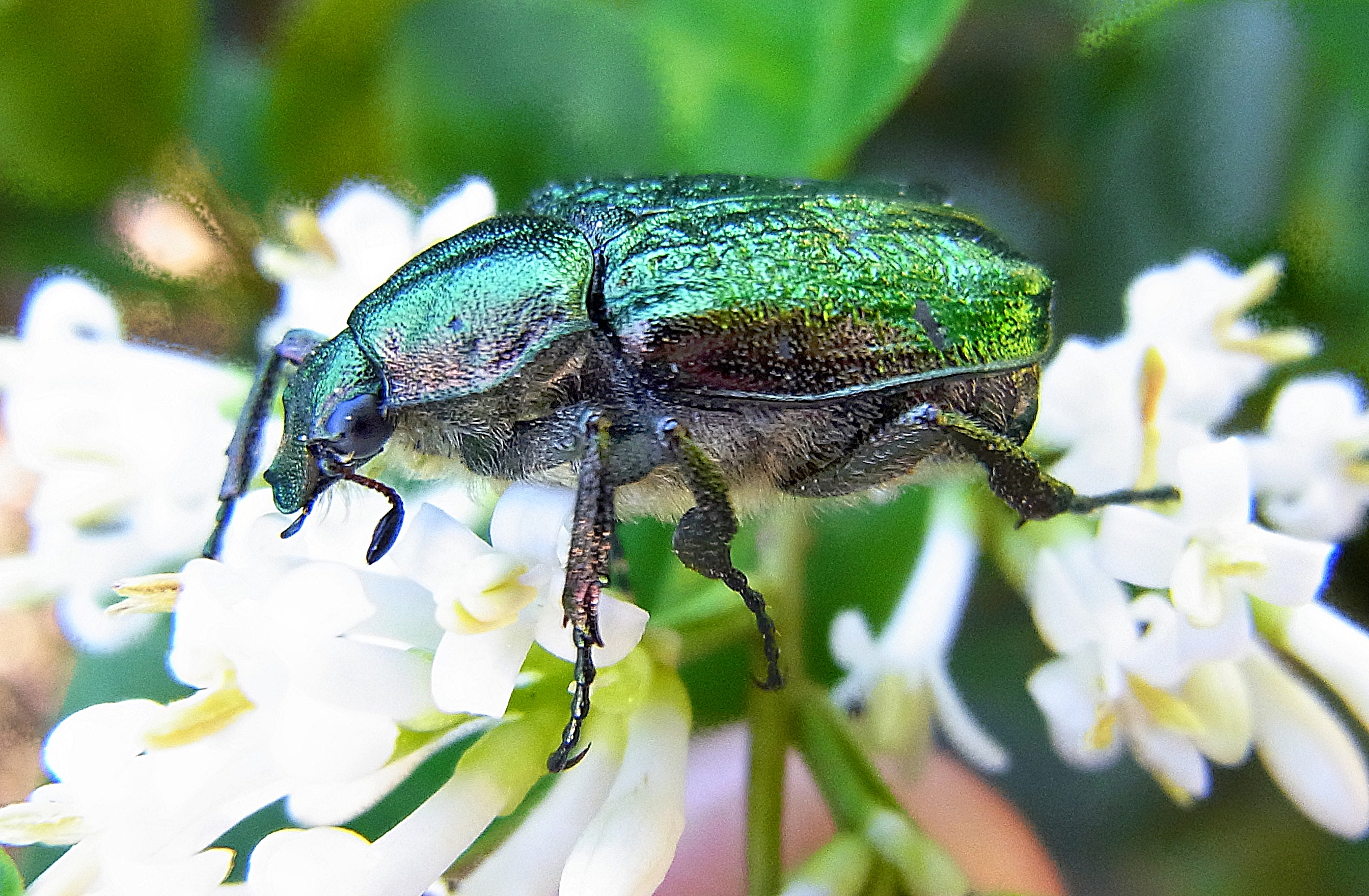
Hermit beetle
Osmoderma eremita
Osmoderma eremita, the hermit beetle or Russian leather beetle, is a species of European beetle in the family Scarabaeidae. Adults measure between 21 and 32 mm in length.
23
Countries
Photo: Wikimedia Commons (CC) via https://en.wikipedia.org/wiki/Osmoderma_eremita
Taxonomy & Classification
Kingdom
Animalia
Phylum
Arthropoda
Class
Insecta
Order
Coleoptera
Family
Scarabaeidae
Genus
Osmoderma
Hermit beetle belongs to the family Scarabaeidae, order Coleoptera, within the Insecta class.
Species Profile
Osmoderma eremita, the hermit beetle or Russian leather beetle, is a species of European beetle in the family Scarabaeidae. Adults measure between 21 and 32 mm in length.
The Hermit beetle is critically endangered primarily due to the loss and fragmentation of old-growth deciduous forests containing ancient hollow trees, which are essential for its larval development. Modern forestry practices that remove dead and dying trees, along with urbanization and agricultural expansion, have severely reduced suitable habitat across Europe. The species' extremely slow development cycle and limited dispersal ability make populations particularly vulnerable to habitat disturbance.
Key Facts
Habitat & Distribution
Osmoderma eremita, when defined as distinct from the closely related Osmoderma barnabita, O. cristinae, O. italicum, and O. lassallei, occurs in central and western Europe, from northern Spain and northern Italy northward to southern Sweden and eastern Germany. When interpreted more broadly, as including O. cristinae and O. lassallei as subspecies, it is distributed in much of Europe.
Threats
IUCN Red List: Critically Endangered
The Hermit beetle is critically endangered primarily due to the loss and fragmentation of old-growth deciduous forests containing ancient hollow trees, which are essential for its larval development. Modern forestry practices that remove dead and dying trees, along with urbanization and agricultural expansion, have severely reduced suitable habitat across Europe. The species' extremely slow development cycle and limited dispersal ability make populations particularly vulnerable to habitat disturbance.
Forest management practices removing dead wood
Habitat fragmentation
Loss of ancient hollow trees
Climate change affecting tree health
Urbanization and land conversion
Found in 23 Countries
National vs Global Threat Status
How this species is assessed at the national level compared to its IUCN global status (CR).
| Country | National Status | Global Status | Comparison |
|---|---|---|---|
| EU | NTNear Threatened | CRCritically Endangered | Lower local risk |
| EU | NTNear Threatened | CRCritically Endangered | Lower local risk |
National Red List data sourced from the National Red List Project (nationalredlist.org, ZSL) and country-specific Red List authorities.
Community Sightings
Report a sightingNo community sightings yet. Be the first to report!
Sources & Attribution
How to Cite
IUCN: IUCN (2025). The IUCN Red List of Threatened Species. Version 2025-1. Available at: https://www.iucnredlist.org. doi:10.2305/IUCN.UK.2025-1.RLTS
GBIF: GBIF.org (2025). GBIF Home Page. Available at: https://www.gbif.org
National Red Lists: ZSL (2025). National Red List. Zoological Society of London. Available at: https://www.nationalredlist.org
This page: SpeciesRadar (2025). Hermit beetle (Osmoderma eremita). SpeciesRadar: Intelligence for Earth's Biodiversity. Available at: https://speciesradar.org/species/hermit-beetle